

Béchamel Sauce
Classic French béchamel — one of the five mother sauces. Butter, flour, and milk, whisked into a velvety white sauce that forms the base of lasagna, gratins, and croque monsieurs. Fifteen minutes, three ingredients, endless possibilities.
Ingredients
- 40 gbutter
- 40 gall-purpose flour
- 500 mlwhole milk
- 0.25 tspground nutmeg
- to tastesalt
- a pinchwhite pepper
Method
- Melt the butter in a medium saucepan over medium-low heat. Do not let it brown — you want it just melted and bubbling gently.
- Add the flour all at once and whisk constantly for 2 minutes. This cooks out the raw flour taste and creates the roux. It should look like a smooth, pale paste that pulls away from the sides of the pan slightly.
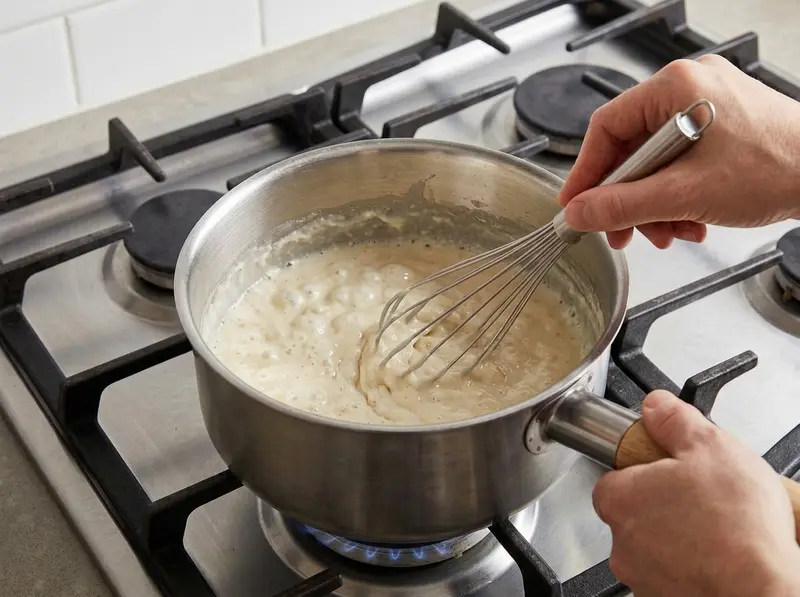
- Start adding the milk about 80 ml at a time, whisking vigorously after each addition until the mixture is completely smooth before adding more. The first two additions will make a thick paste — keep whisking, it will loosen.
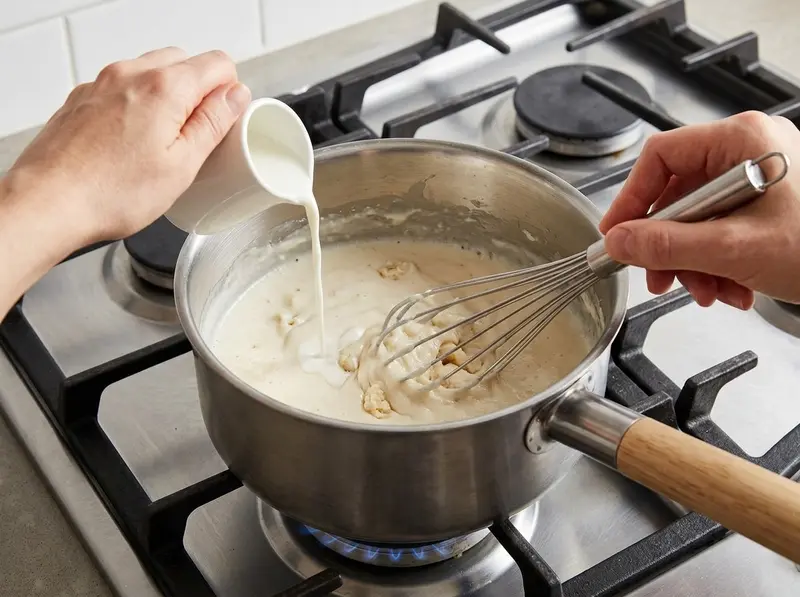
- Once all the milk is incorporated, increase heat to medium. Whisk continuously as the sauce comes to a gentle simmer — it will thicken noticeably in 3 to 5 minutes.
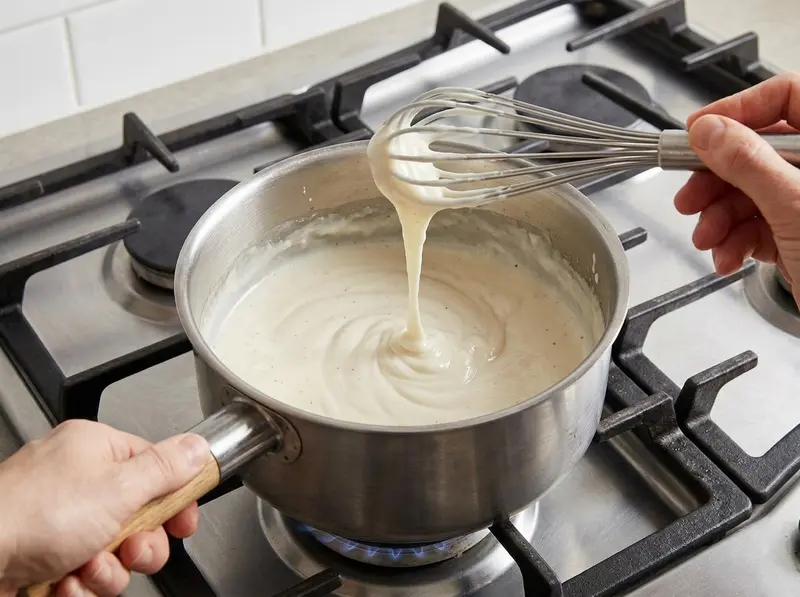
- Season with nutmeg, salt, and white pepper. Cook for 1 more minute, then remove from heat. The sauce should coat the back of a spoon and leave a clean line when you draw your finger through it.
FAQ
Lumps form when flour clumps together before being fully incorporated into the liquid. The fix: strain the finished sauce through a fine-mesh sieve into a clean pot, pressing with a spoon. This removes every lump and takes 30 seconds. To prevent lumps next time, add milk in small portions of about 80 ml, whisking vigorously after each addition until completely smooth before adding more. The first two additions will form a thick paste — this is normal. Keep whisking and it will smooth out as you add more milk.
Mornay is simply béchamel with cheese melted in. Make your béchamel as described, then remove from heat and stir in 80 to 100 grams of grated Gruyère, Emmental, or a mix of both. Add 30 grams of Parmesan for extra depth. The residual heat melts the cheese — never put it back on direct heat after adding cheese or it can become stringy and grainy. A Mornay sauce is the base for macaroni and cheese, croque monsieur, and cauliflower gratin.
Béchamel keeps for 3 days in the fridge. To prevent a skin from forming on top, press plastic wrap directly onto the surface of the sauce while it is still warm — the wrap should touch the sauce with no air pocket. To reheat, warm gently over medium-low heat, whisking constantly. If it has thickened too much, add milk a tablespoon at a time while whisking until you reach the desired consistency. Béchamel also freezes well for up to 2 months.
The standard ratio is equal parts butter and flour by weight, with about 12 times their weight in milk. For this recipe: 40 grams butter, 40 grams flour, 500 ml milk. For a thicker béchamel (lasagna layers), increase butter and flour to 50 grams each with the same milk. For a thinner sauce (pouring consistency), reduce to 25 grams each. The 1:1 butter-to-flour ratio stays constant — only the milk amount changes the thickness.
A floury taste means the roux was not cooked long enough. After adding the flour to the melted butter, whisk constantly for a full 2 minutes over medium-low heat before adding any milk. The roux should bubble gently and look like a smooth, pale paste. You will notice the raw flour smell disappear and be replaced by a slightly nutty aroma — that is your signal. After adding all the milk, simmer the sauce for an additional 3 to 5 minutes. The starch granules need heat and time to fully swell and cook through.
Rate this
Recipes by email
One letter a week: a recipe picked for your taste, plus whatever is new on the site. Unsubscribe in one click.
Welcome gift: Sergei's cookbook (e-book).
By subscribing you agree to the privacy policy.
Tell us what you like to cook (30 seconds) →Keep browsing
More dishes from the French archive — picked by overlap with what you're cooking now.



Join the conversation
Comments (1)
Taste this béchamel sauce at room temperature, not straight from the fridge. Cold mutes flavors — you might oversalt it. Let it warm up for 10-15 minutes, taste, then make your final seasoning adjustments.