
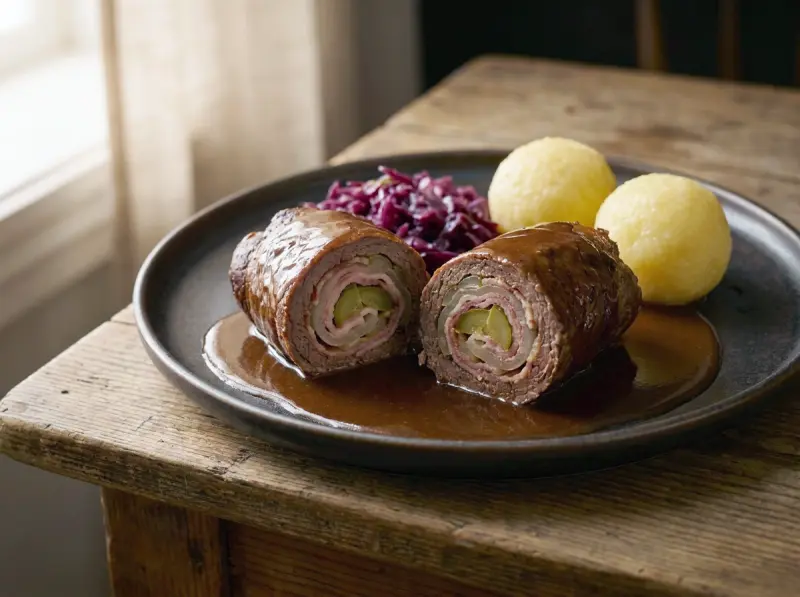
Rinderrouladen (German Beef Roulades)
The German Sunday roast in miniature: thin slices of beef spread with mustard, layered with bacon, onion, and a dill pickle, rolled tight and braised for two hours until they cut with a fork. The sauce is built from the browned bits in the pan, which is why searing the rolls hard matters more than anything else here.
Ingredients
- 800 gbeef, thin top round slices
- 100 gbacon
- 4 pcsdill pickles
- 40 gmustard, medium-hot
- 2 pcsonion
- 600 mlbeef stock
- 150 mlred wine
- 1 pcscarrot
- 20 gtomato paste
- 30 mlvegetable oil
- 20 gflour
- 3 gblack pepper
Method
- Lay the beef slices between two sheets of cling film and pound them to about 5 mm — thin and even. Thick slices never turn tender, however long you braise them.
- Season with pepper and spread each slice with mustard right to the edges. Lay on the bacon, a scattering of finely sliced onion, and a quartered pickle at one short end.
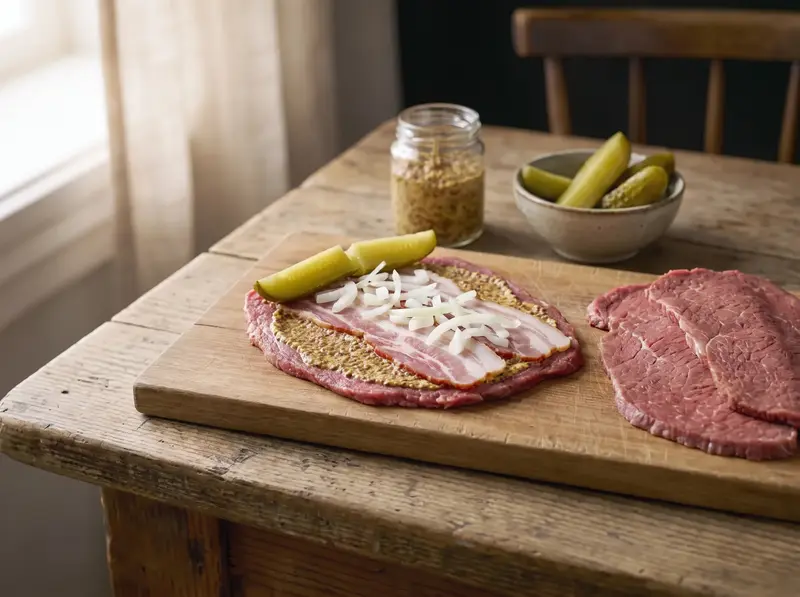
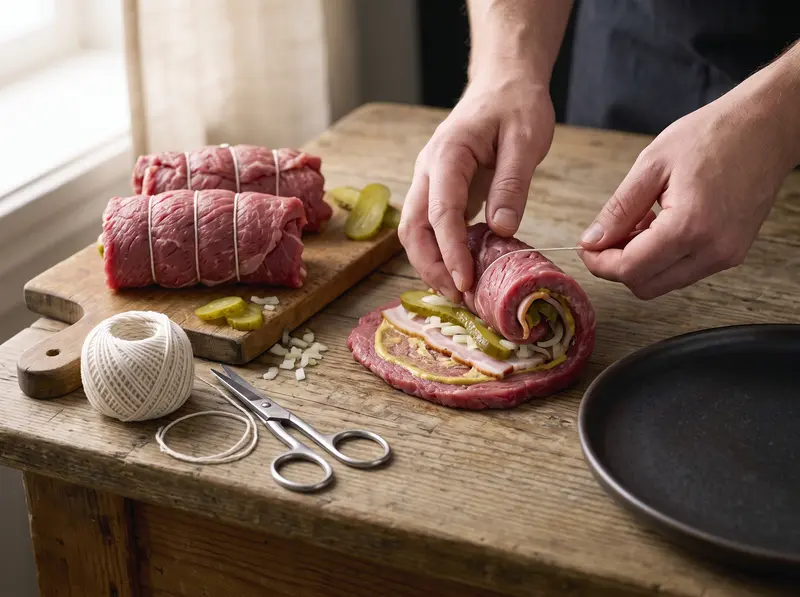
- Fold the two long sides inward first, then roll up tightly from the filled end and secure with kitchen string or two toothpicks. Folding the sides in is what keeps the filling inside during the braise.
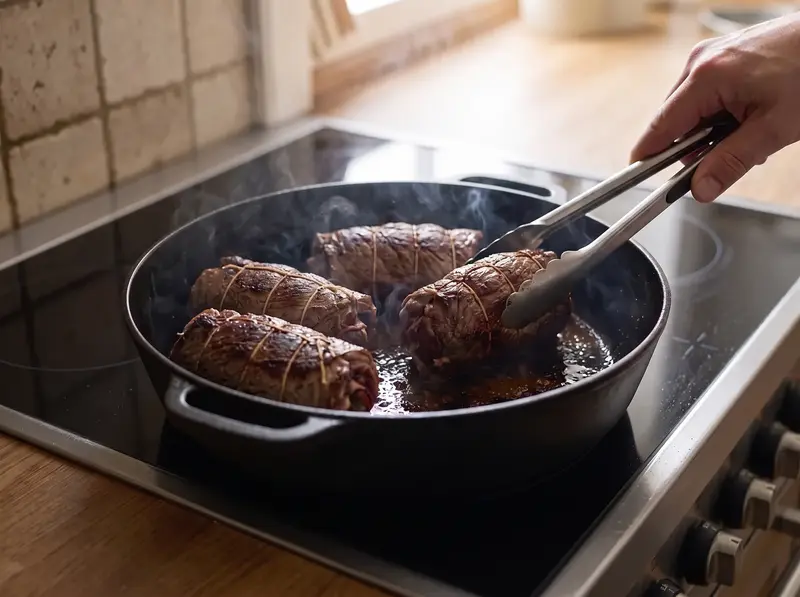
- Heat the oil in a heavy pot and brown the rolls hard on all sides, in batches so they aren't crowded. Take your time here: the dark fond left in the pot is the entire foundation of the sauce.
- Remove the rolls and fry the remaining onion and diced carrot in the same pot until coloured, then stir in the tomato paste and cook for a minute. Pour in the red wine and scrape the base clean, letting it reduce by half.
- Return the rolls, add the stock so they are about two-thirds submerged, cover, and braise on the lowest simmer for 90 minutes to 2 hours. It should barely bubble — a hard boil tightens the meat instead of softening it.
- Lift out the rolls and keep them warm. Strain the sauce if you want it smooth, then thicken it with the flour whisked into a little cold water and simmer for 3 to 4 minutes. Remove the string and serve with the sauce poured over.
FAQ
Thin slices from the top round, the cut German butchers sell as Rouladenfleisch. Ask for slices about 5 mm thick and pound them evenly. Flank or thin sirloin can work, but avoid quick-cooking lean cuts — they seize up rather than turning tender over two hours.
Almost always the rolling. Fold both long sides inward before rolling so the ends are closed, then tie with kitchen string or pin with toothpicks. Overfilling is the other culprit: a thin layer of each filling is plenty, and a bulging roll won't stay shut.
Yes. Sear on the stove, then braise covered at 160°C for about 2 hours, which holds a steadier temperature than a hob. In a slow cooker, sear first and cook on low for 6 to 7 hours, though you'll need to reduce the sauce separately at the end.
Whisk flour or cornstarch into a little cold water and stir it into the simmering sauce, then cook it for a few minutes to lose the raw taste. Reducing the sauce uncovered also concentrates it. A spoonful of the braised vegetables blended in thickens it without any starch.
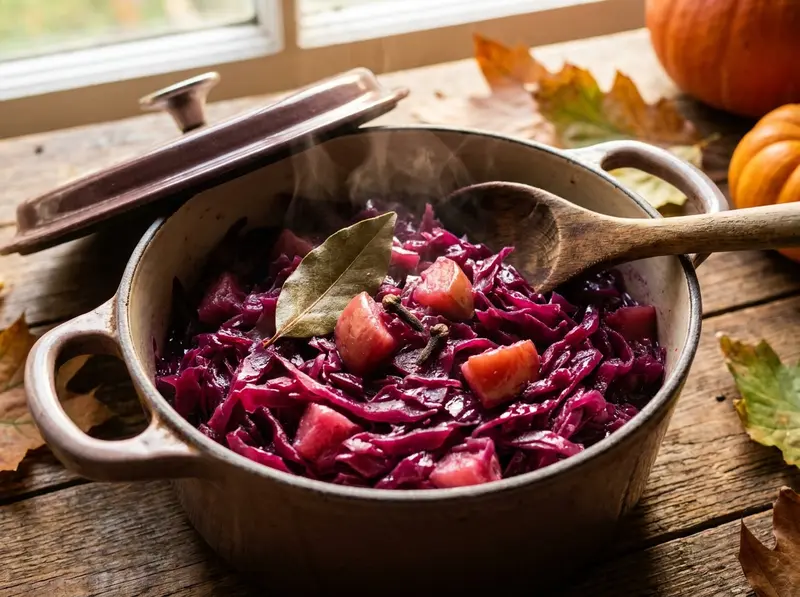
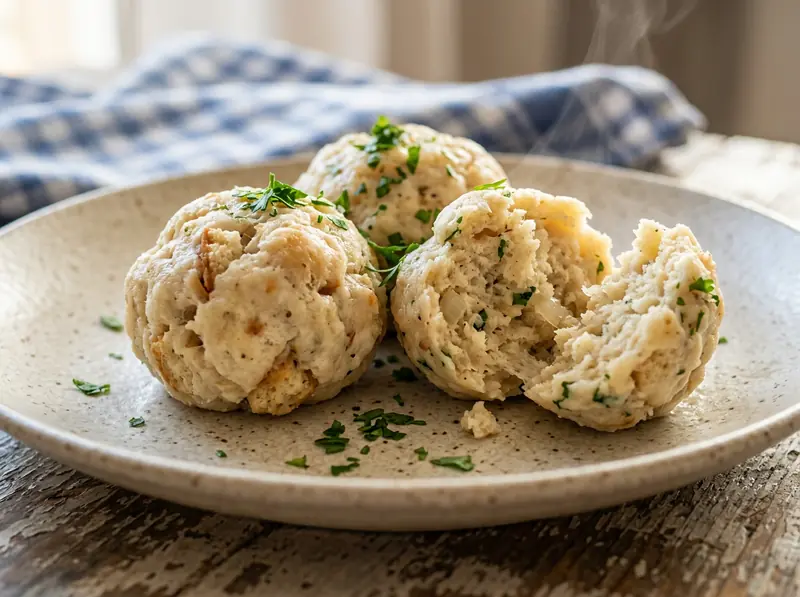
Braised red cabbage and potato dumplings are the classic pairing, with spätzle or mashed potato as everyday alternatives. Whatever you choose, it needs to soak up sauce. They also reheat well the next day, and many cooks think the sauce is better for the rest.
Keep browsing
More dishes from the German archive — picked by overlap with what you're cooking now.
Recipes by email
One letter a week: a recipe picked for your taste, plus whatever is new on the site. Unsubscribe in one click.
Welcome gift: Sergei's cookbook (e-book).
By subscribing you agree to the privacy policy.
Tell us what you like to cook (30 seconds) →
Join the conversation
Comments
No comments yet — be the first!