
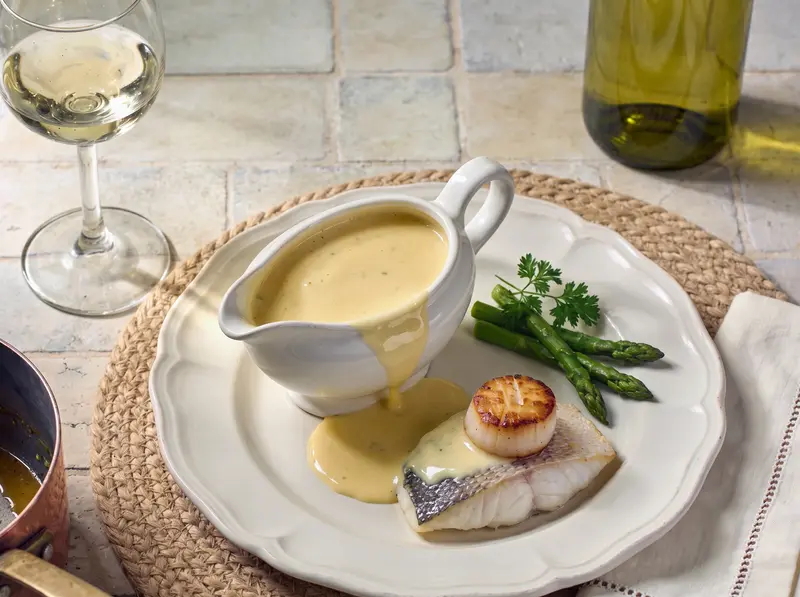
Beurre Blanc (Classic French Loire Valley White Butter Sauce)
Beurre blanc is a French sauce from the Loire Valley, around Nantes: a reduction of dry white wine, white wine vinegar and finely chopped shallots into which cold butter is whisked until the sauce turns pale, glossy and creamy. By the most common account it was invented around 1890 by Clémence Lefeuvre, a cook near Nantes. It is served warm over poached or pan-fried white fish, scallops, lobster, asparagus and poached eggs; the traditional partner is Loire pike. The sauce is light yellow and slightly sharp from the wine and vinegar, with a soft sweetness from the shallots.
Ingredients
- 200 gunsalted European butter
- 2 pieceshallots
- 80 mldry white wine
- 30 mlwhite wine vinegar
- 0.25 tspfine sea salt
- 1 pinchwhite pepper
Method
- Prep before you start cooking. Cut 200 g of cold butter into 1.5 cm cubes and return to the fridge — the butter must stay cold until the moment it goes into the sauce. Finely chop 2 shallots (about 50 g total) into pieces no larger than 2 mm. Have your whisk, fine-mesh sieve, and warm serving dish ready. The sauce builds fast and there is no time to prep mid-process.
- Make the reduction. In a small heavy-bottomed saucepan, combine 80 ml dry white wine (Muscadet from the Loire is the authentic choice; Sauvignon Blanc or unoaked Chardonnay also work), 30 ml white wine vinegar, and the chopped shallots. Bring to a simmer over medium heat and reduce until only about 2 tablespoons of liquid remain — this is the au sec stage ('almost dry'). The shallots should look glazed in syrupy reduction. This step takes 5 to 7 minutes.
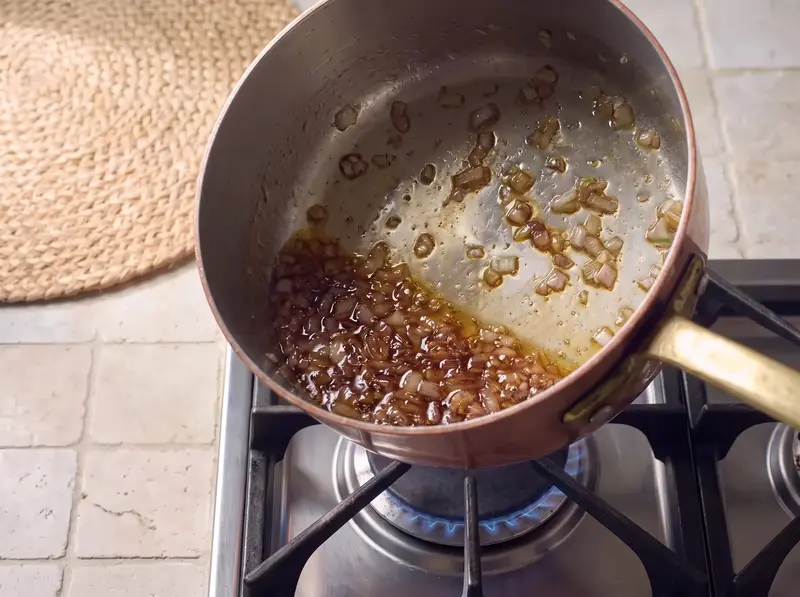
- Turn the heat to the lowest setting or take the pan off the heat entirely. The reduction should be warm, not hot: you should be able to hold a finger against the side of the pan. The sauce is held at about 50 to 60°C while the butter goes in; above about 65°C the emulsion separates into melted fat and watery liquid. Cold butter melts into the warm reduction at this temperature, so you do not need more heat, only gentle warmth. This narrow window is the technical heart of beurre blanc.
- Whisk in the first cubes of butter. Add 2 to 3 cold butter cubes to the pan and whisk continuously and vigorously. Do not stop whisking — the motion of the whisk creates the mechanical force that maintains the emulsion. As the butter melts and incorporates, the sauce will start to look creamy and pale yellow. Each addition of butter should be fully emulsified before the next.
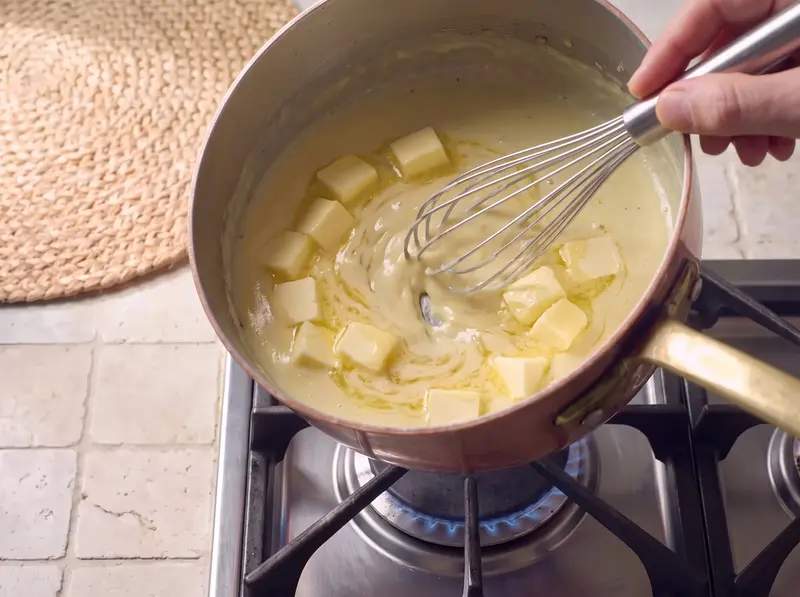
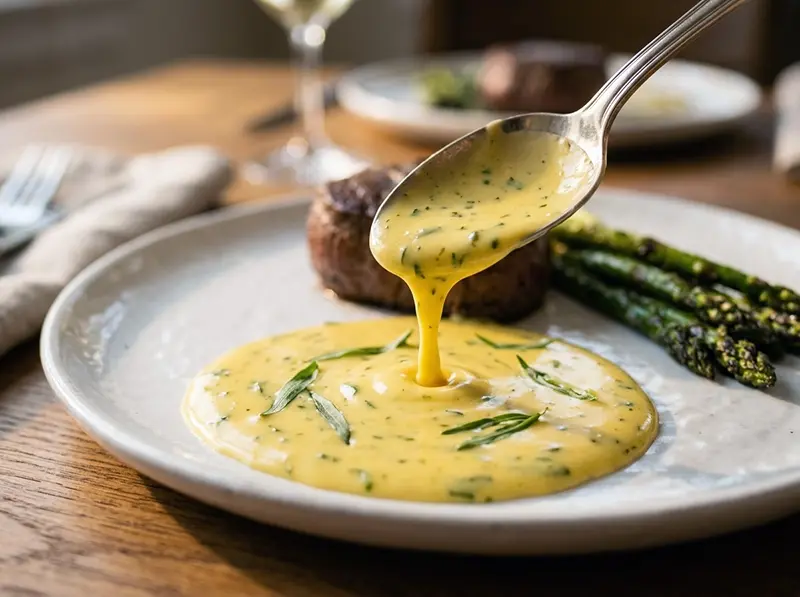
- Continue adding butter 2 to 3 cubes at a time, whisking constantly. If the pan starts to feel too cool to melt the butter, return it briefly to the lowest heat for 5 to 10 seconds, then remove. If the pan starts to feel hot, lift it off the heat and whisk in the air to cool. Work systematically through all 200 g of butter — this takes 5 to 7 minutes total. The finished sauce should be glossy, pale-yellow, and thick enough to coat the back of a spoon (nappe consistency).
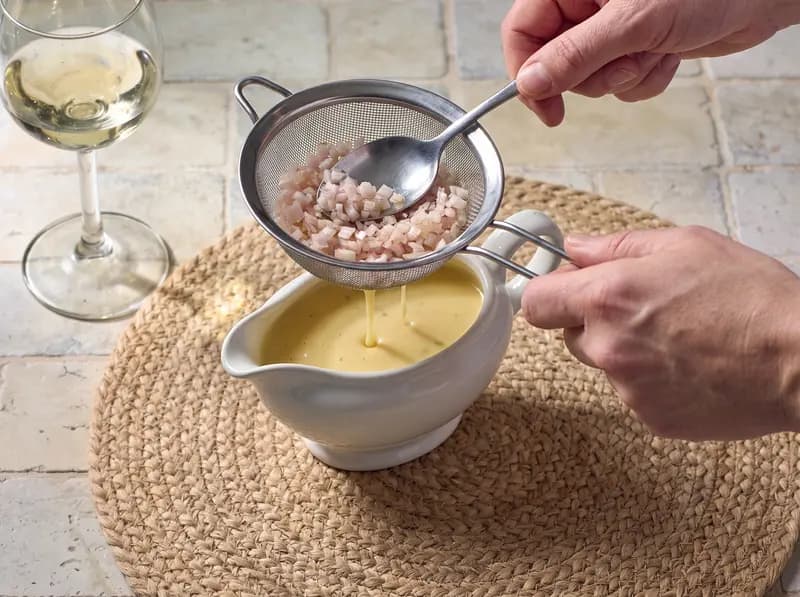
- Strain through a fine-mesh sieve into a warm serving dish or sauceboat, pressing on the shallots to extract every drop of flavour. The strained sauce is silky and uniform; the rustic version (with shallots left in) is more textural. Season with ¼ tsp fine sea salt and a pinch of white pepper. White pepper is traditional — black pepper would speckle the pale sauce.
- Serve immediately. Beurre blanc cannot wait — within 5 to 10 minutes at room temperature it begins to break, and reheating it on the stove will split it. If you must hold for a few minutes before serving, keep the saucepan on the very lowest heat or in a warm water bath, whisking briefly every minute or two to keep the emulsion alive. Pour generously over poached fish, seared scallops, steamed asparagus, or boiled new potatoes.
FAQ
Beurre blanc is a warm French butter sauce from the Loire Valley, made by whisking cold butter into a reduction of white wine, vinegar and shallots. It contains no eggs, unlike hollandaise, which is thickened with egg yolks over gentle heat and is more stable. Because beurre blanc relies only on the water in the reduction and the milk solids in the butter, it is lighter, tangier and more delicate. Its relative béarnaise is a hollandaise-type sauce made with a tarragon and shallot reduction.
Beurre blanc splits when it gets too hot or too cold. Keep it at about 50 to 60°C; above roughly 65°C the butterfat separates from the water and milk solids and floats as a greasy layer. Take the pan off the heat or set it on the lowest burner, add the cold butter 2 to 3 cubes at a time and whisk constantly, letting each addition melt before the next. Without a thermometer, the side of the pan should feel comfortably warm to a finger and the sauce should steam a little but never bubble. If the pan cools too much, return it to the lowest heat for 5 to 10 seconds.
It depends on why it broke. If the sauce split because it got too hot (greasy, thin), take the pan off the heat and whisk in a tablespoon of cold water or cold cream; if it seized because it got too cold, set the pan back on the lowest heat for a few seconds and whisk. To hold the finished beurre blanc for 5 to 15 minutes, keep the pan in a warm water bath at about 50 to 55°C and whisk briefly every minute or two. Do not refrigerate or reheat it on the stove, because the emulsion will not come back. Only the reduction can be made ahead and kept in the fridge for up to 3 days.
Use unsalted butter with at least 82% fat, preferably French cultured butter, because the sauce is mostly butter and its taste and fat content decide the result. Butter with 80% fat still works, but the emulsion is less stable. Margarine, spreads and low-fat butter contain too little milk fat and too much water, so the sauce will not hold together. If you use lightly salted butter, skip the salt at the end and taste first. The recipe makes 6 servings, about 30 g of butter per person, so make only what you will serve at once.
The classic pairing is poached or pan-fried Loire pike, but beurre blanc suits any delicate white fish, salmon, seared scallops, lobster, asparagus, new potatoes and poached eggs. It does not suit red meat, and it only works warm. Common variations are red wine in place of white for beurre rouge with salmon or duck breast, 50 ml of cream added to the reduction for a more stable home version, a squeeze of lemon, or chives and tarragon stirred in at the end. Serve straight away in a warmed sauceboat.
Rate this
Recipes by email
One letter a week: a recipe picked for your taste, plus whatever is new on the site. Unsubscribe in one click.
Welcome gift: Sergei's cookbook (e-book).
By subscribing you agree to the privacy policy.
Tell us what you like to cook (30 seconds) →Keep browsing
More dishes from the French archive — picked by overlap with what you're cooking now.

Join the conversation
Comments
No comments yet — be the first!