


Bigos (Polish Hunter's Stew)
Bigos is a traditional Polish hunter's stew: sauerkraut and fresh cabbage simmered slowly with mixed meats, smoked sausage and dried mushrooms. Deeply savory, rich and smoky. It is said to improve with every reheating, so it is a good one to make a day or two ahead.
Ingredients
- 400 gveal or beef
- 400 gpork
- 50 gsmoked bacon
- 200 ghunter sausages
- 50 gsmoked sausage
- 750 gsauerkraut
- 500 gfresh cabbage
- 250 gtomatoes
- 2 onions
- 30 gdried porcini mushrooms
- 200 mldry red wine
- 700 mlhot broth or water
- 1 tspcaraway seeds
- 2 bay leaves
- 3 tbspvegetable oil (2 tbsp for the pot, 1 tbsp for the sauerkraut)
- to tastesweet paprika
- to tastesalt and black pepper
Method
- Cut the meat and bacon into 3 × 3 cm cubes. Soak the dried mushrooms in 250 ml hot water for 30 min, then slice. Squeeze sauerkraut (rinse if very sour). Shred fresh cabbage. Slice onions into half-rings, dice tomatoes, slice sausages into rounds.
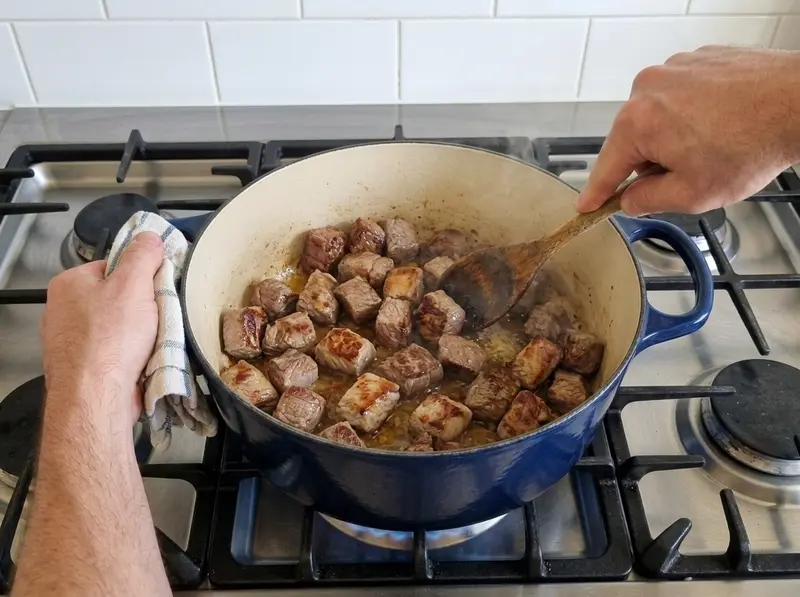
- Heat oil in a heavy pot over high heat. Brown the meat in batches until deeply golden. Add onions and cook until soft and golden, 5–7 min. Pour in half the broth, cover and simmer the meat on low for 45 minutes.
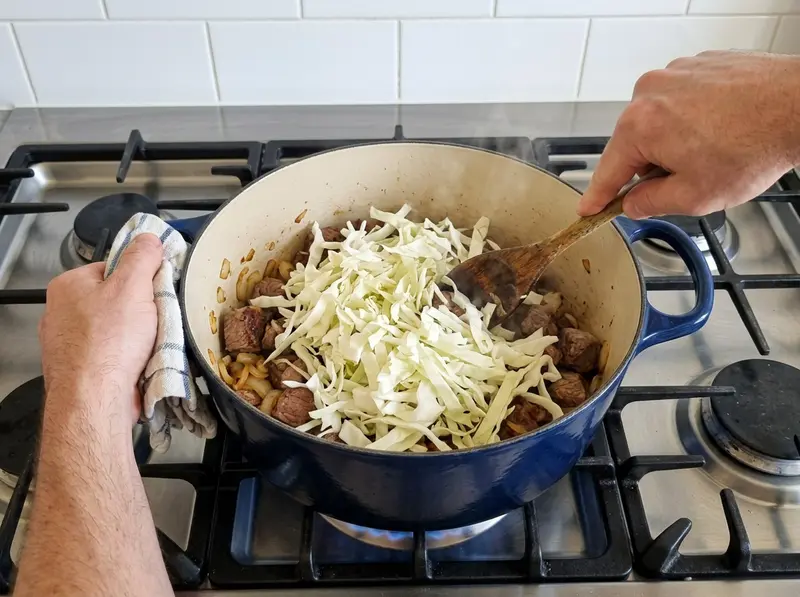
- Add fresh cabbage. Cover and cook on medium 10–15 min until it wilts. Meanwhile sauté sauerkraut in a separate pan 5–7 min for extra aroma, then transfer to the pot. Stir in caraway and paprika.
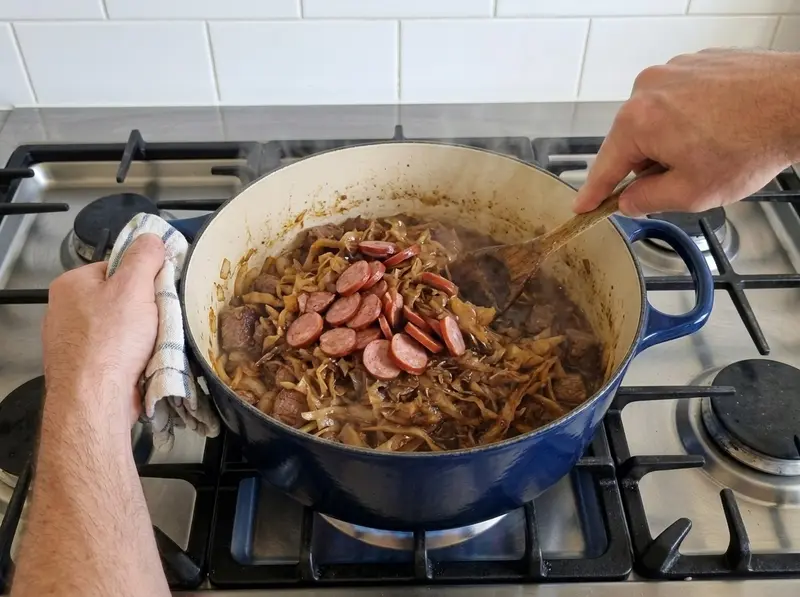
- Add tomatoes, mushrooms with their soaking liquid, bay leaves, black pepper, bacon and smoked sausage. Hold the hunter sausages aside for now.
- Pour in the wine and the rest of the broth so the liquid nearly covers everything. Bring to a boil, reduce to the lowest heat and simmer covered 1.5–2.5 hours, stirring occasionally. Add water if the stew starts to catch.
- 30 minutes before the end add the hunter sausages. Season with salt. Remove the lid and cook on low until excess liquid evaporates and the stew is thick and deeply flavored. It tastes even better the next day.
Cooked it? Rate the recipe
FAQ
Dry red wine gives bigos depth and a slight tannic bitterness that balances the acidity of the sauerkraut. It goes in with the rest of the broth at the start of the long simmer. Most of the alcohol cooks off over two hours, but some remains, so for children or anyone avoiding alcohol, leave it out. Without wine bigos is still good, just a little less complex. Dark grape juice, apple cider or more broth all work in its place.
Sauerkraut is the heart of bigos and is hard to replace. Without it the dish loses its characteristic sourness and becomes an ordinary braised meat with cabbage. A compromise: use fresh white cabbage and add 2–3 tbsp apple cider vinegar or the juice of one lemon — the acidity partially mimics the taste of fermented cabbage. You can also add finely chopped pickled cucumbers (2–3 pieces) for a fermented flavor. But keep in mind: this will be a similar dish, not authentic bigos.
Smoked meats are an essential element of bigos: they provide the smoky, rich base flavor without which the dish is incomplete. At minimum, use at least one smoked variety: smoked bacon, kabanos or hunter's sausages. The meat part can be anything: pork, beef, or game (venison, wild boar) — it is the game that gave the dish its name 'hunter's stew'. A great combination: braised pork + smoked sausage + bacon. Chicken or turkey will give a more delicate, less rich result — not classic, but acceptable.
If bigos is too sour, the sauerkraut was very mature or too much was used. Easy to fix: add 1–2 tbsp of sugar or the same amount of tomato paste (it softens acidity). You can add more fresh cabbage or grated apple — apple balances the acidity and adds a light fruity note. Diluting with broth also helps. To prevent the problem: taste the sauerkraut before cooking — if very sour, rinse it with cold water first.
This recipe uses about 60% sauerkraut to 40% fresh cabbage (750 g and 500 g). That balance gives acidity without sharpness and a tender texture without mush. The meat goes first: after browning, it simmers covered in half the broth for 45 minutes, so it has a head start on the cabbage. Then the fresh cabbage cooks for 10–15 minutes until it wilts, and the sauerkraut, sautéed in a separate pan, follows straight after. From there everything simmers together for 1.5–2.5 hours. If the sauerkraut is very sour, rinse half of it with cold water before adding.
Keep browsing
More dishes from the Polish archive — picked by overlap with what you're cooking now.





Recipes by email
One letter a week: a recipe picked for your taste, plus whatever is new on the site. You can stop the letters in one click.
Welcome gift: Sergei's cookbook (e-book).
By signing up for the newsletter you agree to the privacy policy.
Tell us what you like to cook (30 seconds) →
Join the conversation
Comments
No comments yet — be the first!