

Brandade de Morue (Provençal Salt Cod and Olive Oil Spread from Nîmes)
Brandade de Morue is the southern French classic from Nîmes (Languedoc-Roussillon), an emulsion of desalted cod, olive oil, milk, and garlic. The name comes from Occitan 'brandar' — to stir, to shake — describing the vigorous beating that turns flaked cod and oil into a creamy spread. First documented by Charles Durand in 1830, the original Nîmes version contains no potato — that addition is a 19th-century Parisian shortcut. This recipe follows Durand's purist tradition: cod-collagen emulsion, no shortcuts. Spread on toasted baguette, baked into a gratin, or used as a dip with raw vegetables. High in protein, naturally gluten-free, low in carbohydrates (keto-friendly when no potato is added). Active time 40 minutes plus 24-48 hours of soaking the salt cod. Yields about 600 g, serves 8 as appetizer with crostini, salad, and chilled rosé.
Ingredients
- 500 gsalt cod loin (weight before soaking)
- 250 mlwhole milk
- 150 mlextra virgin olive oil
- 3 clovesgarlic
- 1 piecebay leaf
- 2 sprigsthyme
- 1 tbspfresh lemon juice
- 1 pinchwhite pepper
- 1 tbspfresh parsley
- 1 piecesmall baguette, for croutons
- 2 tbspolive oil, for the croutons
Method
- Desalt the cod (24 to 48 hours ahead). Rinse the salt cod loin under cold running water for 5 minutes to remove surface salt. Place in a large bowl, cover with cold water (at least four times the volume of the fish), and refrigerate. Change the water every 6-8 hours, three to four times per day. Thin pieces need 24 hours; thick loin needs 48 hours. Test by tasting a small raw piece with the tip of your tongue — it should taste pleasantly salty, not aggressive. If still too salty, continue another 12 hours. If the fish has become bland, stop immediately.
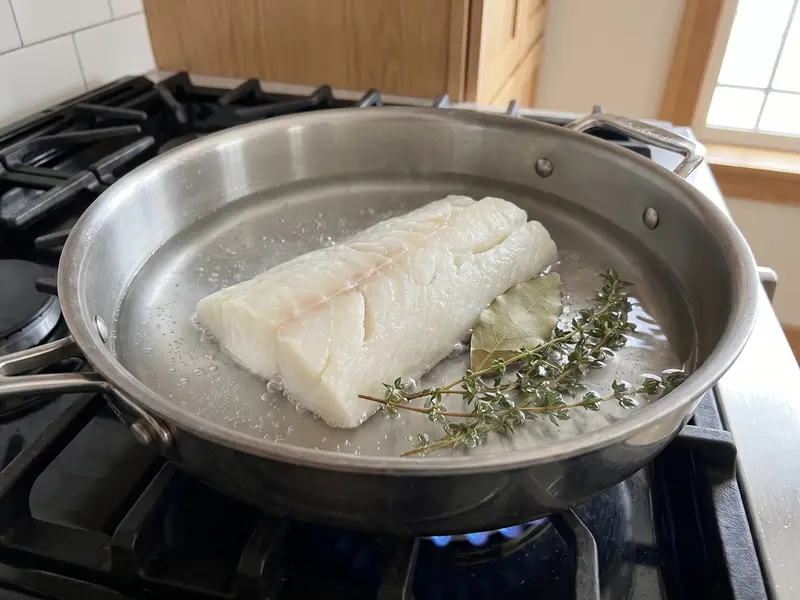
- Poach the cod gently. Drain the desalted cod and place it in a wide pan. Cover with cold water and add the bay leaf and fresh thyme sprigs. Heat slowly to 70-80°C (just below a simmer — do not boil). Hold at this temperature for 10 minutes, until the fish flakes easily under a fork. Boiling toughens the fibers and destroys the collagen needed for emulsion. Drain the cod, discard the aromatics, and let cool to lukewarm. Remove any skin and bones with your fingers — feel carefully, salt cod often hides bones.
- Warm the milk and oil. Pour 250 ml of whole milk into a small saucepan and heat to 70°C (steaming, just below the boil) — this is called 'scalding'. In a separate small pan, warm 150 ml of extra virgin olive oil to about 50°C (warm to the touch, not hot). Both liquids must be warm when added to the cod — cold liquids will not emulsify, the cod collagen will not activate, and the brandade will be a mealy paste rather than a smooth cream.
- Prep the garlic. Peel 3 garlic cloves and cut each in half lengthwise. Remove the green germ from the centre of each clove with the tip of a knife — the germ is bitter and causes lasting garlic burps. Crush the garlic to a smooth paste in a mortar and pestle, or grate on a microplane. Do not boil the garlic with the cod — boiled garlic loses its sharpness, and we want raw bite for contrast against the rich emulsion.
- Build the emulsion (food processor method). Place the warm flaked cod and crushed garlic in a food processor. Pulse 3-4 times to break the cod into smaller flakes — do not over-blend yet. With the machine running on low speed, drizzle in the warm olive oil in a thin stream over 60-90 seconds. Stop, scrape down the bowl, then drizzle in the warm milk in a thin stream over another 60-90 seconds, alternating with more oil if needed. The mixture will turn glossy, pale, and creamy — like a thick mayonnaise. Stop processing the moment it looks smooth: 3-5 minutes total maximum. Over-processing makes it gluey and rubbery.
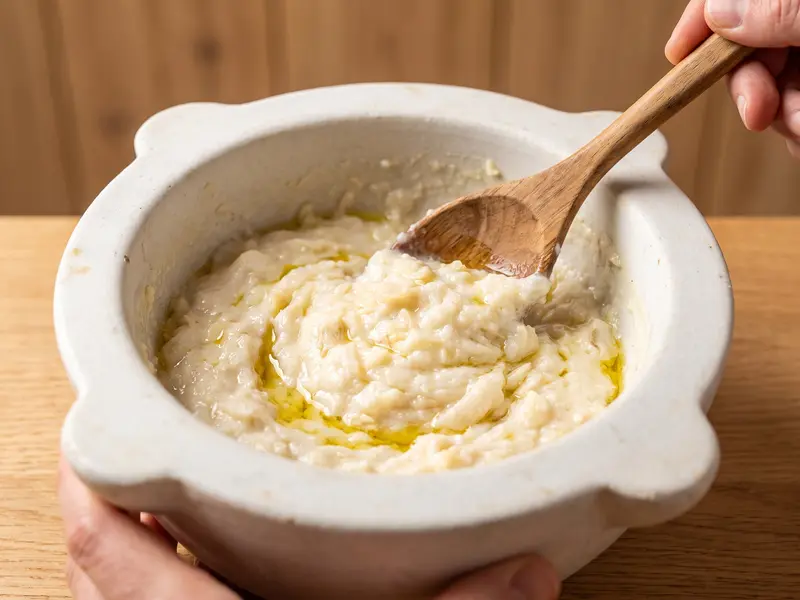
- Build the emulsion (traditional hand method). For the authentic Nîmes technique, place the warm flaked cod in a large mortar or heavy bowl and beat with a sturdy wooden spoon for 5 minutes until broken down. Add the garlic paste. Now, with one hand drizzling warm oil and warm milk alternately in tiny streams and the other hand beating constantly, work the brandade for 15-20 minutes. This is the 'brandar' — vigorous shaking — that gave the dish its name. The result has slightly more texture and is closer to the original 18th-century version.
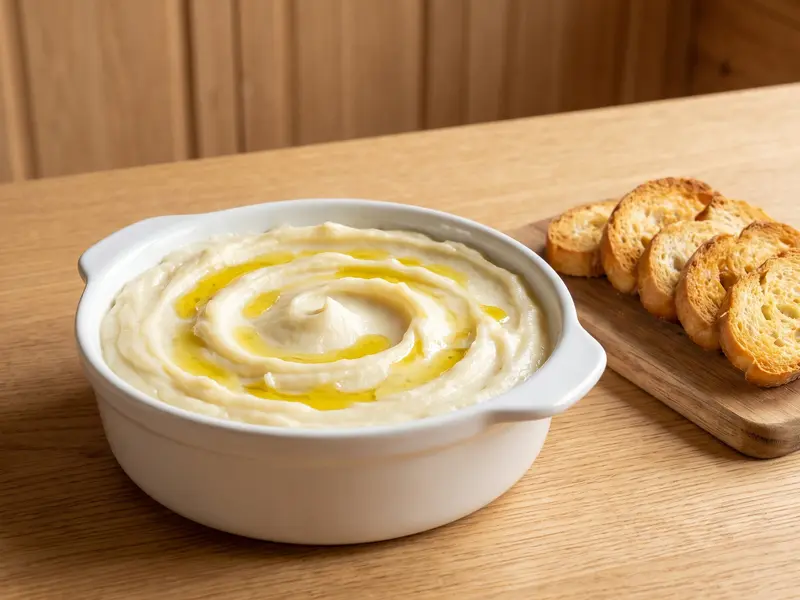
- Season and finish. Whisk in 1 tablespoon of fresh lemon juice and a pinch of white pepper. Taste — salt is rarely needed, the cod retains some salinity. If the mixture is too thick, add a splash more warm milk; if too loose, more flaked cod or warm olive oil. Stir in the chopped parsley at the very end (heat fades parsley flavour quickly). The finished brandade is glossy, pale ivory, with a faint creamy gold tint from the olive oil, fluffy like whipped potato.
- Serve warm, room temperature, or gratinate. Best at room temperature with toasted baguette croutons (sliced 1 cm thick, brushed with olive oil, baked at 180°C for 10 minutes, optionally rubbed with a raw garlic clove). For a gratin: transfer the brandade to a small ceramic dish, top with panko breadcrumbs and a drizzle of olive oil, broil at 200°C for 8-10 minutes until golden. For a dip: room temperature with crudités (carrot, celery, fennel, cucumber). Keeps 3-4 days in the fridge in an airtight container, with flavour deepening overnight as the garlic and cod integrate.
FAQ
Brandade de morue is a southern French (specifically Nîmoise) classic from the late 18th century: an emulsion-style spread of desalted salt cod, olive oil, milk, and garlic. The name comes from the Provençal verb 'brandar' — to stir, to shake — reflecting the traditional technique of breaking the cod into fibres and beating it with oil and milk into a creamy paste, like making aioli or mayonnaise. Two main schools exist. Brandade de Nîmes (the classic, original, no potato): only cod + olive oil + milk + garlic. This is a pure emulsion, like a gourmet aioli with cod. Texture is delicate, light, with intense cod flavour. This is how Charles Durand made it when he published the recipe in 1830, and how Nîmes restaurants still serve it. Brandade Parmentier (modern, Parisian, with potato): adds mashed boiled potato roughly 1:1 to the cod. Texture is denser, more filling, milder in flavour — potato softens both the salinity and the intensity. Often baked into a gratin dish with breadcrumbs and cheese. This is the 'family' version, available in any French bistro. Which to choose: for authenticity and aperitif — Nîmes; for family dinner and winter comfort food — Parisian. A third intermediate version (a good compromise): 500 g cod + 200 g potato + milk + oil — balanced authenticity and accessibility. Baccalà mantecato (Venetian) skips both potato and milk, a pure cod-and-oil emulsion like Nîmes but with more garlic.
Desalting is the most critical step in making brandade, and most failures happen here. Salt cod (bacalao, baccalà, morue salée) comes from the shop with 18-25% salt content — that is enormous, and the fish is dry and stiff like cardboard. Without desalting, it is inedible. Basic rule: thickness determines time. Thick loin (3-4 cm) needs 48 hours; medium pieces 36 hours; thin pieces (1-2 cm) 24 hours. Process: 1) Rinse the cod under cold running water for 5 minutes to wash away surface salt. 2) Place in a large bowl and cover with cold water so the fish is fully submerged (at least 4× the volume of fish in water). 3) Refrigerate, covered with cling film. 4) Change the water every 6-8 hours (three to four times daily) — this is critical, without changes the salt does not leave. Doneness test: after 24 hours (thin) or 48 hours (thick), cut a small piece, taste raw with the tip of your tongue. Should be pleasantly salty, like well-seasoned fish, not aggressive. If still too salty — continue 12 more hours. If already bland — stop, otherwise the flavour will be flat. Alternative test: simmer a 30-second piece in water and taste — if salt is balanced, you are done. Pre-soaked: many Mediterranean specialty shops sell 'bacalao demolhado' — already soaked. This is a good shortcut, but test a piece — sometimes it is undersalted. Mistakes: soaking in warm water (bacterial risk), skipping water changes (salt does not leave), over-soaking (flat flavour). Substitution: fresh cod will not work, the texture and flavour will be entirely different. Without salt cod, make a different dish.
Brandade is an emulsion (like mayonnaise or aioli) and follows emulsion rules with one specificity: the emulsifier is not egg yolk but cod collagen. Quality brandade requires cod with high collagen content (thick loin, NOT tail or dry pieces — those have little collagen and the emulsion will not work). Main rules: 1) EVERYTHING WARM. Cod warm (just poached and flaked), oil warmed to about 50°C (not hot!), milk scalded to about 70°C. Cold ingredients do not emulsify, collagen does not activate. 2) SLOWLY. Add the warm oil in a thin stream, alternating with milk, while constantly working the mixture. Never pour everything at once. The principle is the same as mayonnaise: the first 60-90 seconds are literally a teaspoon at a time, then a thin stream. 3) BY HAND OR FOOD PROCESSOR. The authentic method uses a mortar with a heavy wooden spoon for 15-20 minutes (hence 'brandar' — to shake). The modern fast method is a food processor — but do not over-run: 3-5 minutes maximum, otherwise the texture becomes rubbery and gluey (like potatoes mashed too long with a mixer; the protein and starch slip out and become sticky). 4) RATIOS: per 500 g of salt cod (weighed before soaking) — 150-200 ml of olive oil + 200-250 ml of milk. If too thin, add more flaked cod; if too dry, more warm oil. If the emulsion breaks (oil separates, liquid pools at the bottom): take 1 tbsp of hot cream or warm milk in a separate bowl, add a spoonful of the broken brandade and beat vigorously to recover; then add the rest of the brandade in spoonfuls, beating constantly. This is an emulsion 'reset'. Mistakes: cold ingredients, adding oil too fast, over-running the food processor, using thin tail cod (low collagen).
Brandade keeps in an airtight container in the fridge for 3-4 days — an excellent window thanks to the cod being already preserved with salt and the oil acting as a natural preservative. Storage: airtight glass or food-grade plastic container, surface optionally covered with a thin layer of olive oil (creates a protective seal against oxidation), always a clean spoon when serving. Texture when chilled: the brandade thickens significantly and may become almost firm because of the cooled oil and collagen — this is normal and reversible. Freezing is possible for 1-2 months but the texture after thawing will be slightly grainy (the emulsion partially breaks, collagen crystallizes). If freezing, make tight portions in small containers (100-150 g each), thaw in the fridge for 12 hours (never microwave or at room temperature). After thawing, mix with 1-2 tsp of warm olive oil to recover the emulsion. Reheating: on the lowest possible heat in a small saucepan, or in a water bath (more forgiving), stirring every 30 seconds. Can be warmed in a 100°C oven for 10 minutes, covered with foil. Never reheat in a 100% microwave — creates hot spots, the emulsion splits. If the sauce splits during reheating, add 1-2 tsp of warm oil or cream and stir quickly — usually recovers. Brandade gratinée (baked): the most common serving format — transfer to a ceramic gratin dish, top with breadcrumbs and droplets of olive oil, broil at 200°C for 8-10 minutes until golden. Often eaten as a hot main, not appetizer. For a dinner party: make brandade a day ahead, store in the fridge; 30-60 minutes before serving take it out and let warm to room temperature; for the gratin version put under the broiler 10 minutes before serving.
Brandade is an extraordinarily flexible base — a classic aperitif or starter in southern France, but also a hot main course depending on presentation. Classic aperitif service (cold or warm): in a shallow ceramic bowl, sprinkled with freshly chopped parsley, with olive oil drizzled on top and bright lemon wedges. Served with toasted croutons (rustic baguette sliced 1 cm thick, fried in olive oil until golden, optionally rubbed with a raw garlic clove), crostini, breadsticks, or raw vegetables for dipping: carrot sticks, celery, cucumber, fennel — especially good for summer brandade. Gratin dish service (baked): brandade in a ceramic vessel, topped with panko breadcrumbs (or with grated Gruyère for the cheese version), baked at 200°C for 8-10 minutes until golden. Hot main course with crispy crust and creamy centre — the classic Nîmes dinner, especially in cold months. Served with green salad and crusty bread. Modern applications: filling for ravioli or agnolotti (cod and potato work well inside); sandwich spread (crouton + brandade + arugula + lemon); part of an aperitif board with terrine, olives, and rillettes; filling for stuffed artichokes or zucchini; salad base (over greens with anchovies and croutons). What to serve alongside: green salad with mustard vinaigrette (contrast to the richness); olive verte de Nîmes (green olives, local); anchovies (salty contrast); crusty baguette or country bread; cornichons or caper berries (acidic contrast). Do not pair with: red meat (overpowers); sweet dishes; Italian pasta (combination too heavy). Wine: dry white — Côtes du Rhône blanc (local classic for Nîmes), Picpoul de Pinet (Languedoc), Chablis, Albariño; rosé — Provence rosé (Bandol, Côtes de Provence). Cold and dry. Red wine does NOT work — too many tannins against the rich texture. Champagne is excellent with cold aperitif service. For a richer starter, put a spoonful of aioli on the side.
Rate this
Recipes by email
One letter a week: a recipe picked for your taste, plus whatever is new on the site. Unsubscribe in one click.
Welcome gift: Sergei's cookbook (e-book).
By subscribing you agree to the privacy policy.
Tell us what you like to cook (30 seconds) →Keep browsing
More dishes from the French archive — picked by overlap with what you're cooking now.


Join the conversation
Comments
No comments yet — be the first!