

Cepelinai (Lithuanian Potato Dumplings)
Traditional Lithuanian dumplings shaped like zeppelins — a mixture of raw grated and mashed potato forms a dough that is filled with seasoned meat, then boiled and served with sour cream and crispy pork cracklings.
Ingredients
- 1000 gpotatoes
- 3 tbsppotato starch
- 300 gground meat pork beef
- 1 piecesmall onion
- 100 gsour cream
- 100 gpork cracklings or fried onion
Method
- Divide 1 kg potatoes: boil 250 g, mash and cool. Grate the remaining 750 g raw on a fine grater.
- Transfer grated potato to a clean cloth and squeeze out ALL liquid into a bowl. Do NOT discard the liquid — let it stand 10–15 minutes so the starch settles to the bottom.
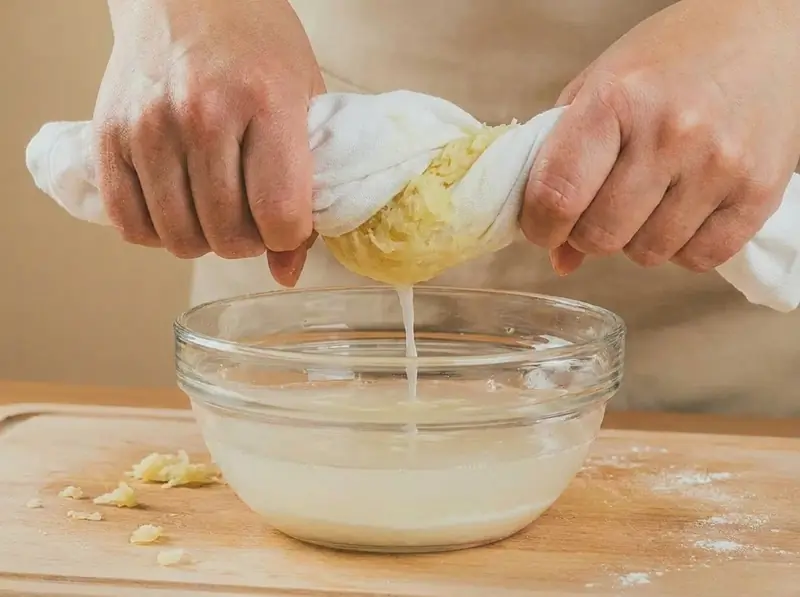
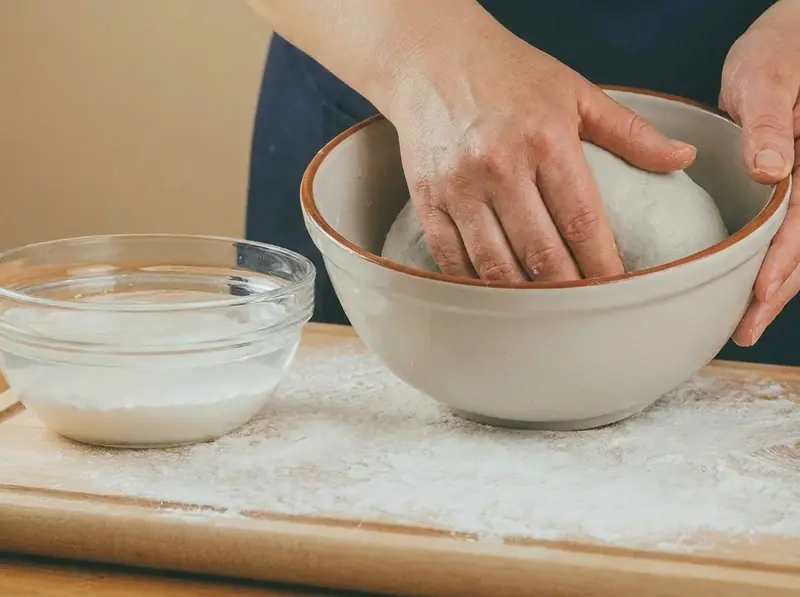
- Carefully pour off the water but keep the settled starch. Combine the starch, squeezed raw potato and mashed potato in a large bowl. Add 3 tbsp extra starch and a pinch of salt. Knead until smooth and pliable.
- Mix ground meat with finely diced onion, salt, pepper and 2–3 tbsp cold water or cream so the filling is juicy.
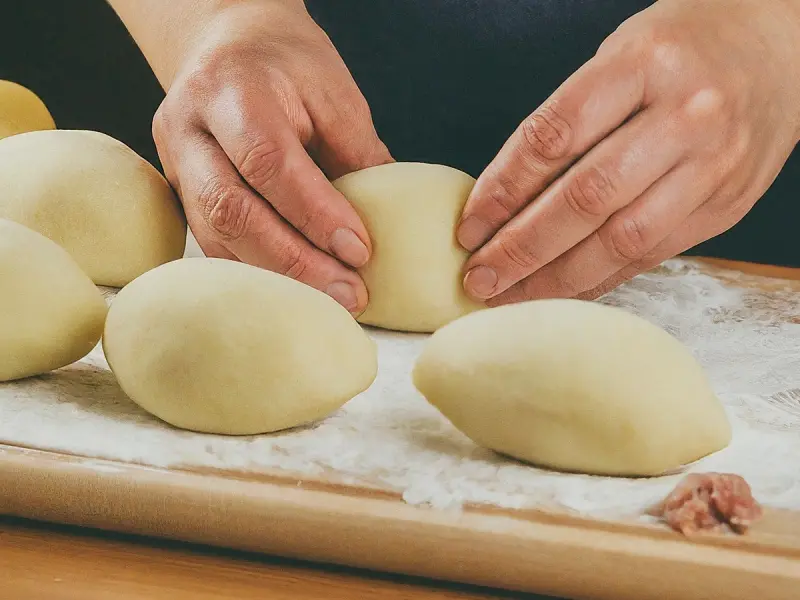
- Take a fist-sized portion of dough and flatten to a 1 cm patty on your palm. Place 2 tbsp (about 40 g) filling in the center. Seal edges tightly and roll between your palms into a large oval pointed at both ends — like a zeppelin. Test one small dumpling first: boil 5 min; if it holds together the dough is ready.
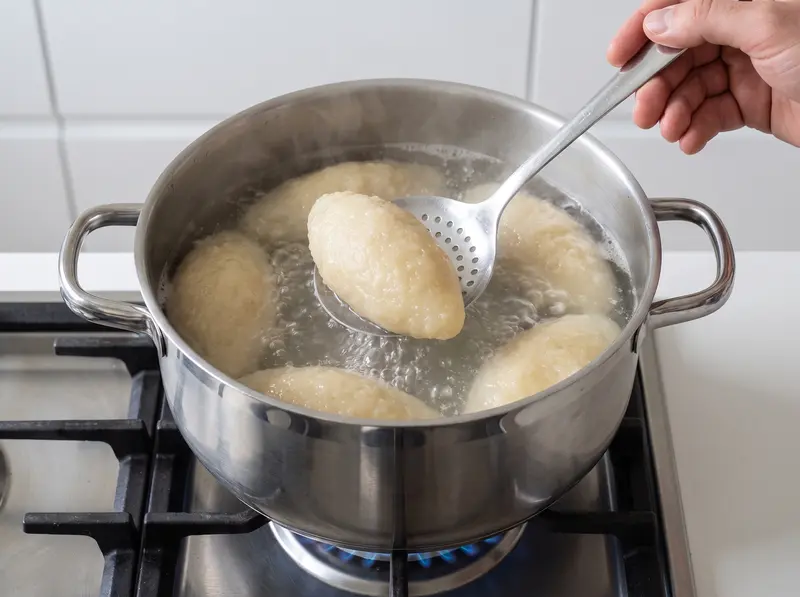
- Drop cepelinai carefully into a large pot of salted boiling water in small batches. Simmer on low heat 15–20 minutes after they float. Serve hot topped with sour cream and cracklings or fried onion.
FAQ
Cepelinai falling apart is almost always caused by too much moisture in the potato dough or insufficient natural starch to bind it. After grating raw potatoes, wring out as much liquid as possible using a clean cloth or fine sieve — this step is critical. Let the squeezed-out liquid settle for 5 minutes, then carefully pour off the water and scrape the white starch that settled at the bottom back into the grated potato. This recovered starch is the primary binder. The dough should feel firm and slightly tacky, not wet. Another cause of falling apart is adding dumplings to water that isn't at a full boil — always drop them into vigorously boiling salted water, then immediately reduce to a gentle simmer.
Use floury, high-starch potato varieties — in Europe these include Russet, King Edward, or Maris Piper (anything labelled 'baking potato' or 'floury'). Waxy salad potatoes don't work — too much moisture and not enough starch, resulting in sticky dough that falls apart. The squeezing step removes excess water so the dough isn't too wet to shape; collecting the white potato starch that settles from the squeezed liquid is crucial — that natural starch is the 'glue' that holds the dumplings together during the long cooking time. Never skip collecting the starch that settles at the bottom of the bowl.
Cooked cepelinai keep in the fridge for up to 2 days. To reheat without turning them rubbery, skip re-boiling — instead pan-fry in a little butter or bacon fat over medium heat for 3–4 minutes per side until golden and heated through. This creates a lightly crispy crust that actually improves the texture. You can also steam them for 8–10 minutes. A microwave works in a pinch but can make the texture uneven and slightly gummy — if using one, cover with a damp paper towel and heat in 30-second intervals. Raw shaped cepelinai can be frozen on a tray first, then bagged for up to 1 month; cook from frozen in boiling water for about 30–35 minutes.
Yes — the potato shell works with many fillings. The most traditional vegetarian substitute is sautéed mushrooms (300–400 g cremini or mixed wild mushrooms, finely chopped and fried until all moisture evaporates) mixed with caramelized onion. Cottage cheese or farmer's cheese (tvorog) mixed with fried onion is another classic Lithuanian meatless version. Lentil filling also works well — cook 200 g green lentils until tender, drain thoroughly, then mix with fried onion, garlic, salt, pepper and a pinch of smoked paprika for depth. Regardless of filling, keep it on the drier side — too much moisture will make the dough wet and cause splitting during cooking. If you'd rather try a different dumpling altogether, Russian pelmeni use a flour-based dough, or keep the potato base without the wrapping and make potato pancakes instead.
Runny cepelinai dough is caused by not squeezing enough water from the grated raw potatoes — the most common mistake. The fix is to squeeze again: transfer the dough to a clean cloth and wring it out one more time. If it's still too wet, add 1–2 tablespoons of potato starch or regular cornstarch and mix well, then let the dough rest for 5 minutes to allow the starch to absorb moisture. A small amount of flour (1–2 tablespoons) can help as a last resort but changes the texture. Also check the potato variety — waxy potatoes contain much more water than floury ones. Very fresh-harvest potatoes tend to be wetter; if you can, use potatoes that have been stored for a few months.
Rate this
Recipes by email
One letter a week: a recipe picked for your taste, plus whatever is new on the site. Unsubscribe in one click.
Welcome gift: Sergei's cookbook (e-book).
By subscribing you agree to the privacy policy.
Tell us what you like to cook (30 seconds) →Keep browsing
More dishes from the Lithuanian archive — picked by overlap with what you're cooking now.


Join the conversation
Comments (1)
Rest the beef for at least 5 minutes after cooking cepelinai. Cutting immediately lets all those precious juices run onto the board. A loose foil tent keeps it warm without steaming the crust.