
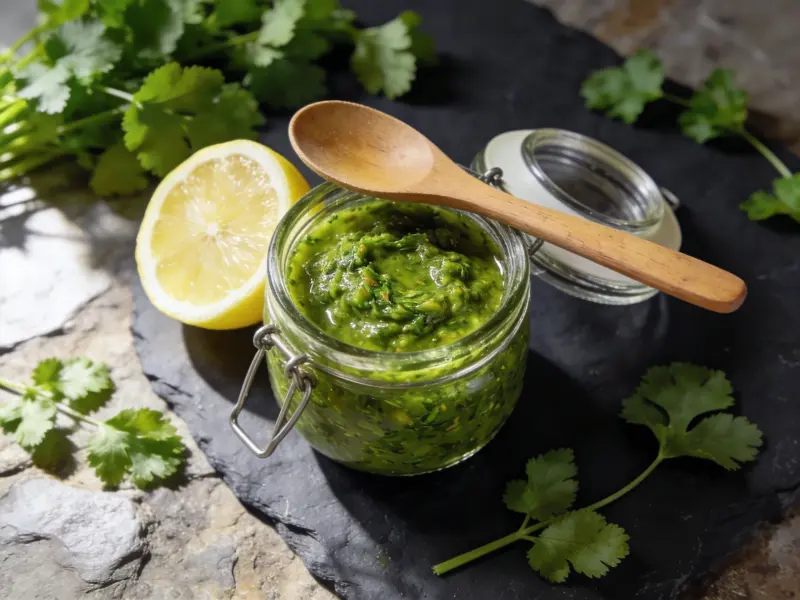
Chermoula
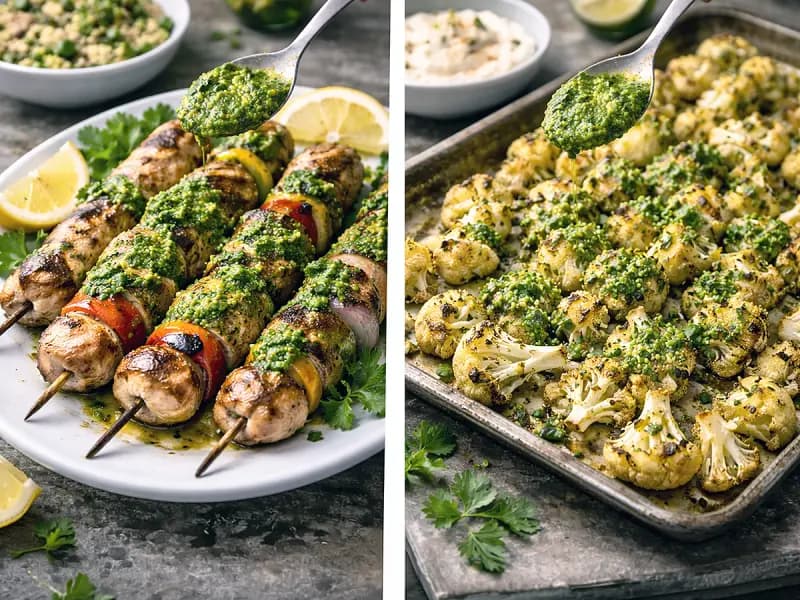
Chermoula is Morocco's answer to chimichurri — a herb sauce built on cilantro and parsley, sharpened with lemon, warmed by cumin and paprika, cut through with raw garlic. It's used three ways in Moroccan cooking: as a marinade before cooking, a sauce spooned over at the end, and a condiment on the side. The fish version, where whole fish are stuffed and grilled with chermoula, is the most famous application. But it works equally well on chicken thighs, roasted cauliflower, fried eggs, grilled bread, or anything else that could use a hit of brightness. Make it in a food processor for speed, or by hand with a knife if you want more texture.
Ingredients
- 40 gfresh cilantro
- 30 gfresh flat-leaf parsley
- 3 garlic cloves
- 3 tbspfresh lemon juice
- 1 tsplemon zest
- 80 mlextra-virgin olive oil
- 1.5 tspground cumin
- 1 tspsweet paprika
- 0.5 tspground coriander
- 0.5 tspfine salt
- 0.25 tspcayenne or red pepper flakes
- 0.5 tsppreserved lemon rind
Method
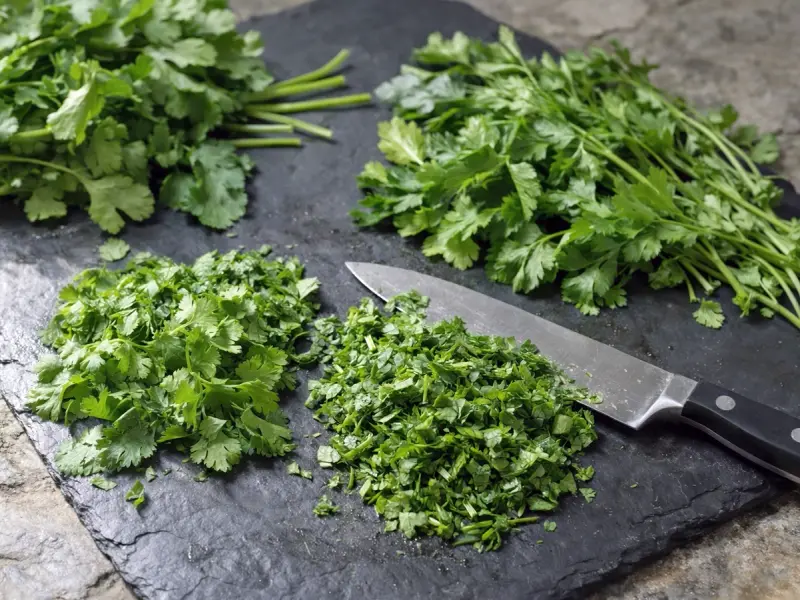
- Prep the herbs. Wash the cilantro and parsley well and spin or pat dry. Remove the thick lower stems — everything above the lower third of the bunch is usable, including the thin stems, which have good flavor. Rough-chop before adding to the food processor; it helps the machine work evenly.
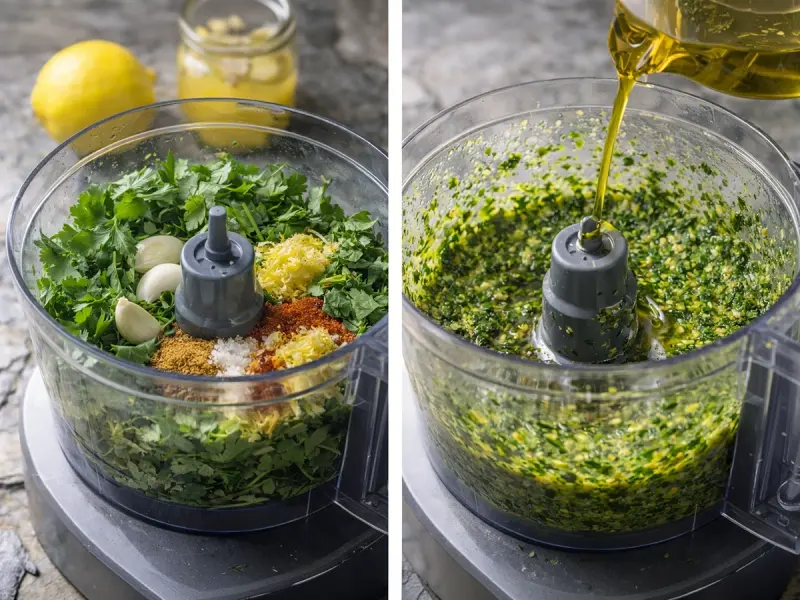
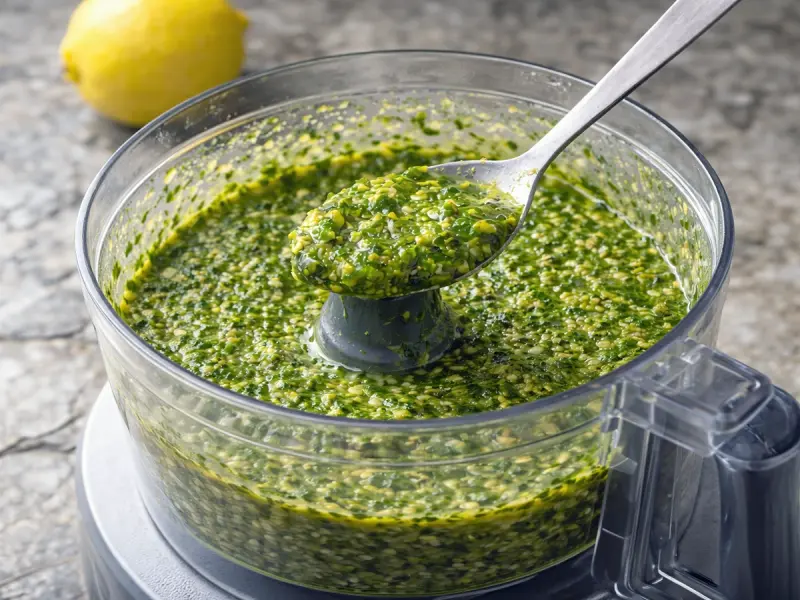
- Blend. Put the cilantro, parsley, garlic, lemon juice, lemon zest, cumin, paprika, coriander, salt, cayenne, and preserved lemon if using into a food processor. Pulse 6 to 8 times to break everything down. With the motor running, pour the olive oil through the feed tube in a steady stream. Blend until the sauce is uniformly chopped and cohesive — 30 to 45 seconds total. Stop before it becomes a smooth paste. Chermoula should have visible texture, not be completely smooth.
- Taste and adjust. The balance to aim for: bright from the lemon, warm from the cumin, herby and slightly bitter from the raw garlic, with a background heat from the cayenne. If it's flat, add more lemon juice or salt. If the herb flavor is too aggressive, add a little more olive oil. If you want more heat, more cayenne. The preserved lemon, if you used it, adds a fermented, salty depth that lemon juice alone doesn't produce.
- Use immediately or store. Chermoula is at its best within the first few hours when the herbs are vivid and the garlic is sharp. As a marinade: coat meat or fish generously and leave for at least 30 minutes, up to 8 hours in the fridge. As a sauce: spoon over grilled fish, chicken, or roasted vegetables just before serving. Reserve a portion before using the rest as a marinade — never use marinade that's been in contact with raw protein as a finishing sauce.
- Storage: Pour into a glass jar, press a layer of olive oil over the surface to limit oxidation, and seal. Keeps in the refrigerator for up to 5 days. The herbs will lose some of their bright green color after day one, which is normal — the flavor stays. Chermoula can be frozen in ice cube trays for up to 3 months; freeze individual portions and add directly to soups, stews, or sauces from frozen.
FAQ
Both are herb-based sauces built on parsley, raw garlic, olive oil, and an acid. The differences are in origin, spices, and character. Chimichurri is Argentinian, uses red wine vinegar as the acid, and typically includes oregano. Chermoula is Moroccan, uses lemon juice (or preserved lemon) as the acid, and is warmed by North African spices — cumin, coriander, paprika — which chimichurri doesn't contain. Chermoula also uses cilantro as a primary herb rather than a supporting one. The result is earthy and aromatic where chimichurri is sharp and herbal.
Preserved lemon is whole lemon fermented in salt for several weeks. The rind becomes soft and intensely flavoured — salty, sour, and complex in a way that fresh lemon isn't. It's used in Moroccan cooking as both an ingredient and a condiment. In chermoula, only the rind is used; the pulp is discarded. You can skip it — the recipe works fine without it. If you want to approximate the effect, use fresh lemon juice plus a small pinch of extra salt. Preserved lemons are sold in jars in most Middle Eastern grocery stores and many supermarkets.
For fish: 30 minutes to 2 hours maximum. The lemon juice in chermoula is acidic enough to begin denaturing the proteins in delicate fish after a couple of hours, which changes the texture. For chicken: 2 to 8 hours in the fridge. For lamb or beef: up to 12 hours. The longer marination on tougher meats allows the aromatics time to penetrate. Don't marinate at room temperature for longer than 30 minutes regardless of protein.
Yes. Red chermoula is a distinct version, common in Moroccan fish tagines, that includes tomato, red pepper, or harissa alongside the herbs and spices. The basic approach: add 1 roasted red pepper (peeled and seeded), 1 tablespoon of harissa, and a pinch of saffron to the standard recipe. Reduce the amount of cayenne since the harissa adds heat. The result is richer, deeper, and more complex than the green version — less chimichurri-adjacent, more distinctly Moroccan.
The traditional use is fish — whole fish stuffed and grilled, or fillets marinated and pan-fried. Beyond that: chicken thighs (marinate, then roast or grill), lamb chops, prawns, roasted cauliflower or carrots, fried eggs, labne, flatbread, couscous. It also works well stirred into chickpeas with a squeeze of extra lemon, or used as a dressing for a grain salad. Think of it as a herb sauce that goes anywhere a vinaigrette or pesto might go, but with a North African spice profile instead.
Keep browsing
More dishes from the Moroccan archive — picked by overlap with what you're cooking now.
Recipes by email
One letter a week: a recipe picked for your taste, plus whatever is new on the site. Unsubscribe in one click.
Welcome gift: Sergei's cookbook (e-book).
By subscribing you agree to the privacy policy.
Tell us what you like to cook (30 seconds) →
Join the conversation
Comments (1)
第一次做摩洛哥的酱料,味道很特别。香菜和孜然的搭配很好。可以配烤鱼也可以配鸡肉