

Hollandaise Sauce
A warm, buttery emulsion of egg yolks, clarified butter, and lemon juice whisked over gentle heat until it holds its own weight on a spoon. Hollandaise is one of the five French mother sauces, and its reputation for being difficult is vastly overblown — the only real rule is keep the heat low. I make this every weekend for eggs Benedict and it takes me about twelve minutes from cold butter to finished sauce.
Ingredients
- 3 egg yolks
- 150 gunsalted butter
- 1 tbsplemon juice
- 1 tbspcold water
- pinchcayenne pepper
- to tastesalt
Method
- Melt the butter in a small saucepan over low heat. Do not let it brown. Once melted, set it aside — you want it warm but not hot, around 55–60°C. If it's too hot, the eggs will scramble on contact.
- Set up a double boiler: place a heatproof bowl over a saucepan of barely simmering water. The bottom of the bowl should not touch the water. Add egg yolks and cold water to the bowl.
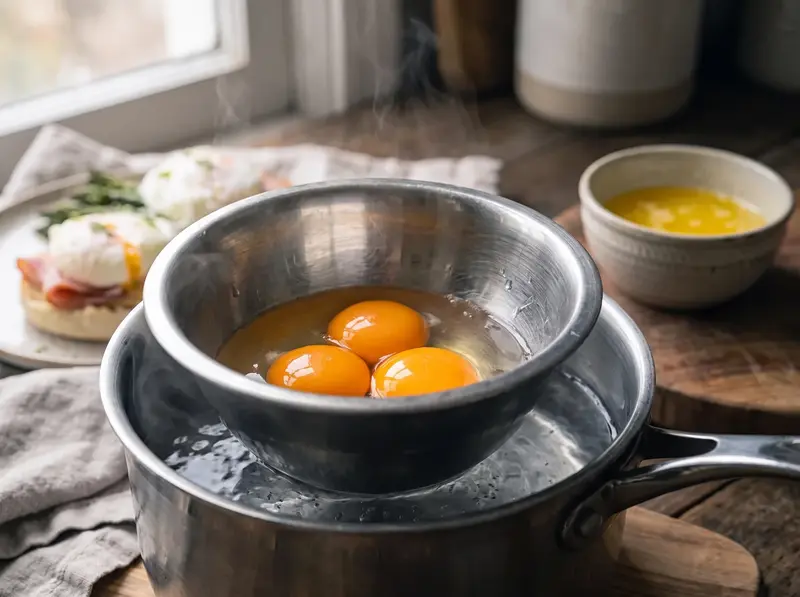
- Whisk the yolks and water vigorously for about 2 minutes until the mixture turns pale, thick, and roughly doubles in volume. You should see the whisk leave trails that hold for a second. If the eggs start to look like they're cooking on the edges, lift the bowl off the water immediately.
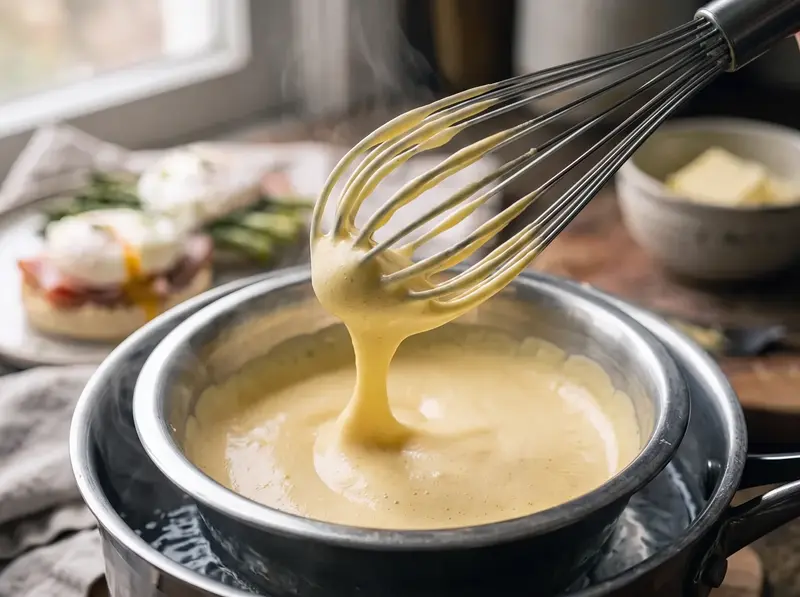
- Remove the bowl from heat. Begin adding the melted butter very slowly — start with a thin drizzle, whisking constantly. Once the emulsion starts to hold (after about a third of the butter is in), you can add the butter in a slightly thicker stream. Keep whisking. If the sauce looks too thick at any point, add a few drops of warm water.
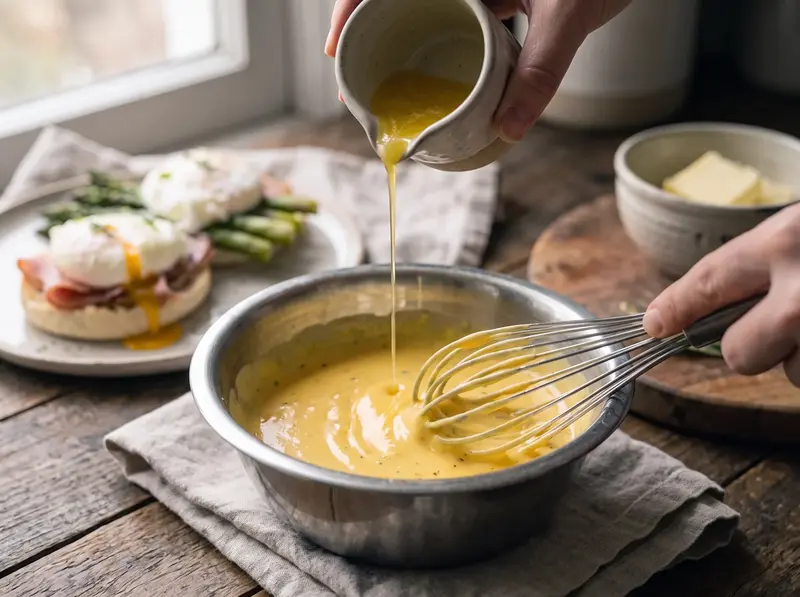
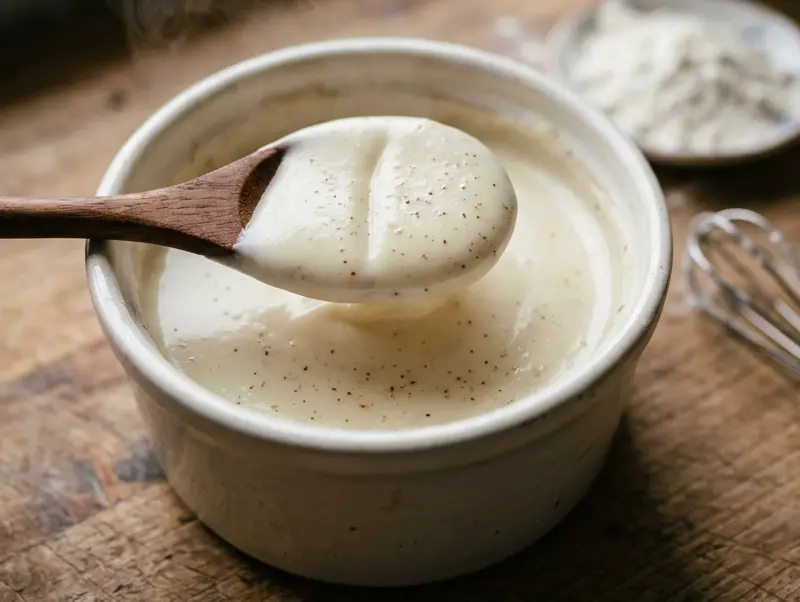
- Once all the butter is incorporated, whisk in the lemon juice, cayenne, and salt. Taste and adjust. The sauce should be thick enough to coat the back of a spoon and hold a line when you drag your finger through it. Serve immediately — hollandaise does not reheat well.
FAQ
Hollandaise breaks when the emulsion fails, almost always from too much heat or adding butter too fast. The yolks cook instead of emulsifying and the fat separates. To rescue it: place a fresh egg yolk in a clean bowl with a teaspoon of warm water. Whisk until foamy, then drizzle the broken sauce very slowly into the new yolk while whisking constantly. The fresh yolk re-establishes the emulsion. This works about 95% of the time. If the sauce is simply too thick, whisk in a few drops of warm water.
Hollandaise is best served immediately, but you can hold it for up to an hour. Pour it into a thermos preheated with hot water — the insulation keeps it at a safe temperature without cooking it further. Alternatively, set the bowl over a pot of warm (not simmering) water and whisk occasionally. Never put hollandaise in the microwave. If it thickens too much while holding, whisk in a few drops of warm water to loosen it.
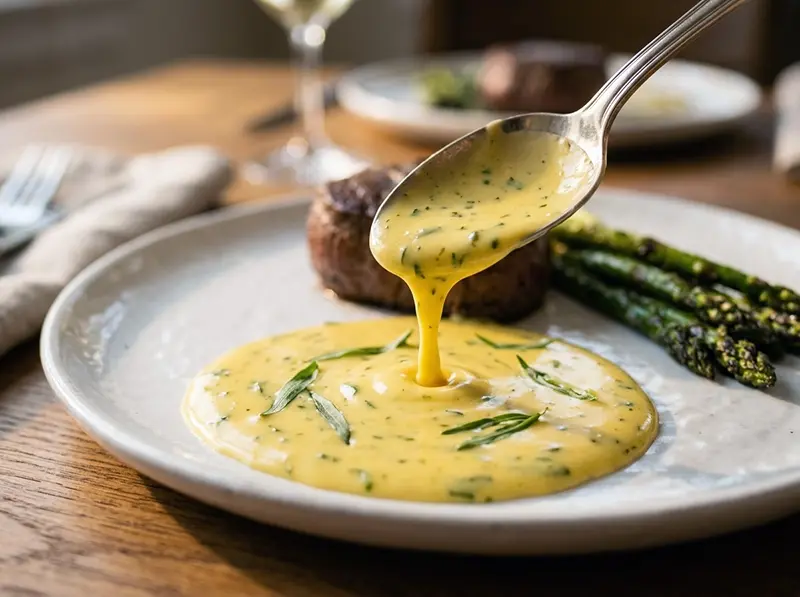
Both are warm butter emulsions with egg yolks, but the flavoring is completely different. Hollandaise uses lemon juice and cayenne — it's bright and buttery. Béarnaise replaces the lemon with a reduction of white wine vinegar, shallots, and tarragon — it's more herbaceous and tangy. Béarnaise is traditionally served with steak, hollandaise with eggs Benedict, asparagus, or fish. The technique for making both is identical; only the acid and aromatics change.
In a properly made hollandaise, the egg yolks reach 65–70°C during whisking over the double boiler, which is enough to pasteurize them and make them safe. The key is whisking continuously so the heat distributes evenly. If you're concerned, use pasteurized eggs, which are sold in most supermarkets. Pregnant women and immunocompromised individuals may prefer pasteurized eggs as an extra precaution.
Yes. The immersion blender method is nearly foolproof: put the egg yolks, lemon juice, cayenne, and salt in a tall narrow container. Melt the butter until it's bubbling hot (about 85°C). Turn on the immersion blender and pour the hot butter in a thin, steady stream. The heat from the butter cooks the yolks while the blender emulsifies everything. Takes about 90 seconds and produces a perfectly smooth sauce. The only drawback is you need the butter very hot, not just warm.
Rate this
Recipes by email
One letter a week: a recipe picked for your taste, plus whatever is new on the site. Unsubscribe in one click.
Welcome gift: Sergei's cookbook (e-book).
By subscribing you agree to the privacy policy.
Tell us what you like to cook (30 seconds) →Keep browsing
More dishes from the French archive — picked by overlap with what you're cooking now.
Join the conversation
Comments (2)
Ratée 2 fois puis reussi. L'erreur c'etait de mettre le beurre trop vite. Faut y aller cuillère par cuillère sinon ça tranche direct
The egg yolks quality is the entire dish here. With so few ingredients, every component of this hollandaise sauce is exposed — there's absolutely nowhere for mediocre ingredients to hide.