

Iced Matcha Latte
Three ingredients and five minutes. Matcha whisked with a small amount of hot — not boiling — water, poured over ice and milk. The result depends almost entirely on the quality of the matcha powder: good ceremonial-grade matcha is sweet, grassy, and vivid green; cheap culinary-grade matcha is dull, bitter, and yellow-green. Buy the better one. The milk is a matter of preference — oat milk is naturally sweet and works well, whole dairy milk is richer, almond milk is thinner. There is no wrong answer.
Ingredients
- 2 tspceremonial-grade matcha powder
- 60 mlhot water
- 300 mlmilk of choice
- 1 tbsphoney, maple syrup, or simple syrup
- 1 pinchfine salt
- 2 cupice cubes
1 cup = 240 ml
Method
- Sift the matcha. Matcha clumps the moment it touches air — this is normal and not a sign of bad quality, but those clumps will not break down in water if you skip sifting. Push the matcha through a fine mesh strainer into a small bowl using the back of a spoon. This takes about 20 seconds and eliminates every lump before you start.
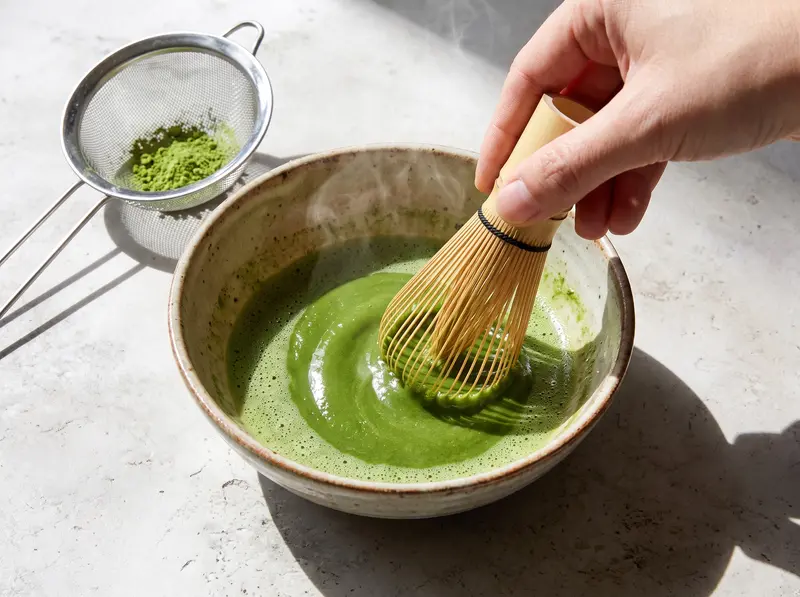
- Whisk the matcha with hot water. Pour the hot water (75–80°C — if you don't have a thermometer, boil water and let it sit for 3 minutes) over the sifted matcha. If you're sweetening the drink, add the sweetener and pinch of salt here too, so they dissolve in the hot liquid. Whisk using a bamboo chasen whisk or a small electric milk frother for 20–30 seconds in a rapid W or zigzag motion until the matcha is fully incorporated and the surface is lightly foamy. The mixture should look smooth and glossy, not grainy. If using a regular metal whisk, whisk harder and longer.
- Fill the glasses with ice. Divide the ice between two tall glasses. Fill each glass roughly three-quarters with cold milk — exact amounts are up to you. If you like a stronger matcha flavor, use less milk; if you want something milder and creamier, use more.
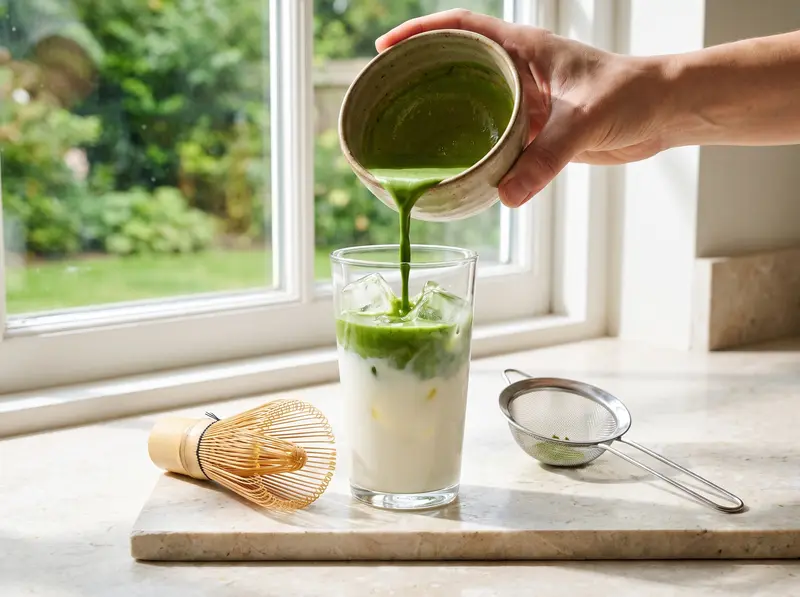
- Pour the matcha and serve. Pour the matcha mixture slowly and evenly over the ice and milk in each glass. It will form a brief green layer before mixing — stir gently or leave it for a moment if you want the visual effect. Taste and add more sweetener if needed. Serve immediately.
- Store and variations. This drink does not keep well — matcha oxidises and the ice melts. Make it fresh each time. For a stronger drink, increase the matcha to 1.5 teaspoons per serving. For a lavender variation, steep a pinch of culinary dried lavender in the hot water for 3 minutes before adding the matcha. For a vanilla version, add half a teaspoon of vanilla extract to the matcha mixture before whisking.
FAQ
Ceremonial grade comes from the first harvest of the year, using the youngest and most tender leaves from shaded plants. It is ground to a fine powder on granite stone mills, producing a bright, vivid green color and a naturally sweet, mellow flavor with no harshness. Culinary grade uses older leaves from later harvests, ground with less precision. The color is duller, the flavor more bitter, and the texture slightly coarser. Culinary grade is fine in baked goods, smoothies, and desserts where it's masked by sugar and other ingredients. For a drink where matcha is the main flavor, the difference is very noticeable.
You can, but the result is grainier. Matcha powder is a suspension, not a solution — the particles don't actually dissolve, they float in the liquid. Hot water helps disperse the powder more evenly and quickly. Cold or room-temperature water leaves more visible particles and tends to clump. If you want to avoid hot water entirely, use a small blender or jar and shake vigorously for at least 30 seconds. The froth will be different but the drink will be drinkable.
Oat milk: naturally sweet, creamy, and doesn't overpower the matcha. Most people find it the most balanced pairing. Whole dairy milk: richer and fattier, which gives the drink a silkier texture. Slightly more flavor interaction with the matcha, which some people love. Almond milk: thinner and slightly nutty. Works fine but the latte will be less creamy. Soy milk: close to dairy in protein content and texture, heats and froths well if you're making a hot version. Coconut milk from a carton (not a tin): light and slightly sweet. Coconut cream from a tin is too thick and heavy.
Roughly 70 mg of caffeine per teaspoon of matcha powder, making this recipe around 140 mg total for two servings — about 70 mg per glass. For comparison, a standard espresso shot is about 65 mg and a drip coffee is around 100–150 mg. Matcha also contains L-theanine, an amino acid that appears to moderate the effect of caffeine: most people report a more gradual onset and longer duration of alertness compared to coffee, with less of the spike-and-crash pattern. This is well-documented in the research on L-theanine, though individual responses vary.
Three likely causes. First, low-quality matcha: culinary or very cheap ceremonial grade. The solution is to buy better matcha. Second, water that was too hot: boiling water scorches matcha. Use 75–80°C water. Third, too much matcha relative to water and milk: if you've increased the matcha to intensify the flavor, try adding more milk or sweetener before reducing the matcha — the bitterness can be corrected that way. If none of those apply and the matcha is still bitter, it may be old: matcha oxidises quickly once opened and goes stale within two to three months. Store it sealed, in the fridge, away from light.
Rate this
Recipes by email
One letter a week: a recipe picked for your taste, plus whatever is new on the site. Unsubscribe in one click.
Welcome gift: Sergei's cookbook (e-book).
By subscribing you agree to the privacy policy.
Tell us what you like to cook (30 seconds) →Keep browsing
More dishes from the Japanese archive — picked by overlap with what you're cooking now.


Join the conversation
Comments (1)
Don't skip sifting the matcha. I know it seems unnecessary for 2 teaspoons of powder, but matcha clumps are real and they won't dissolve in cold milk. Also — water temperature matters more than brand. 80°C max. I burned through three expensive tins before I started using a thermometer.