
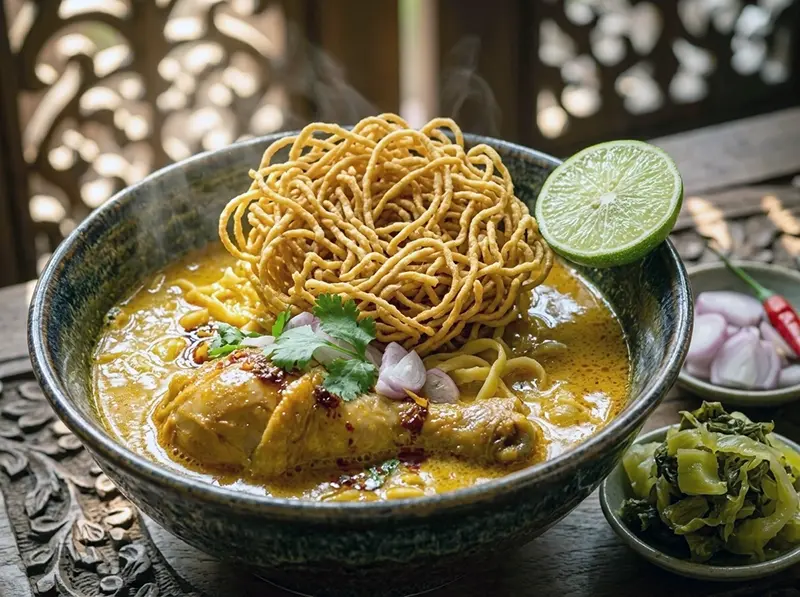
Khao Soi (Northern Thai Coconut Curry Noodle Soup)
Northern Thai egg noodle soup with a rich, golden coconut curry broth, braised chicken, and — the defining detail — a nest of deep-fried crispy noodles floating on top of the same egg noodles in the bowl. Khao soi (ข้าวซอย) is the signature dish of Chiang Mai and the Lanna region of Northern Thailand, though its origins trace the old trade routes connecting Thailand, Myanmar, and Yunnan. The broth is distinct from Bangkok-style curries: turmeric-forward, slightly spiced, coconut-rich, and not particularly hot. The condiments served alongside — pickled mustard greens, raw shallots, lime wedges, and chilli oil — are not optional. They complete the dish by adding sharp, sour, fresh notes that cut through the richness of the coconut broth. This is one of the great noodle soups of the world.
Ingredients
- 300 gfresh Chinese egg noodles
- 600 gbone-in chicken thighs or drumsticks
- 400 mlfull-fat coconut milk
- 400 mlchicken stock
- 3 tbspred or yellow Thai curry paste
- 1 tspground turmeric
- 1 tspground coriander
- 2 tbspfish sauce
- 1 tbsppalm sugar or light brown sugar
- 2 tbspneutral oil
- 4 shallots
- 3 garlic cloves
- 50 gpickled mustard greens, rinsed and roughly chopped
- 2 limes
- neutral oil for deep-frying the noodles (a 3–4 cm layer in a small pan)
Method
- Build the curry base. Heat the oil in a large heavy pot over medium heat. Add 2 of the shallots (sliced) and the minced garlic and fry 2 to 3 minutes until golden and fragrant. Add the curry paste, turmeric, and ground coriander. Stir and fry the paste in the oil for 2 minutes — this 'blooming' of the paste and spices in hot oil is what deepens the flavor and gives the broth its character. The paste should sizzle, darken slightly, and become very fragrant. Do not rush this step.
- Add coconut milk and build the broth. Pour in half of the coconut milk (200 ml) and stir into the paste. Cook for 2 minutes until the oil begins to separate and the surface looks glossy — this is the coconut milk splitting, which is correct and desirable. Add the remaining coconut milk, the chicken stock, fish sauce, and palm sugar. Stir to combine. Bring to a gentle simmer. Taste the broth: it should be savory, lightly sweet, subtly spiced, and golden from the turmeric.
- Braise the chicken. Add the chicken pieces to the simmering broth. Partially cover and simmer on medium-low heat for 30 to 35 minutes until the chicken is completely tender and starting to fall off the bone. The broth will deepen in color and flavor as the chicken braises. Skim any foam that rises in the first few minutes. Taste and adjust seasoning: more fish sauce for salt, more sugar for sweetness, more curry paste for spice and depth. The balance should be rich, rounded, and slightly complex.
- Fry the crispy noodles. This is the detail that makes khao soi khao soi. Take a small portion of the raw egg noodles (about 30 to 40 g per serving). Heat 3 to 4 cm of oil in a small pan to 175°C. Fry the noodles in small batches for 1 to 2 minutes until puffed, golden, and crispy. Drain on paper towels. They should be light and shatteringly crisp. These go on top of the finished bowls. Meanwhile, cook the remaining noodles in boiling water per the package and drain.
- Assemble and serve. Divide the cooked noodles between four deep bowls. Place one or two pieces of braised chicken in each bowl. Ladle the hot coconut broth generously over the noodles and chicken. Top each bowl with a nest of crispy fried noodles. Set out the condiments at the table: pickled mustard greens, raw sliced shallots, lime wedges, and chilli oil or dried chilli flakes. Each person assembles their own finishing touches — the lime especially should be squeezed generously. This contrast of rich broth, fresh acid, and crunch is the whole point of the dish.
FAQ
Several things set khao soi apart. It is a noodle soup rather than a rice-based curry — egg noodles are served submerged in the broth, not alongside it. It originates from Northern Thailand, not Bangkok, and reflects Burmese and Yunnan Chinese culinary influences from old trade routes. The broth is flavoured heavily with turmeric (giving it a golden color) and warm spices like coriander and sometimes black cardamom — different from the lemongrass-forward Bangkok curries. And crucially, it is served with crispy fried noodles on top, which is unique to this dish.
Yes, with a trade-off. Bone-in chicken pieces braised in the broth for 30 minutes make the broth noticeably richer and more complex — the bones and skin release gelatin and fat into the liquid. Pre-cooked or rotisserie chicken skips the braising and requires you to compensate with extra stock. If using cooked chicken: shred it and add it to the finished broth 5 minutes before serving just to warm through. Use a good chicken stock (not water) and add a splash of fish sauce and a teaspoon of extra curry paste to deepen the flavor.
Pickled mustard greens (pak dong in Thai, chai poh in Chinese) are a fermented vegetable condiment with a sour, slightly salty, crunchy texture. They provide the acidic counterpoint that cuts through the richness of the coconut broth — the same function that lime plays, but with more depth and texture. They are sold in cans or pouches at Asian supermarkets, often in the Thai or Chinese aisle. Rinse them briefly before serving to remove excess brine. If unavailable, a small amount of sauerkraut (drained) provides a similar fermented sour note, or simply increase the lime at the table.
Fresh or dried Chinese-style egg noodles — wheat noodles made with egg, similar to wonton noodles or Hong Kong-style noodles. The same noodle does double duty: most of it is boiled and placed in the bowl, while a small portion is deep-fried into crispy curls for the top. Ramen noodles (fresh or dried) are an excellent substitute and widely available. Rice noodles are not traditional — the wheat and egg in the noodle provide a slightly richer chew that works better with the coconut broth than rice noodles do.
Yes. Replace the chicken with firm or extra-firm tofu (pan-fried first until golden) or a mix of shiitake mushrooms and pumpkin or squash. Replace fish sauce with soy sauce (use a little less as it is saltier) or a vegan fish sauce made from seaweed and soy. Use vegetable stock instead of chicken stock. The broth flavor will be slightly lighter without the chicken bones and fat, but a good-quality vegetable stock and a generous hand with the curry paste and coconut milk will produce an excellent result.
Rate this
Recipes by email
One letter a week: a recipe picked for your taste, plus whatever is new on the site. Unsubscribe in one click.
Welcome gift: Sergei's cookbook (e-book).
By subscribing you agree to the privacy policy.
Tell us what you like to cook (30 seconds) →Keep browsing
More dishes from the Thai archive — picked by overlap with what you're cooking now.

Join the conversation
Comments (1)
Salt your cooking water generously for khao soi — about 1 tablespoon per liter. This is the only chance to season from inside. No amount of sauce compensates for bland, under-seasoned pasta or grains.