


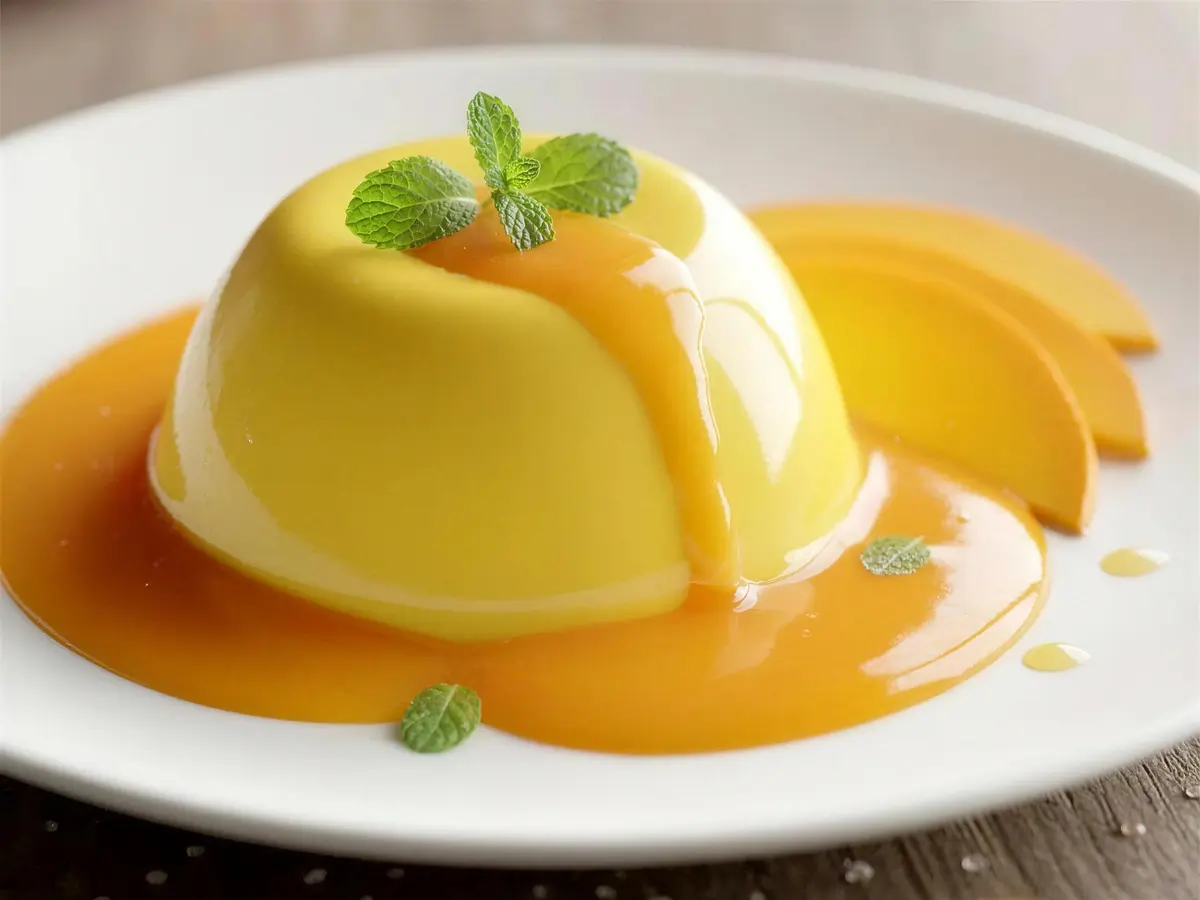
Mango Pudding (Hong Kong Style)
Mango pudding is a chilled mango-and-cream dessert set with gelatin, a Hong Kong dim sum classic that Thai cafés also serve, there with fragrant Nam Dok Mai mangoes. It needs 3–4 hours in the fridge to set smooth and gently sweet. Lemon juice keeps the color vivid. Garnish with a sprig of mint and serve cold.
Ingredients
- 400 gmango
- 150 mlheavy cream
- 50 mlmilk
- 2 tbspsugar
- 8 ggelatin
- 3 tbspcold water
- 1 tsplemon juice
- fresh mint for garnish
Method
- Sprinkle gelatin over cold water in a small bowl. Let stand 10–15 minutes to bloom. Heat gently in the microwave (10-second pulses) or over a bain-marie, stirring until fully dissolved. Do not boil. Cool to room temperature.
- Peel the mangoes (about 2, for 400 g of flesh), remove the flesh from the stone. Blend the flesh with lemon juice until completely smooth.
- In a bowl, combine mango purée, cream, milk, and sugar. Stir until sugar dissolves. Taste and adjust sweetness.
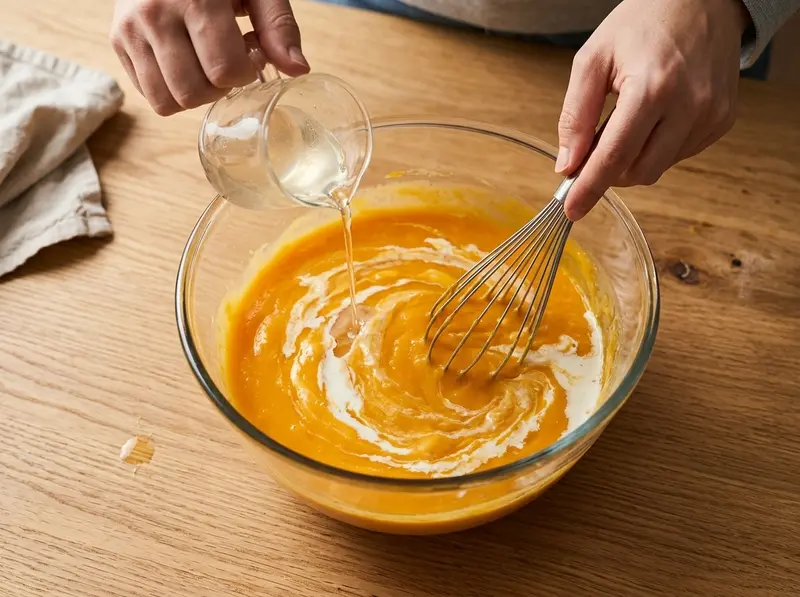
- Pour the cooled gelatin solution into the mango mixture, stirring constantly until evenly combined.
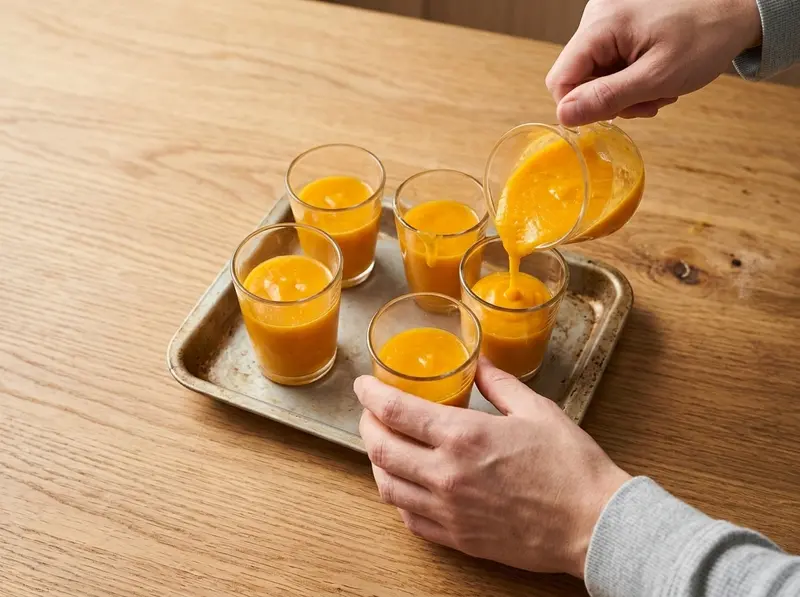
- Divide into serving moulds or glasses. Refrigerate at least 3–4 hours until fully set.
- Garnish with a mint leaf and serve cold.
Cooked it? Rate the recipe
FAQ
This recipe uses 8 g of powdered gelatin for about 650 g of mixture, roughly 6 g per 500 ml, which gives a soft, just-set pudding in glasses. Mango puddings are usually set with 6–8 g per 500 ml, so if you want to turn them out of moulds, go to the top of that range, about 10 g for this recipe. If the pudding did not set, the gelatin was probably overheated or not fully dissolved: warm it only until it turns clear, no hotter than 60 °C. Or it simply needed longer in the fridge: at least 3–4 hours, and overnight is better.
Yes — frozen mango works well: thaw, drain excess liquid, and puree. Canned mango also works but the flavor will be less vibrant. If using canned, reduce the sugar as it is already sweetened. Fresh ripe mango of the Ataulfo or Alphonso variety gives the most intense flavor and color.
Agar-agar works, but not at a 1:1 ratio: it sets at a much lower dose than gelatin. Start with agar powder at about 0.75% of the total weight, roughly 5 g for this recipe; at 2–3% the pudding turns gummy. Agar only sets after boiling, so simmer it in the milk and cream for 1–2 minutes, then whisk in the mango purée while the mixture is still warm, before it starts to set. The texture comes out firmer and less wobbly than with gelatin. The cream and milk are dairy, so for a fully vegan pudding replace them with plant-based cream and milk.
The color depends on the variety and ripeness of the mango. A pale pudding is a sign of underripe or low-quality mango. Use very ripe mango with bright orange flesh. A few drops of lemon juice help preserve the color vibrancy. Cream lightens the puree: if you want an intense color, reduce the cream and increase the mango puree.
In Hong Kong, where mango pudding comes from, it is served with a spoonful of evaporated or condensed milk poured over. A Thai way to finish it is a spoonful of coconut-flavoured whipped cream with mint and small cubes of fresh mango. For a festive presentation, pour the mixture into heart- or flower-shaped moulds.
Keep browsing
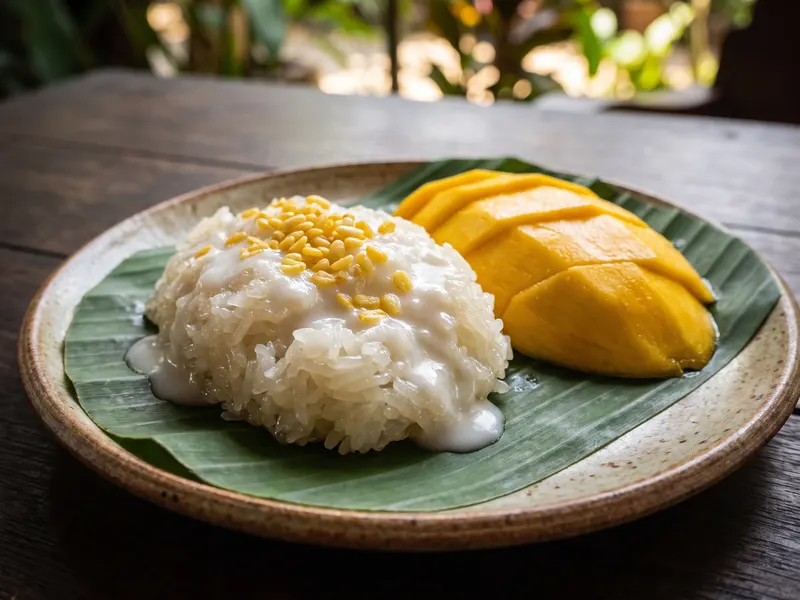
More dishes from the Thai archive — picked by overlap with what you're cooking now.





Recipes by email
One letter a week: a recipe picked for your taste, plus whatever is new on the site. You can stop the letters in one click.
Welcome gift: Sergei's cookbook (e-book).
By signing up for the newsletter you agree to the privacy policy.
Tell us what you like to cook (30 seconds) →
Join the conversation
Comments
No comments yet — be the first!