
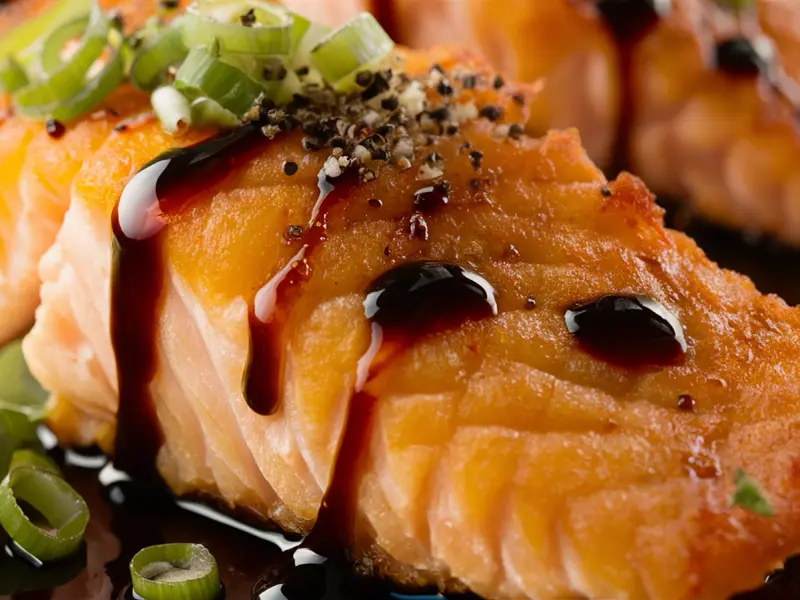
Thai-Style Salmon
Pan-seared salmon with a fragrant ginger-lime marinade and a glossy soy-honey glaze inspired by Thai flavors. The sweet-sour sauce enhances the richness of the fish without overpowering it.
Ingredients
- 600 gsalmon fillet with skin
- 1 tbspfresh ginger
- 1 piecegarlic clove
- 20 mllime juice
- 1 tbspsesame oil
- 50 mlsoy sauce
- 1 tbsphoney
- 1 tbspvegetable oil
- 1 tspsesame seeds
- 2 scallion stalks
- 1 pinchred chili flakes
Method
- Combine grated ginger, minced garlic, lime juice, a pinch of red chili flakes and sesame oil in a bowl to make the marinade.
- Place salmon in a non-metallic dish, pour marinade over and spread evenly. Marinate 15-20 minutes at room temperature.
- While fish marinates, stir soy sauce and honey together in a small bowl until the honey dissolves.
- Heat vegetable oil in a pan over medium heat. Pat salmon fillets dry with paper towels. Place skin-side down. Cook 4-5 minutes until skin is golden and crispy.
- Flip the fish. Pour soy-honey glaze over the top. Cook 2-3 more minutes, basting continuously with the sauce from the pan, until it thickens into a glossy glaze. Remove from heat when the center is just barely pink.
- Sprinkle with sesame seeds and sliced green onion before serving.
FAQ
Salmon skin sticks when the pan isn't hot enough or the fish is wet. Pat the fillet completely dry with paper towels before cooking — even slight moisture creates steam that prevents a crust from forming. Heat the pan over medium heat for 2–3 minutes until you see a faint wisp of smoke, then add oil and place the fish skin-side down. Press firmly with a spatula for the first 30 seconds to prevent the skin from curling. Don't move the fish — it will release naturally from the pan once the skin is properly seared.
15–20 minutes at room temperature is enough for this recipe. Lime juice starts denaturing protein after 20–30 minutes, making the fish mushy. If you want to marinate ahead, refrigerate the salmon and don't leave it in the marinade longer than 1 hour. For deeper flavor, increase the amount of ginger and soy sauce rather than extending the marinating time.
The closest substitute is fish sauce (nam pla): use 35–40 ml instead of 50 ml — it's saltier and gives a more authentic Thai flavor. For a gluten-free version, use tamari in the same quantity. Coconut aminos work for a lower-sodium diet, but the marinade will be sweeter — reduce the honey to 1/2 teaspoon accordingly. Plain salt won't replace soy sauce in terms of flavor — without it the glaze won't have the necessary umami depth.
Perfectly cooked salmon remains slightly translucent in the very center — it springs back when pressed but doesn't flake apart. Use timing as your guide: a 600 g fillet about 3–4 cm thick needs 4–5 minutes skin-side down, then flip for another 2–3 minutes. For precision, the internal temperature should be 52–54°C for medium (pink center) or 60°C for well done. Overcooked salmon turns white and stringy — if that happens, remove it from the heat 1–2 minutes earlier next time.
Yes — the oven gives more even heat and less splatter. Preheat to 200°C, place the marinated fillet skin-side down on a parchment-lined baking sheet, and roast for 12–15 minutes. Five minutes before it's done, brush with the soy-honey glaze and switch to the broiler for 2–3 minutes to caramelize the surface. The skin won't be as crispy as pan-seared, but the fish texture will be juicier. Add sesame seeds and green onion only after removing from the oven.
Rate this
Recipes by email
One letter a week: a recipe picked for your taste, plus whatever is new on the site. Unsubscribe in one click.
Welcome gift: Sergei's cookbook (e-book).
By subscribing you agree to the privacy policy.
Tell us what you like to cook (30 seconds) →Keep browsing
More dishes from the Thai archive — picked by overlap with what you're cooking now.

Join the conversation
Comments (1)
Fresh seafood should smell like the ocean, not like fish. If your salmon fillet with skin smells strongly when you buy it for thai-style salmon, it's past its prime. Your nose is the most reliable freshness test.