
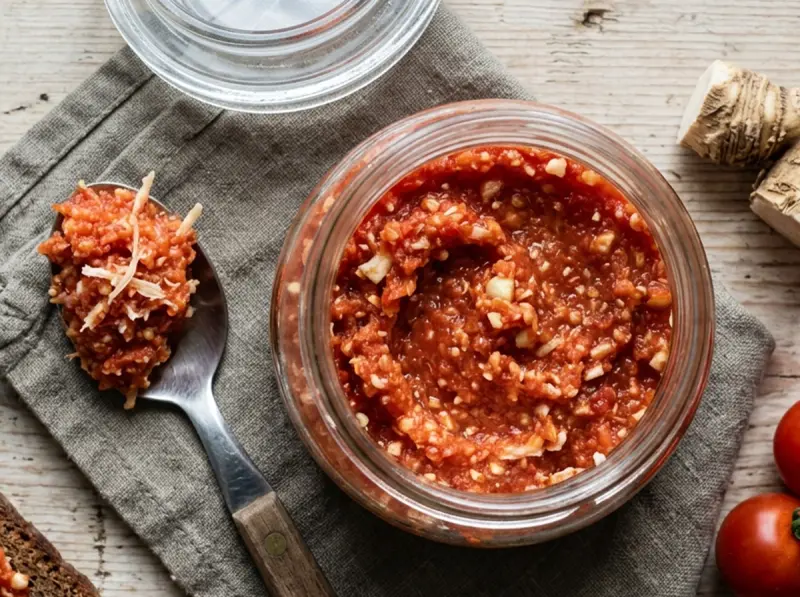
Khrenovina
A raw Siberian horseradish-and-tomato sauce, also called gorloder, known for its burning heat. Fresh tomatoes, horseradish root, garlic, and hot pepper are ground together uncooked and seasoned with salt. It is served with pelmeni, meat, fish, and on black bread.
Ingredients
- 1000 gtomatoes
- 80 ghorseradish root
- 60 ggarlic
- 1 wholehot pepper
- 1 tbspsalt
- 1 tspsugar
Method
- Wash the tomatoes and remove the stems; for a smoother sauce, blanch and peel them. Peel the horseradish root and garlic and seed the hot pepper.
- Chill the horseradish root in the freezer for 1 to 2 hours; this tames the fumes and makes it easier to grind.
- Working in a ventilated spot, grind the tomatoes, horseradish, garlic, and hot pepper through a meat grinder or blend them. The horseradish fumes are sharp, so tie a bag over the grinder spout or keep the blender lid on.
- Stir in the salt and sugar until fully dissolved. Do not cook the sauce.
- Pack into clean, sterilised jars, close tightly and refrigerate.
- Let it stand in the fridge at least overnight before serving so the heat evens out. Keep it refrigerated and finish it within a week, or freeze it in small jars. Serve with pelmeni, meat, fish, or on black bread.
FAQ
It is one Siberian and Ural sauce under different folk names. Khrenovina and khrenodyor come from khren (horseradish); gorloder, ogonyok, and cobra refer to its burning heat. The make-up is essentially the same.
Chill the root for 1 to 2 hours, grind it in a ventilated spot, tie a bag over the grinder spout, or keep a tight lid on the blender and do not open it at once. This is the sharpest step.
Not essential. Peeled (blanched and chilled) gives a smoother sauce; with skins it is quicker and coarser. Drain watery tomatoes first.
Treat it as a fresh raw sauce: in a clean, tightly closed jar in the fridge, use it within a week. Horseradish and garlic make it sharp, but they do not turn raw tomatoes into a preserve, and a sterilised jar does not sterilise what goes into it. For longer storage, freeze it in small jars or portions and thaw in the fridge; the heat fades a little after freezing. Shelf-stable khrenovina needs a tested canning recipe with added acid, which this one is not.
Classically with pelmeni, meat, fish, and aspic; spread on black bread; with potatoes and grains. A spoonful goes into borscht or alongside plov.
Keep browsing
More dishes from the Russian archive — picked by overlap with what you're cooking now.
Recipes by email
One letter a week: a recipe picked for your taste, plus whatever is new on the site. Unsubscribe in one click.
Welcome gift: Sergei's cookbook (e-book).
By subscribing you agree to the privacy policy.
Tell us what you like to cook (30 seconds) →
Join the conversation
Comments
No comments yet — be the first!