

Lobster Bisque (Bisque de Homard)
Bisque de homard is the most luxurious soup in the classical French repertoire: a deeply orange, velvety-smooth cream soup built entirely on the flavor extracted from lobster shells. The technique is methodical — the shells are roasted hard in butter until they smell nutty and oceanic, the aromatics are sweated, cognac is added and often flambéed, white wine and fish stock are added, and the whole mixture simmers for 30 to 40 minutes to extract every molecule of flavor from the shells. The stock is then strained, blended, passed through a fine sieve, enriched with double cream, and mounted with cold butter to a glossy, coating consistency. A swirl of cream and a few morsels of lobster meat garnish each bowl. Nothing is wasted: the shells that look like kitchen scraps become the foundation of one of the most complex, satisfying soups in existence.
Ingredients
- 2 whole cooked lobsters
- 3 tbspunsalted butter
- 1 onion
- 2 carrots
- 2 celery stalks
- 2 shallots
- 3 garlic cloves
- 2 tbsptomato paste
- 100 mlcognac or brandy
- 200 mldry white wine
- 1 lfish stock or shellfish stock
- 2 sprigs of fresh tarragon
- 2 bay leaves
- 1 tspcayenne pepper
- 250 mldouble cream
- 30 gcold unsalted butter
- 2 tbspfresh chives or tarragon
- 4 tbspdouble cream, for swirling
Method
- Prepare the lobster and extract the meat. If starting from whole cooked lobsters: twist off the claws and arms, crack them and extract the claw meat. Pull the tail from the body, cut lengthwise, and remove the tail meat. Reserve all the meat refrigerated. Using a heavy knife or mallet, roughly chop or crush all the shells — head, body, legs, claw shells — into pieces no larger than 4 cm. The more surface area exposed, the more flavor is extracted. Collect any juices that run out and add to the pot.
- Roast the shells to build flavor. Melt the butter in a large, heavy pot over the highest heat. Add the crushed shells and sauté, stirring and pressing frequently, for 6 to 8 minutes. The shells will turn a deep, vivid red-orange and the kitchen should smell intensely sweet and oceanic. This step — the Maillard reaction on the shell surface — is the single most important technique in the recipe. Do not rush it: under-roasted shells produce a pale, flat bisque.
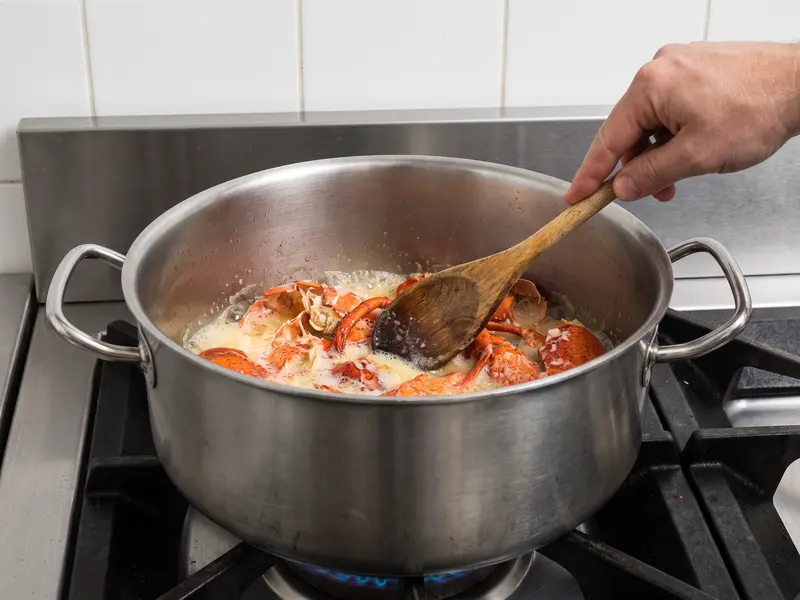
- Build the base. Reduce the heat to medium. Add the onion, carrots, celery, and shallots to the shells and cook 5 minutes, stirring. Add the garlic and tomato paste and cook, stirring constantly, for 2 minutes until the tomato paste darkens from red to a deep, rusty caramel — this removes its raw flavor and intensifies the color. Remove from heat. Add the cognac and, if desired, tilt the pan to ignite or simply return to heat and cook 2 minutes until the cognac reduces by half. Add the white wine and reduce by half.
- Simmer and strain. Add the fish stock, tarragon, bay leaves, and cayenne. Bring to a boil, then reduce to a steady simmer and cook uncovered for 35 to 40 minutes. The stock will reduce and deepen in color. Remove from heat. Using tongs, remove and discard the large shell pieces. Transfer the remaining mixture — including smaller shells, vegetables, and liquid — to a blender and blitz in batches until as smooth as possible. Pass through a fine-mesh sieve or chinois, pressing hard to extract every drop of flavor from the solids. Discard all solids.
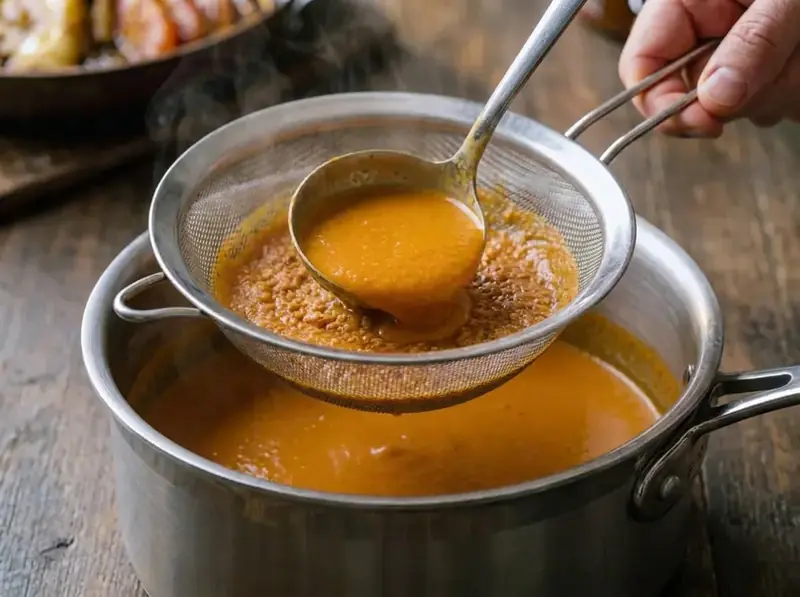
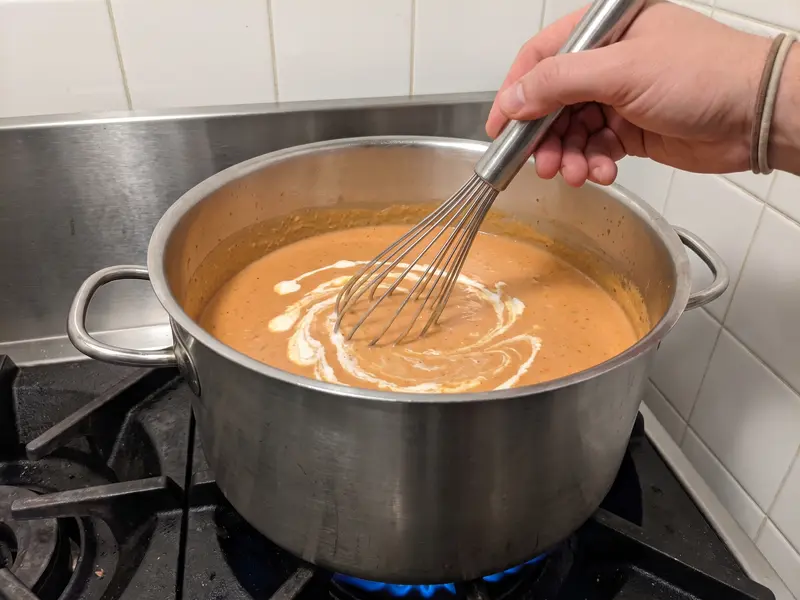
- Finish with cream, mount with butter, and serve. Return the strained bisque to a clean pot. Bring to a gentle simmer. Stir in the double cream and simmer 5 minutes until the bisque coats the back of a spoon. Taste and adjust salt, pepper, and cayenne. Remove from heat and whisk in the cold butter one piece at a time — this mounts the soup, giving it a glossy sheen and silky body. Warm the reserved lobster meat briefly in a little butter. Ladle the bisque into warmed bowls, add the lobster meat pieces, swirl a tablespoon of cream across the surface, and scatter chives or tarragon. Serve immediately.
FAQ
A bisque is specifically a shellfish soup in which the stock is made by roasting and simmering the shells of crustaceans — lobster, crab, prawn, crayfish — and then straining out all solids to produce an intensely flavoured base. The defining characteristics are the shell-based stock, the cognac or brandy, the use of cream for enrichment, and the very smooth, passing-through-a-fine-sieve texture. A regular cream soup might use cream but is typically made from a vegetable or poultry base. The term bisque in classical French cookery also refers to the technique of using the cooking juices and a purée of the main ingredient to thicken and enrich the soup rather than relying on a starch-based roux.
Yes — this is actually the traditional, economical origin of bisque. The dish was historically a way to use lobster shells, heads, and claws that were not saleable whole. Any combination of shells works: saved from a previous lobster dinner, bought from a fishmonger or restaurant (many will sell shells cheaply), or from prawns and crayfish. Using only shells, you will still need some lobster meat for the garnish — buy pre-cooked lobster tail or claws for this purpose. The stock made from shells alone is not necessarily inferior to one made from whole lobsters.
Crustacean shells contain calcium carbonate — the same mineral as chalk and limestone — and pulverised shell is indigestible and gritty even when very finely processed. A bisque that has not been strained through a fine-mesh sieve or chinois will have a sandy, slightly gritty texture from microscopic shell particles that passed through a blender but are too small to see. The straining must be done through a fine sieve, not a coarse colander, and the solids must be pressed firmly to extract the maximum amount of liquid. Discard all solids after straining — they have given everything they have to the stock.
Cognac is preferred because it is grape-based — the same origin as the wine — and adds both warmth and a round, fruity depth that complements lobster without fighting it. Good substitutes, in order of preference: Armagnac (similar to cognac, slightly more rustic); dry sherry (Fino or Amontillado) in the same quantity, which adds a nutty complexity; dry Madeira. A small amount of good brandy from any country works. Whisky produces an uncharacteristic flavor and is not recommended. For a version without alcohol: replace the cognac with an equal quantity of additional fish stock plus 1 teaspoon of white wine vinegar for the acidic brightness that cognac provides.
The orange color comes from three sources working together. First, astaxanthin — the carotenoid pigment in lobster shells that is chemically bound to protein in the live lobster (producing the dark color) and is released as a vivid orange-red when the shell is heated. Roasting the shells in butter for 6 to 8 minutes is essential to extracting this pigment fully. Second, caramelized tomato paste — added after the aromatics and cooked until dark and rusty, it deepens the orange and adds umami. Third, reduction — simmering the stock uncovered for 35 to 40 minutes concentrates both the color and the flavor. Under-reduced bisque is pale and thin; fully reduced bisque is a deep, rich orange.
Rate this
Recipes by email
One letter a week: a recipe picked for your taste, plus whatever is new on the site. Unsubscribe in one click.
Welcome gift: Sergei's cookbook (e-book).
By subscribing you agree to the privacy policy.
Tell us what you like to cook (30 seconds) →Keep browsing
More dishes from the French archive — picked by overlap with what you're cooking now.

Join the conversation
Comments
No comments yet — be the first!