
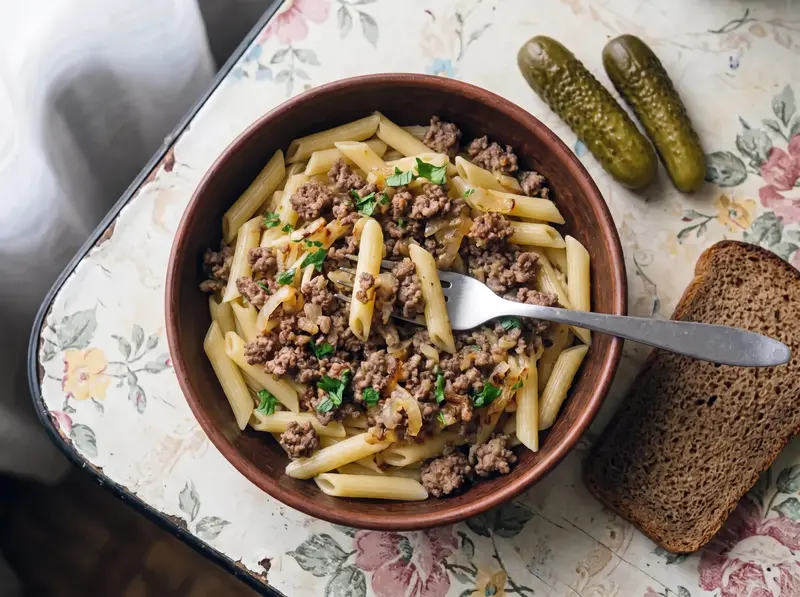
Makarony po-flotski (Russian Navy-Style Pasta)
Makarony po-flotski is a simple Soviet dish: boiled pasta tossed with browned ground meat and golden onions. The key is to truly fry the meat to a crust rather than stew it, or the flavor falls flat. Quick, filling, and sauce-free — a Soviet-era classic that takes its name from the navy's pasta-with-meat ration.
Ingredients
- 400 gpenne or elbow macaroni
- 400 gground beef
- 2 pcsonions
- 20 gbutter
- 1 tspsalt
- 0.5 tspblack pepper
- 2 tbspvegetable oil
Method
- Boil the pasta in salted water until al dente, reserving 2–3 tablespoons of the starchy cooking water before you drain it. Drain and toss with the butter so it doesn't clump. Slightly underdone is fine — it finishes in the pan.
- Dice the onions and fry them in the oil over medium heat until soft and golden. Golden onion is the flavor base of the dish.
- Add the ground beef, break up the lumps with a spatula, and fry for about 10 minutes, until all the liquid has evaporated, no pink remains anywhere and the crumbles are well browned (ground meat is safe at 71°C). Dry-frying rather than stewing gives the roasted navy flavor.
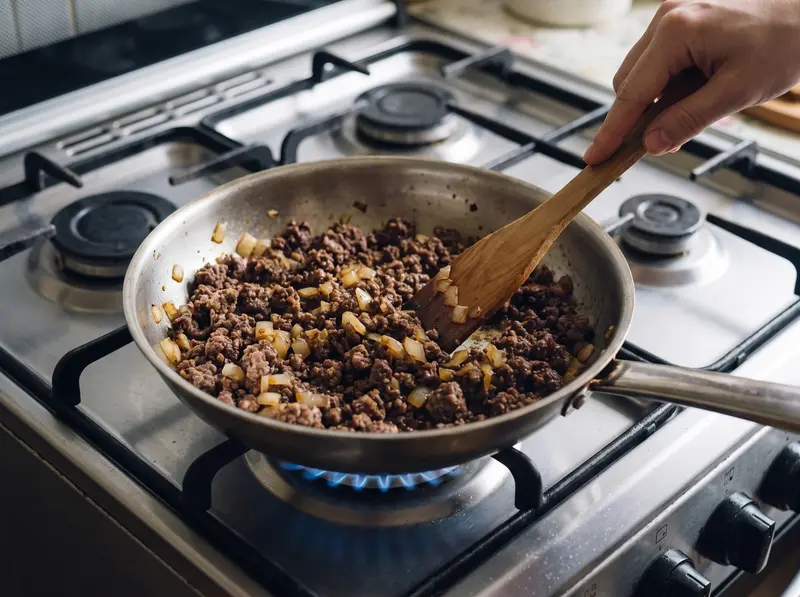
- Season with salt and pepper. Warm the black pepper right in the meat so it opens up.
- Tip the drained pasta into the meat, along with the reserved starchy water. Toss over the heat for 2–3 minutes so the pasta absorbs the fat and flavor and the starchy water helps everything cling together.
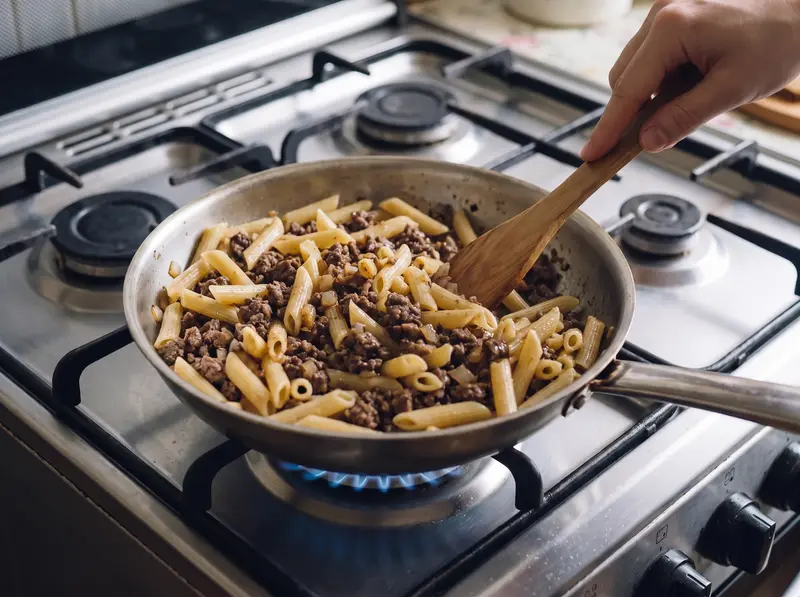
- Taste and adjust the salt and pepper.
- Serve hot, with pickles or fresh herbs. The dish is best fresh.
FAQ
Traditionally penne, elbow macaroni or other tubular shapes, which hold the meat well inside. Cook it al dente, slightly underdone, so it finishes when tossed with the meat and doesn't go mushy. Before draining, scoop out 2–3 tablespoons of the starchy cooking water — it helps bind the pasta and meat together in the final toss. Tossing the pasta with butter right after draining keeps it from clumping while you finish the meat.
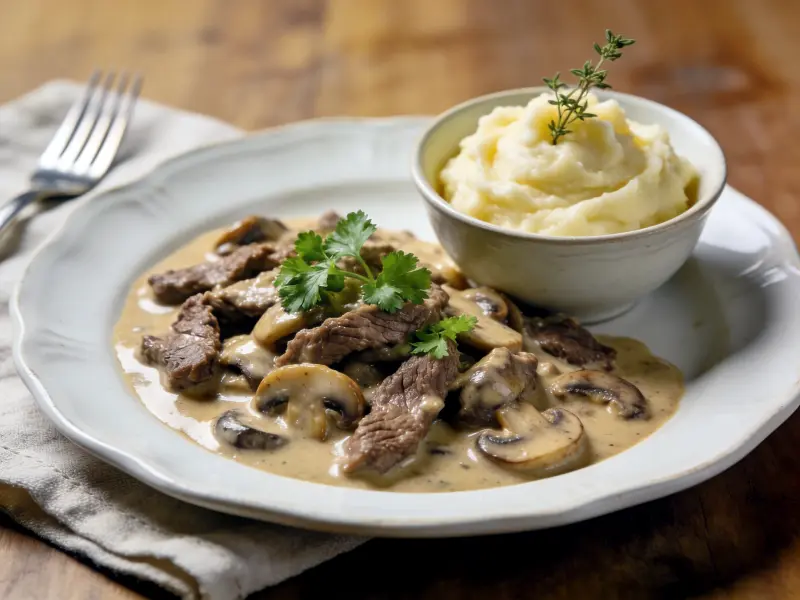
Today most cooks use raw beef or pork mince, and a mix of the two is the juiciest. The older version used boiled beef, pork or lamb put through a grinder and then fried. Tushonka (tinned stewed meat) is the quick version — with it the dish comes together in minutes. Ground poultry works but is leaner and drier. With any meat, the key is to brown it well. For another Russian beef classic, see beef stroganoff.
The original makarony po-flotski recipe has no tomato — just meat, onion, and pasta. That's what sets it apart from spaghetti bolognese, to which it's sometimes compared. Modern versions add 1 tbsp of tomato paste to the meat for color and a little acidity, which is fine but changes the character. For the authentic navy version, leave the tomato out.
Usually the meat was stewed rather than fried: it releases juice, simmers in it, and turns grey. Fry it on a properly hot pan, uncovered, until the liquid evaporates and a browned crust forms — that crust is the flavor. Don't skimp on the onion and take it to golden. And check the salt: blandness is often just under-seasoning.
Yes — it keeps 2–3 days in the fridge and reheats in a pan with a splash of water or oil until steaming hot throughout (74°C). Note that the pasta soaks up moisture and softens as it sits, so freshly made tastes best. If making ahead, cook the pasta a touch less. Freezing isn't worth it — the pasta texture suffers. If you like this kind of simple Soviet comfort food, pelmeni keeps and reheats even better.
Rate this
Recipes by email
One letter a week: a recipe picked for your taste, plus whatever is new on the site. Unsubscribe in one click.
Welcome gift: Sergei's cookbook (e-book).
By subscribing you agree to the privacy policy.
Tell us what you like to cook (30 seconds) →Keep browsing
More dishes from the Russian archive — picked by overlap with what you're cooking now.
Join the conversation
Comments
No comments yet — be the first!