

Mochi
Mochi is a traditional Japanese dessert with a unique, delicate texture made from glutinous rice, filled with fresh fruit — the taste varies with the filling but the exquisite chewy texture is always recognizable.
Ingredients
- 1 cupglutinous rice
- 2 cupwater
- 0.25 cupsugar
- 0.25 cuppotato starch or cornstarch, for dusting
- 0.5 tspsalt
- 1 cupsliced fruit
1 cup = 240 ml
Method
- Soak the rice in cold water for 30 minutes. Drain.
- Steam the rice for 30 minutes until soft and sticky.
- Mix the chopped fruit with the sugar for the filling. Pat juicy fruit dry first so the filling doesn't leak.
- Place the cooked rice in a bowl while still hot, add salt, and pound it with the wet end of a rolling pin until most of the grains are crushed. Then knead with wet hands until a smooth, stretchy paste forms.
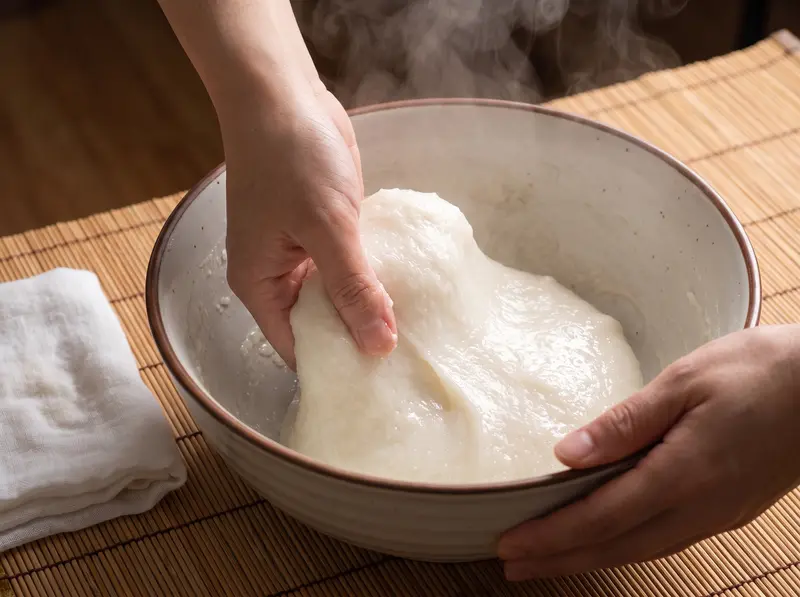
- Dust your hands and the work surface with the starch. Divide paste into walnut-sized balls. Place fruit filling in the center of each ball. Close tightly to prevent leaking.
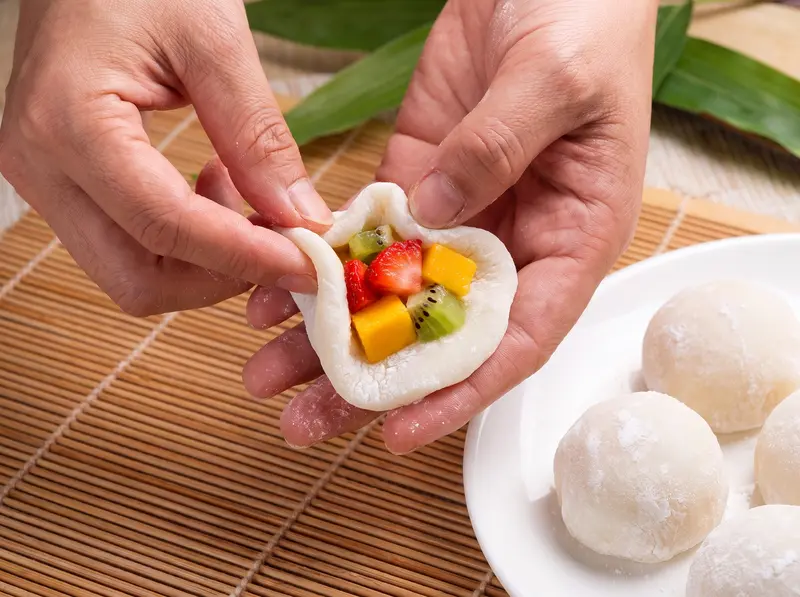
- Place in a bowl, cover with cling film and chill in the refrigerator for a few hours before serving.
FAQ
This recipe doesn't need mochiko at all: the dough is made from whole glutinous rice, steamed and pounded. What you can't replace is the glutinous rice itself, as grain or as flour. Ordinary starch or wheat flour won't give the chewy, stretchy texture — cornstarch turns brittle and wheat flour makes a different dough altogether; here the starch is only for dusting. Glutinous rice and glutinous rice flour are sold in Asian grocery stores and large supermarkets.
Mochi works wonderfully with many fillings: strawberry or mango jam, matcha cream, Nutella, peanut butter, ice cream (mochi ice cream), soft cheese with honey, or sweetened sesame paste. The main requirement is that the filling should be thick enough not to leak — liquid fillings should be pre-frozen.
Freshly made mochi are best eaten on the day they're made — they harden over time. Store at room temperature wrapped in cling film or in an airtight container for up to 2 days. In the refrigerator they last up to 5 days but harden faster; microwave for 10–15 seconds to restore softness. Mochi with ice cream filling are stored in the freezer.
Mochi dough is very sticky by nature — that's a property of glutinous rice flour. To work with it, generously dust your hands, the work surface, and rolling pin with potato starch or cornstarch. Do not use wheat flour as a dusting — it will make the surface rough. It's also helpful to slightly dampen your hands.
This recipe already works without a microwave: the whole rice is steamed and then pounded. If you use glutinous rice flour instead, there are two ways. On the stovetop: mix the flour with water and sugar and cook over low heat, stirring constantly, until the dough turns translucent and elastic, about 10–12 minutes. In a steamer: pour the batter into a greased bowl and steam for 20–25 minutes until translucent. Flour dough gives a smoother skin than hand-pounded rice.
Rate this
Recipes by email
One letter a week: a recipe picked for your taste, plus whatever is new on the site. Unsubscribe in one click.
Welcome gift: Sergei's cookbook (e-book).
By subscribing you agree to the privacy policy.
Tell us what you like to cook (30 seconds) →Keep browsing
More dishes from the Japanese archive — picked by overlap with what you're cooking now.


Join the conversation
Comments (1)
I weigh every ingredient for mochi instead of using cups. Baking is chemistry. An extra tablespoon of glutinous rice can push this from perfectly balanced to dense and heavy. A $15 scale pays for itself immediately.