

French Oeufs en Cocotte (Classic Baked Eggs in Ramekins)
Oeufs en cocotte, literally 'eggs in a little pot,' are eggs baked individually in ceramic ramekins set in a water bath (bain-marie) with cream, often topped with cheese, herbs, or other add-ins. The whites set gently while the yolks stay runny, ready for dipping strips of toasted baguette called mouillettes straight into the yolk. It isn't tied to one region — you'll find it on breakfast and brunch tables from Paris to Provence.
Ingredients
- 4 eggs
- 150 mlheavy cream
- 40 gGruyère
- 40 gunsalted butter
- 2 tbspfresh chives
- 1 pinchsalt
- 1 pinchblack pepper
- 1 pinchnutmeg
- 4 slicebaguette
Method
- Take the eggs out of the fridge 15-20 minutes ahead — cold eggs add 2-3 minutes to bake time and cook unevenly. Preheat oven to 190°C (375°F). Position rack in the middle. Boil a kettle of water (about 1 liter) — you'll need boiling water for the bain-marie. Set 4 ceramic ramekins (6 oz / 180 ml each) ready on the counter.
- Butter the ramekins. Soften 20 g of the unsalted butter and generously grease the inside of each ramekin — bottom and walls. This prevents eggs from sticking and adds a buttery aroma. Place ramekins in a deep baking dish (9x13 inch or similar high-sided dish) with 1-2 cm gaps between them for even steam circulation.

- Build the cream base. Pour 2 tablespoons (about 30 ml) of heavy cream into the bottom of each ramekin. Optionally, add any sautéed add-ins now (see variations): wilted spinach with garlic and a pinch of nutmeg, sautéed mushrooms and leeks, diced ham, smoked salmon strips with dill. For the base recipe, just cream is enough.
- Crack the eggs into a separate bowl first — never directly into the ramekin. This lets you inspect for shell fragments and verify the yolk is intact. If the yolk breaks, use that egg for scrambled and crack a fresh one. Once you have 4 perfect cracked eggs, gently slide each one on top of the cream in its ramekin, keeping the yolk intact and centered.

- Season and top. Sprinkle each egg with a pinch of salt, freshly ground black pepper, and a tiny pinch of nutmeg (classic French combo with cream). Drizzle a teaspoon of cream over each egg. Sprinkle 10 g of grated Gruyère over each ramekin. Dot 10 g of the remaining butter (about 2.5 g per ramekin) on top — this enriches the surface as it melts.
- Set up the bain-marie. Carefully pour boiling water from the kettle into the baking dish around the ramekins — water should reach halfway up the sides of the ramekins (about 2-2.5 cm). Boiling water is essential — cold water resets oven temp and extends cook time significantly. Cover the ramekins with foil (or lids if available) for the first part of baking to prevent the tops from drying out.

- Bake for the right doneness. Transfer the baking dish carefully to the preheated oven. Bake covered with foil for 10 minutes, then uncover and bake 2-4 minutes more: 12-14 minutes total gives whites that are fully set and opaque with a yolk that still wobbles, runny to soft and jammy. Test by a gentle shake: the whites should jiggle as one set mass, while the yolk dome moves separately. For small children, pregnant women, older adults and anyone with a weakened immune system, bake 2-3 minutes longer, until the yolk is firm as well as the white (71°C / 160°F).
- Serve immediately with mouillettes. While the eggs bake, toast 4 slices of baguette cut on the bias, then slice each into 2-3 thin strips (1-2 cm wide) — these are the mouillettes (soldiers). Butter with the last 10 g while still warm. Remove ramekins from oven with oven mitts (very hot, water still bubbling), place each on a small plate. Sprinkle with chopped chives. Serve immediately — eggs continue firming from residual heat. Eat directly from ramekin with a small spoon, dipping mouillettes into runny yolk. Pair with café au lait, espresso, or Champagne brut for brunch.
FAQ
Oeufs en cocotte are eggs baked in individual ceramic ramekins over a water bath, with cream and often cheese, mushrooms, spinach, or ham layered underneath. The dish is French and isn't tied to one region; French cookbooks have printed it with cream since the 1890s. Some versions have names of their own: à la périgourdine with foie gras, à la lorraine with smoked bacon, grated cheese and cream, à la florentine with spinach. In English it's sometimes called shirred eggs, though that term usually means eggs baked flat in a shallow dish rather than in a tall ramekin. In France it appears as a Sunday breakfast, a brunch dish, or a starter before dinner, and aside from the toasted bread served alongside, it's naturally gluten-free.
The water bath keeps the ramekins at a gentle, even temperature, since boiling water never rises above 100°C even when the oven itself is much hotter. That steady heat lets the egg white, which sets a few degrees before the yolk, firm up first, so you end up with delicately set whites and a yolk that's still runny. Skip it, and direct oven heat cooks the eggs unevenly: the whites turn rubbery, the tops dry out and crack, and overcooked eggs can smell faintly of sulfur. Pour boiling water to about halfway up the sides of the ramekins. Without the bath you get something firmer and closer to standard shirred eggs than true oeufs en cocotte.
Heavy cream gives the silkiest, most neutral custard, while crème fraîche, more common in French home kitchens, adds a light tang that balances the richness of the egg. Sour cream can stand in for crème fraîche, but it's more acidic, so it's best mixed half and half with heavy cream to keep it from splitting in the oven. Full-fat Greek yogurt is a lighter option with less fat, though the texture ends up firmer and less silky than a true custard. A garlic-and-herb cheese spread like Boursin whisked into cream makes a bolder, restaurant-style version since the seasoning is already built in, though it can overpower the egg. For four ramekins you'll need about 150 ml of dairy in total, whichever base you pick.
At 190°C, bake covered with foil for 10 minutes, then uncover and bake 2-4 minutes more: 12-14 minutes total gives whites that are fully set and opaque with a yolk that's still runny to softly jammy. For a firmer, fully set yolk, leave them 2-3 minutes longer. Cold eggs straight from the fridge need 2-3 extra minutes, so it helps to bring them to room temperature first, and a second egg in the same ramekin adds another 3-4 minutes. The eggs keep firming for a minute or two after they leave the oven from residual heat, so pull them out slightly before they look fully done if you want a runny center. Check doneness with a gentle shake of the ramekin: the whites should jiggle as one set mass while the yolk's dome moves separately underneath. Serve right away, since the cream cools and the yolk keeps setting within about five minutes of coming out of the oven.
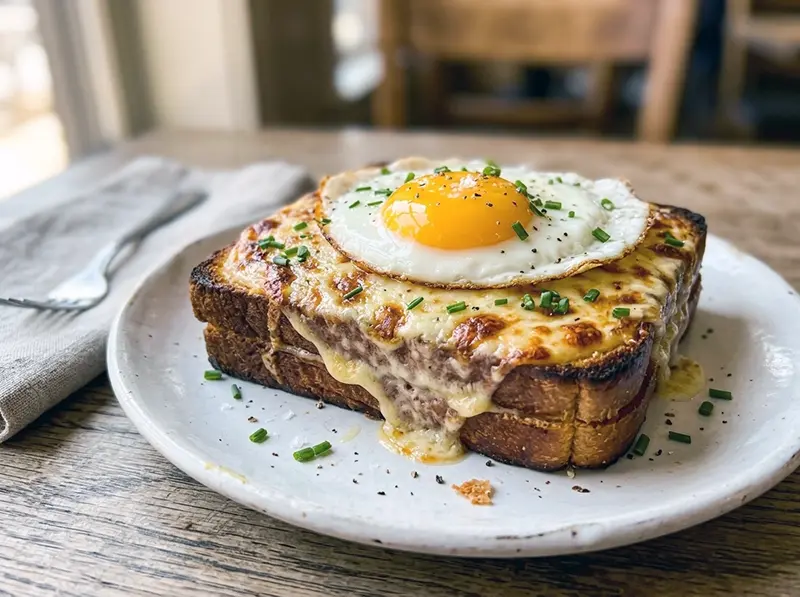
The base of egg, cream, and cheese stays the same; what changes is what you layer in the bottom of the ramekin before the egg goes in. Sautéed mushrooms and leeks are the most common restaurant version, wilted spinach with a pinch of nutmeg makes a lighter one, and diced ham with grated Emmental turns it into a Croque Madame in miniature. Smoked salmon with fresh dill, popular in Parisian cafés, needs no extra salt since the fish already provides it, while a few drops of truffle oil or a shaving of fresh truffle turns the dish into a festive, dinner-party version. Serve with mouillettes — thin strips of buttered toasted baguette for dipping into the yolk — alongside a green salad, café au lait, or a glass of Champagne for brunch.
Rate this
Recipes by email
One letter a week: a recipe picked for your taste, plus whatever is new on the site. Unsubscribe in one click.
Welcome gift: Sergei's cookbook (e-book).
By subscribing you agree to the privacy policy.
Tell us what you like to cook (30 seconds) →Keep browsing
More dishes from the French archive — picked by overlap with what you're cooking now.

Join the conversation
Comments
No comments yet — be the first!