
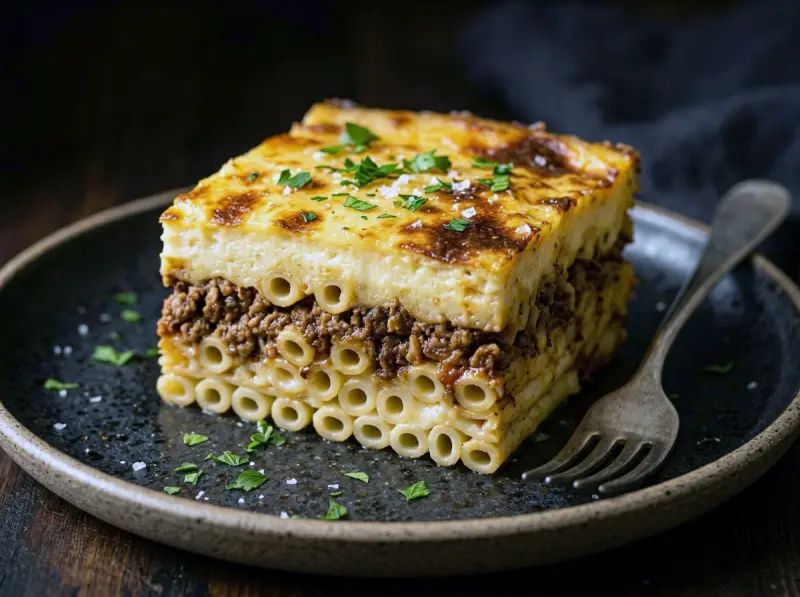
Pastitsio
Three layers baked in a deep dish: tubular pasta bound with egg whites, a cinnamon-and-clove spiced beef sauce cooked until very dry, and a thick Greek béchamel enriched with egg yolks that sets firm during baking. Pastitsio is sometimes called Greek lasagna but the comparison only goes so far — the warm spices in the meat sauce give it a depth that Italian ragù does not have, and the Greek béchamel is deliberately thicker and richer than anything on a lasagna. The dish requires time but all three components can be made separately and assembled the same day or the next.
Ingredients
- 400 gpastitsio No.2 pasta or bucatini
- 2 egg whites
- 500 gground beef
- 1 large onion
- 3 garlic cloves
- 150 mldry red wine
- 400 gcanned crushed tomatoes
- 2 tbsptomato paste
- 0.5 tspground cinnamon
- 2 whole cloves
- 70 gunsalted butter
- 70 gplain flour
- 800 mlwhole milk
- 3 egg yolks
- 0.5 tspfreshly grated nutmeg
- 60 gkefalotyri or parmesan
- 2 tbspolive oil, for the meat sauce
- 1 tbspbutter, for greasing the dish
Method
- Cook the pasta and mix with egg whites. Boil the pasta in generously salted water for 2 minutes less than the packet says — it will finish cooking in the oven. Drain and transfer to a large bowl. While still warm, pour the beaten egg whites over the pasta and toss thoroughly with tongs or two forks to coat every piece. The egg whites dry on the hot surface of the pasta and act as a binder, helping the pasta layer hold together when sliced. Set aside.
- Make the meat sauce. Heat 2 tbsp olive oil in a wide pan over high heat. Brown the onion 8 minutes. Add garlic and cook 1 minute. Add the beef and brown in batches, breaking it up — do not steam it. When browned, add tomato paste and cook 2 minutes. Pour in the wine and reduce by half. Add the crushed tomatoes, cinnamon, cloves, salt, and pepper. Simmer uncovered over low heat for 40 to 45 minutes until very thick and almost dry — the sauce should hold its shape when pressed and not pool. This is the most critical step: a wet sauce will seep down into the pasta layer, making the layers indistinct and causing the dish to collapse when cut. Remove the cloves.
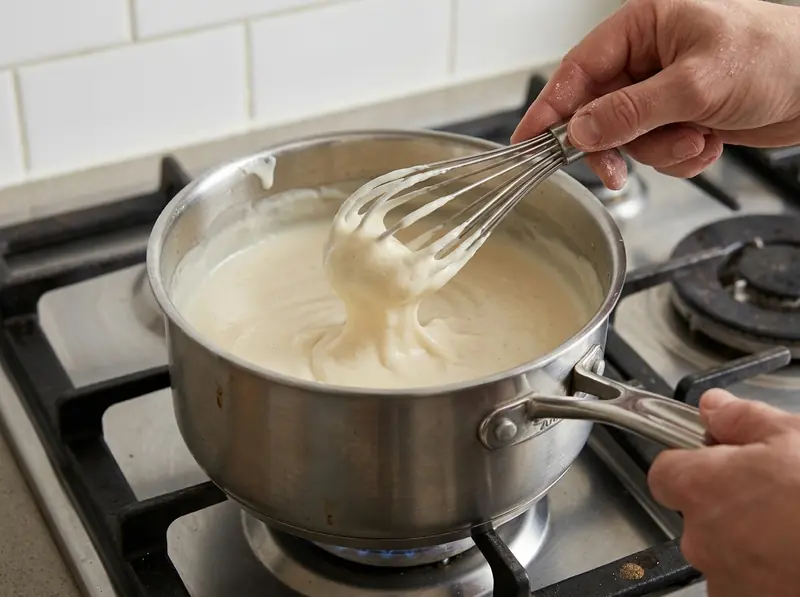
- Make the béchamel. Melt butter over medium heat. Add flour and whisk 90 seconds. Pour in warm milk gradually, whisking constantly to prevent lumps. Cook 8 to 10 minutes until very thick — the béchamel should hold a mound on the whisk. Remove from heat. Beat the egg yolks lightly and quickly whisk them into the hot béchamel. Add nutmeg, half the grated cheese, salt, and pepper. Stir a ladleful of the béchamel into the meat sauce — this helps the layers adhere.
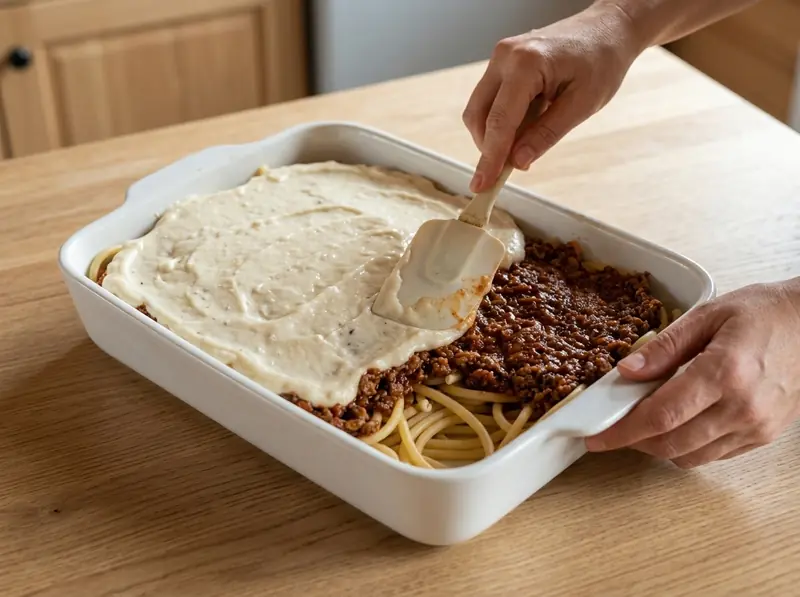
- Assemble. Butter a 25 × 35 cm baking dish at least 7 cm deep. Spread all the pasta in an even layer and press down gently. Pour the entire meat sauce over the pasta and spread flat — do not mix. Pour all the béchamel over the top and smooth it to the edges with a spatula. Sprinkle with the remaining cheese. Bake at 180°C for 45 to 50 minutes until the top is deep golden and the béchamel is completely set.
- Rest and serve. Remove from the oven and leave at room temperature for at least 30 minutes before cutting — this is not optional. The layers need to set or the dish collapses when sliced. Cut with a sharp knife in a single downward motion. Serve with a simple salad. Pastitsio is as good at room temperature as hot, and many Greek cooks consider it better the next day when the flavors have integrated.
FAQ
They are related but distinct. Both are layered Greek bakes with the same Greek béchamel enriched with egg yolks, and both use cinnamon-spiced meat sauce. The differences: moussaka uses roasted eggplant as its base layer and sometimes potato, producing a lighter, more vegetable-forward dish. Pastitsio uses tubular pasta, making it substantially more filling and carbohydrate-rich. Moussaka has a more complex assembly with pre-cooked eggplant; pastitsio is slightly simpler. In Greek households, moussaka tends to be a weekend or celebration dish; pastitsio appears at the same occasions but also at everyday family meals.
The traditional pasta is pastitsio No.2 (Greek bucatini-style), a large thick tube with a hole running through it — thicker than Italian bucatini and specifically designed for this dish. Available at Greek and Middle Eastern grocery stores. Substitutes in order of preference: bucatini (similar shape, slightly thinner), ziti (similar length and hollow, works well), penne (shorter and ridged but acceptable — cooks quickly so reduce the time). The hollow center matters: it allows the béchamel to hold the pasta column together when sliced. Avoid rigatoni as the ridges grip the sauce too much.
Egg whites are a binding agent. When the beaten egg whites are tossed with hot pasta, they dry onto the surface of each piece. During baking, they set and essentially glue the pasta pieces lightly together, forming a cohesive base layer that holds together when cut with a knife. Without egg whites, the pasta layer shifts and crumbles when you slice into it, and the meat sauce migrates down through gaps. The egg whites have no noticeable flavor in the finished dish — their only role is structural.
The layers of pastitsio — pasta, meat sauce, béchamel — are designed to remain distinct and visible when the dish is cut. If the meat sauce has excess moisture, that liquid soaks down through the pasta during the long baking time, softening the pasta layer, muddying the color of the pasta, and making the whole structure too soft to cut cleanly. The finished sauce should hold its shape on a spoon and not pool when transferred. Forty to forty-five minutes of uncovered simmering achieves this. If the sauce is still wet after that time, keep cooking uncovered until it reaches the right consistency.
Pastitsio is an outstanding make-ahead dish and improves over 24 hours. Refrigerate fully baked, covered, for up to 5 days — the flavors deepen and the layers firm up. Reheat covered with foil at 170°C for 20 to 25 minutes, or individual slices in a microwave for 2 to 3 minutes. For freezing: bake and cool completely, then cut into portions and wrap each in foil. Freeze for up to 3 months. Reheat from frozen at 180°C covered for 30 to 35 minutes, then uncovered 10 minutes to revive the top. The texture holds well through freezing and reheating.
Rate this
Recipes by email
One letter a week: a recipe picked for your taste, plus whatever is new on the site. Unsubscribe in one click.
Welcome gift: Sergei's cookbook (e-book).
By subscribing you agree to the privacy policy.
Tell us what you like to cook (30 seconds) →Keep browsing
More dishes from the Greek archive — picked by overlap with what you're cooking now.

Join the conversation
Comments (2)
The egg mixed into the pasta layer is the step everyone skips and then wonders why their portions fall apart. One beaten egg stirred into the hot cooked pasta binds it into a firm layer that holds its shape when you cut squares. Without it the pasta slides everywhere. The cinnamon in the meat sauce is subtle but essential — it is what makes this Greek rather than Italian.
Probé el pastitsio y me gustó mucho, es como una lasaña griega pero con canela en la carne que le da un toque especial. Eso sí, el tiempo de preparación es largo — me tomó casi dos horas. La bechamel tiene que quedar bien espesa, la primera vez me quedó líquida y se desmontó al cortarlo. La segunda vez perfecta.