
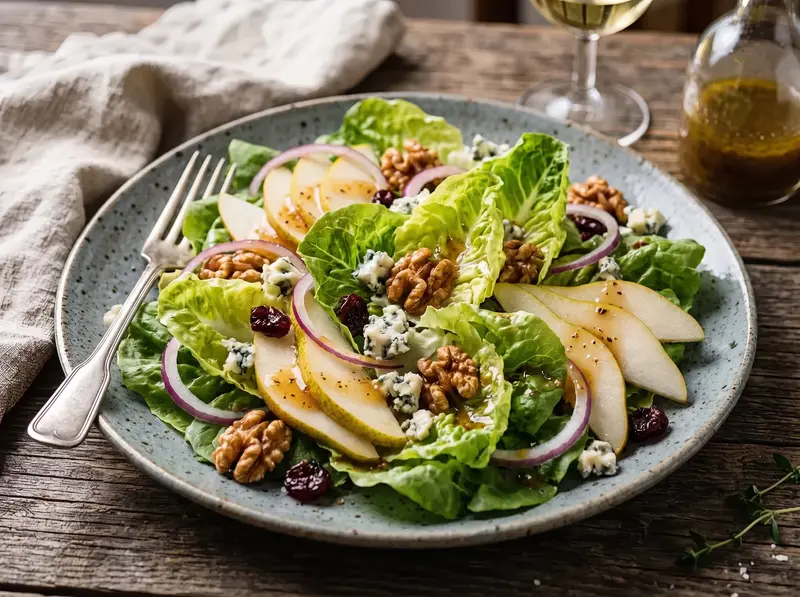
Roquefort Salad
Roquefort salad is a French composed salad built around Roquefort, the pungent blue-veined sheep's-milk cheese aged in the limestone caves of Roquefort-sur-Soulzon, paired here with sweet pear and toasted walnuts. Mixed greens carry thin red onion, sliced pear, dried cherries or cranberries, and crumbled Roquefort, tossed in a honey-mustard vinaigrette that ties the sharp cheese to the sweeter ingredients. The contrast between the cave-aged cheese and the crunchy walnuts makes every bite bold and interesting.
Ingredients
- 1 headlettuce
- 1/2 cupwalnuts, lightly toasted
- 1 red onion, cut into thin rings
- 1 ripe pear, cored and thinly sliced
- 1/2 cupdried cherries or cranberries
- 100 gRoquefort cheese
- 2 tbspred wine vinegar
- 1 tspDijon mustard
- 1 tsphoney
- 4 tbspolive oil
- to tastesalt and pepper
1 cup = 240 ml
Method
- Separate the head of lettuce into leaves, rinse thoroughly in cold water and drain.
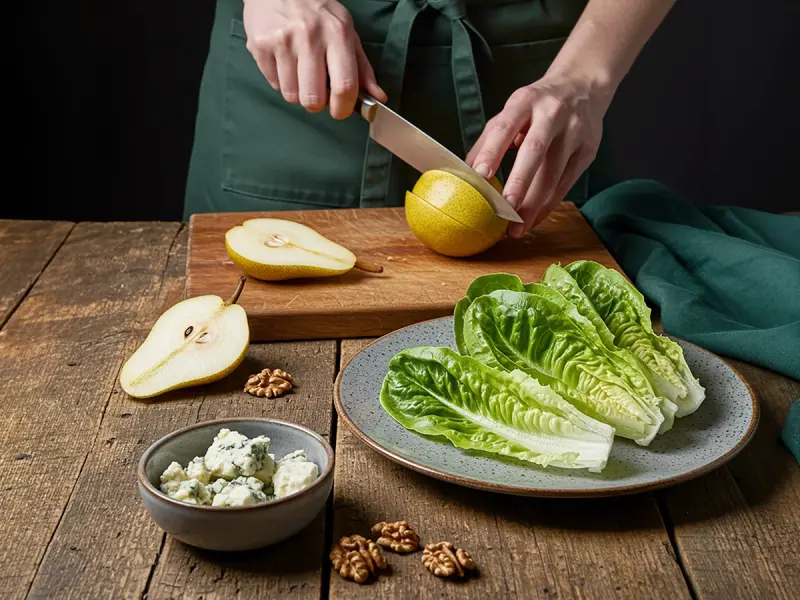
- Slice the red onion into thin half rings. Core and thinly slice the pear. Lightly toast the walnuts in a dry pan until golden. Slice or crumble the Roquefort cheese.
- Arrange lettuce leaves on a large platter or divide among plates.
- Sprinkle red onion, pear, walnuts, dried cherries or cranberries and Roquefort cheese on top.
- In a small bowl, whisk together the Dijon mustard, honey, red wine vinegar, salt, and pepper. Slowly whisk in the olive oil until the dressing is smooth and lightly thickened. Pour over the salad and toss gently. Serve immediately.
FAQ
Any good-quality blue cheese works, though the character of the salad shifts with the choice. Gorgonzola Dolce is the mildest, creamiest option, good for anyone who finds Roquefort too sharp, while Gorgonzola Piccante and English Stilton sit closer to Roquefort's intensity, with Stilton adding a nutty finish. Danish Blue is widely available and more affordable, with a sharp, salty bite; a mild blue-veined brie works too if you want just a hint of blue rather than a decisive punch. For the closest match to Roquefort's tangy sheep's-milk flavor, look for French Bleu d'Auvergne or Bleu des Causses.
Slice the onion into thin rings and soak them in cold water for 10 minutes, then drain — this draws out the sulphur compounds behind the sharp bite without losing color or flavor. For a deeper mellowing, soak the rings in cold water with a tablespoon of white wine or apple cider vinegar for 15-20 minutes instead. You can also quick-pickle them in red wine vinegar with a pinch of sugar and salt for 30 minutes, which turns them into a sweet-sharp condiment that complements the Roquefort rather than fighting it.
Raw walnuts taste flat and slightly bitter and have a soft, almost papery texture; toasting activates their oils, deepens the nutty flavor, and adds the crunch that plays against the creamy cheese and soft pear. Spread them in a single layer in a dry pan over medium heat and stir often for 4-6 minutes until fragrant and a shade darker — they burn quickly, especially at the edges — or toast in the oven at 170°C for 8-10 minutes. Let them cool completely before adding to the salad, since warm nuts wilt the greens and shed oil into the dressing; stored airtight, they keep for about a week.
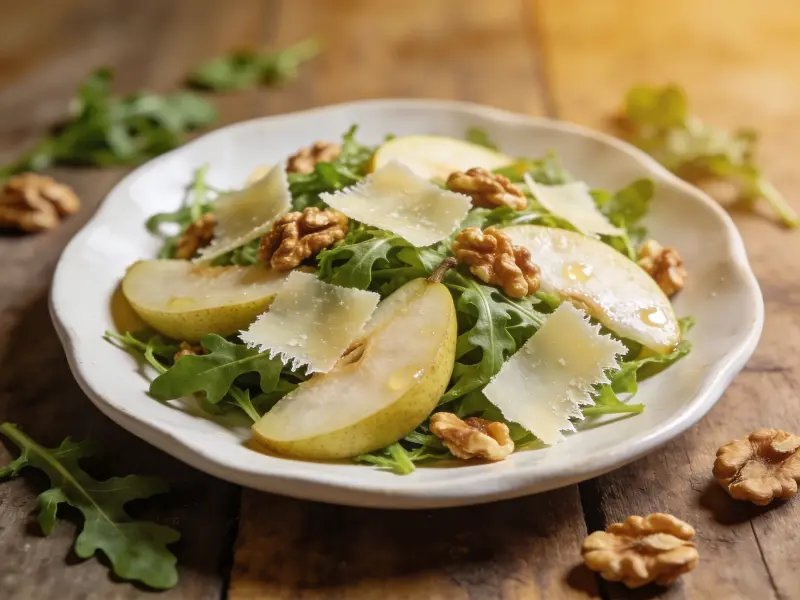
Dried cranberries are the closest substitute, with a nearly identical sweet-tart flavor and chewy texture, and they're often easier to find. Dried blueberries or dried pomegranate seeds work the same way, or for something fresh, pomegranate seeds add a juicy burst of color and tartness, and halved red grapes bring natural sweetness without the chew. If there's fresh fig in season, sliced fig pairs beautifully with both the pear and the Roquefort — see our arugula, pear, and walnut salad for another take on that pairing.
Wrap it loosely in wax paper or cheese paper rather than plastic wrap, which traps moisture and makes the surface slimy, then keep it in a loosely closed container or a zip-top bag with a little air inside. Store it in the vegetable drawer — the least cold part of the fridge, since Roquefort keeps best around 8-12°C — and away from the back wall, where it can partially freeze. Wrapped properly, an opened wedge keeps for 3-4 weeks; if the surface looks dry, just scrape it off. Bring the cheese to room temperature about 30 minutes before serving, since cold mutes its flavor.
Rate this
Recipes by email
One letter a week: a recipe picked for your taste, plus whatever is new on the site. Unsubscribe in one click.
Welcome gift: Sergei's cookbook (e-book).
By subscribing you agree to the privacy policy.
Tell us what you like to cook (30 seconds) →Keep browsing
More dishes from the French archive — picked by overlap with what you're cooking now.
Join the conversation
Comments (1)
The knife work is what makes this rockfor salad special. Every piece of lettuce cut to the same size means every forkful is balanced. It's the kind of detail you taste but can't quite identify.