
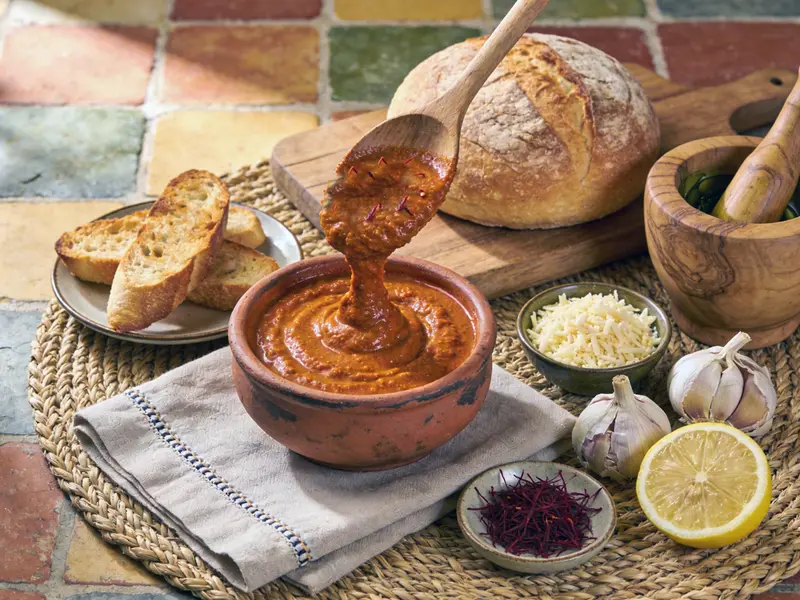
Rouille (Provençal Saffron Garlic Sauce for Bouillabaisse)
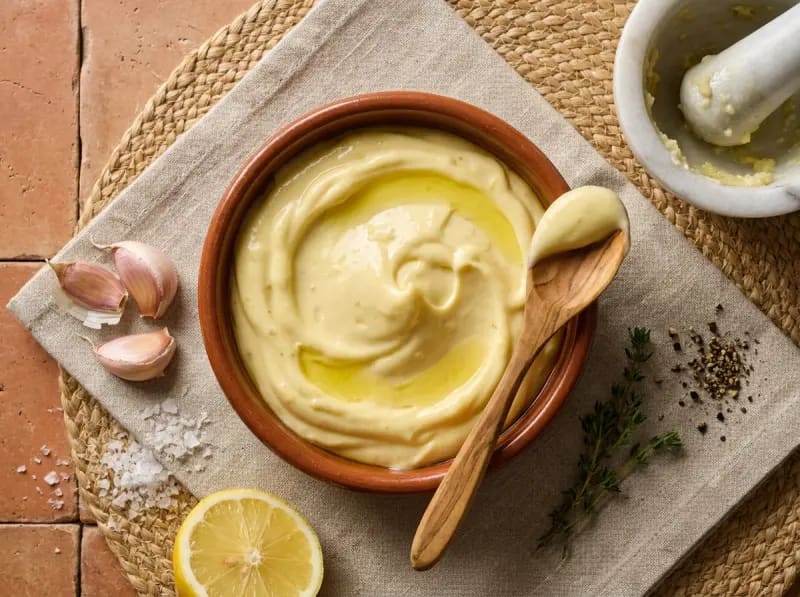
Rouille (literally 'rust' in French — for its rusty-red color) is a Provençal garlic, saffron and hot pepper sauce, the usual partner of bouillabaisse. There is no single canonical recipe: older versions are bound with soaked bread or a boiled potato, many modern ones with egg yolk. This one uses both bread and a yolk, with saffron for color and perfume and hot pepper (traditionally cayenne; piment d'Espelette is a milder choice). Spread on baguette croutons floating in fish soup, used as a dip for seafood, or as a sandwich spread. Active work is about 20 minutes; the finished sauce then rests for 30 minutes. Makes about 300 ml; a serving is about 2 tablespoons.
Ingredients
- 30 gwhite bread crumb
- 30 mlwarm fish stock
- 1 pieceegg yolk
- 4 garlic cloves
- 0.1 gsaffron threads
- 1 tsppiment d'Espelette
- 0.5 tspsweet paprika
- 200 mlextra virgin olive oil
- 0.5 tspflaky sea salt
- 1 tspfresh lemon juice
- 1 piecesmall baguette, for croutons, to serve
- 50 gGruyère, grated, to serve
Method
- Take the egg out of the fridge 30 minutes ahead; the oil should be at room temperature too. Activate the saffron. Warm 30 ml of fish stock (or hot water if you have no stock) until just below boiling, never boiling. Add the saffron threads to the stock, stir, and let steep for 5–10 minutes. The liquid should turn deep golden-orange — this is the saffron releasing its crocin pigment and aroma compounds. Skip this step and the saffron stays sealed inside the threads.
- Soak the bread. Tear 30 g of white bread crumb (interior of a baguette or country bread, no crust) into rough pieces and place in a small bowl. Pour the warm saffron stock over the bread and let it absorb for 2–3 minutes. Squeeze the bread gently with your fingers to break it up — it should be a uniform paste, slightly damp but not dripping wet.
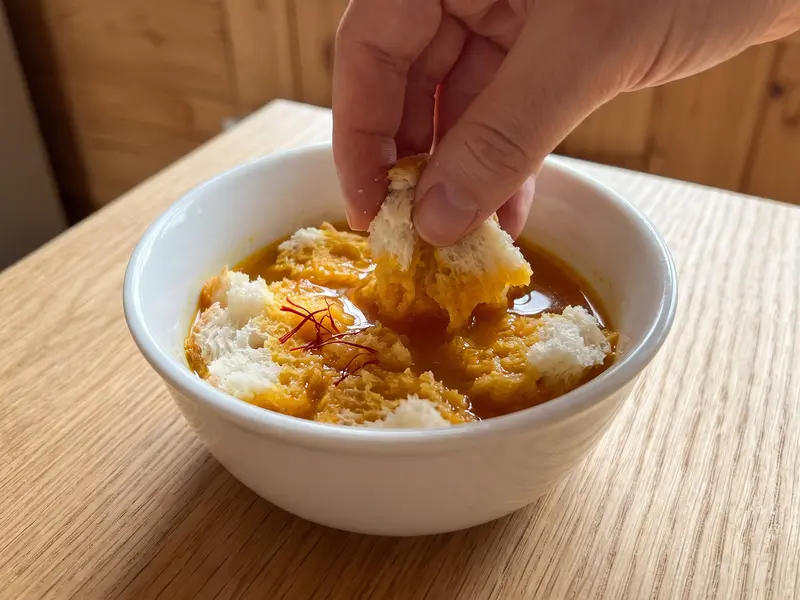
- Make sure the yolk and oil are at room temperature. Cold ingredients emulsify poorly, and this is the most common cause of broken rouille.
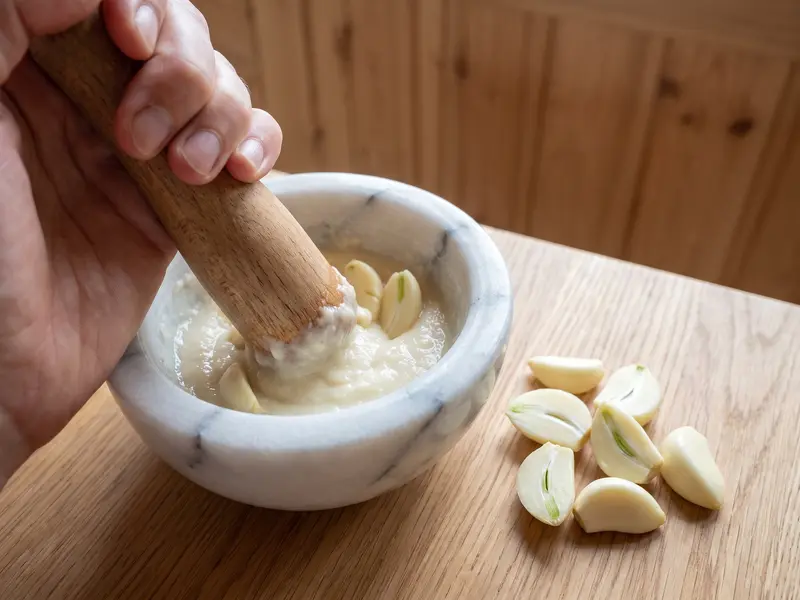
- Prep the garlic. Peel 4 garlic cloves and cut each in half lengthwise. Remove the green germ from the center of each clove with a knife tip — the germ can taste harsh and bitter in a raw sauce. Crush the garlic to a smooth paste in a mortar and pestle, or grate on a microplane. Add the flaky sea salt — salt breaks the cell walls of the garlic and releases the essential oils.
- Combine the base. In a medium bowl, combine the saffron-soaked bread paste, garlic paste, egg yolk, piment d'Espelette, and sweet paprika. The yolk stays raw, so use a pasteurized egg, and do not serve this sauce to pregnant women, small children, the elderly or anyone with a weakened immune system. Whisk vigorously for 30 seconds with a wire whisk until uniform, smooth, and starting to look creamy. The mixture should be deep orange-red at this stage.
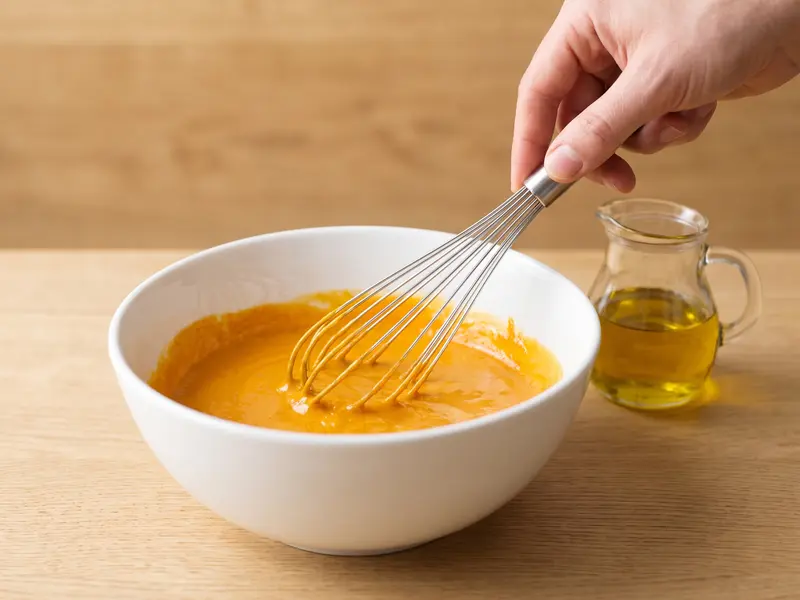
- Build the emulsion. Begin adding olive oil drop by drop, whisking constantly. The first 60 to 90 seconds are critical — literally one drop of oil at a time, fully absorbed before the next. After about 2 tablespoons of oil are incorporated and the sauce visibly thickens, switch to a very thin stream. Continue with the thin stream until all 200 ml are incorporated. The finished rouille is glossy, thick, deep rusty-orange, with a texture between mayonnaise and a thick paste.
- Finish with lemon juice and adjust seasoning. Whisk in 1 tsp of fresh lemon juice (it goes in at the end so you can judge how much brightness the finished sauce needs; the acid itself does not break the emulsion — pouring the oil in too fast does). Taste and adjust: more salt for seasoning, more piment d'Espelette for heat, more lemon for brightness. The sauce should taste of saffron first, garlic second, with the chili warmth lingering at the finish.
- Cover and rest 30 minutes at room temperature before serving — flavors integrate and the emulsion stabilizes. Serve at room temperature, never cold from the fridge — saffron and garlic aromatics are muted when cold. Do not leave it out for more than 2 hours in total. Spread on toasted baguette croutons, float on bouillabaisse, or use as a dip for cooked seafood. Keep it in an airtight container in the fridge and use it within a day; do not freeze.
FAQ
Rouille is a Provençal sauce served with bouillabaisse. It is an emulsion like aïoli, but with three additions: saffron for color and perfume, hot pepper (piment d'Espelette or cayenne), and soaked white bread for a coarser texture and a steadier emulsion. Aïoli is garlic and olive oil, in most modern versions with an egg yolk. Compared with mayonnaise, rouille has far more garlic (4 cloves per yolk), no vinegar and a much thicker body. It is Provençal by origin, but it works with any fish soup.
Saffron gives this rouille its color and perfume; some old versions do without it, but then the sauce is close to garlic mayonnaise with chili. Turmeric gives a yellow color but none of the saffron perfume, so if you have no saffron, make aïoli instead. For this batch use about 0.1 g, roughly 10–15 threads, and steep them in hot (not boiling) stock or water for 5–10 minutes until the liquid turns deep golden-orange. Dry threads stirred straight into the emulsion release almost nothing. Buy long red threads without yellow ends; real saffron colors water golden within a minute.
Yes, but it is a different version, not the one in this recipe. The bread version uses 30 g of soaked white crumb and gives a rusty-gold color and a coarse, dense texture. The pepper version uses about 100 g of roasted, peeled red pepper (optionally with the bread) and is bright red and smoother. A middle path works well too: 30 g bread plus 50 g roasted pepper. To roast peppers, char them whole under the broiler for 15–20 minutes until black, rest them covered for 10 minutes, then peel, seed and blot dry; jarred roasted peppers also work.
Keep rouille in an airtight container in the fridge and use it within a day; the raw egg yolk sets that limit. It does not freeze, because the emulsion breaks for good. Throw it out if it separates, smells sour or turns grey-brown. Beyond bouillabaisse, spread it on croutons for any fish soup, serve it with boiled shrimp, mussels or grilled fish, use it instead of mayonnaise in a tuna sandwich, or stir a spoonful into tomato soup. Take it out of the fridge 30 minutes before serving, since cold mutes the saffron and garlic, but do not leave it out for more than 2 hours in total.
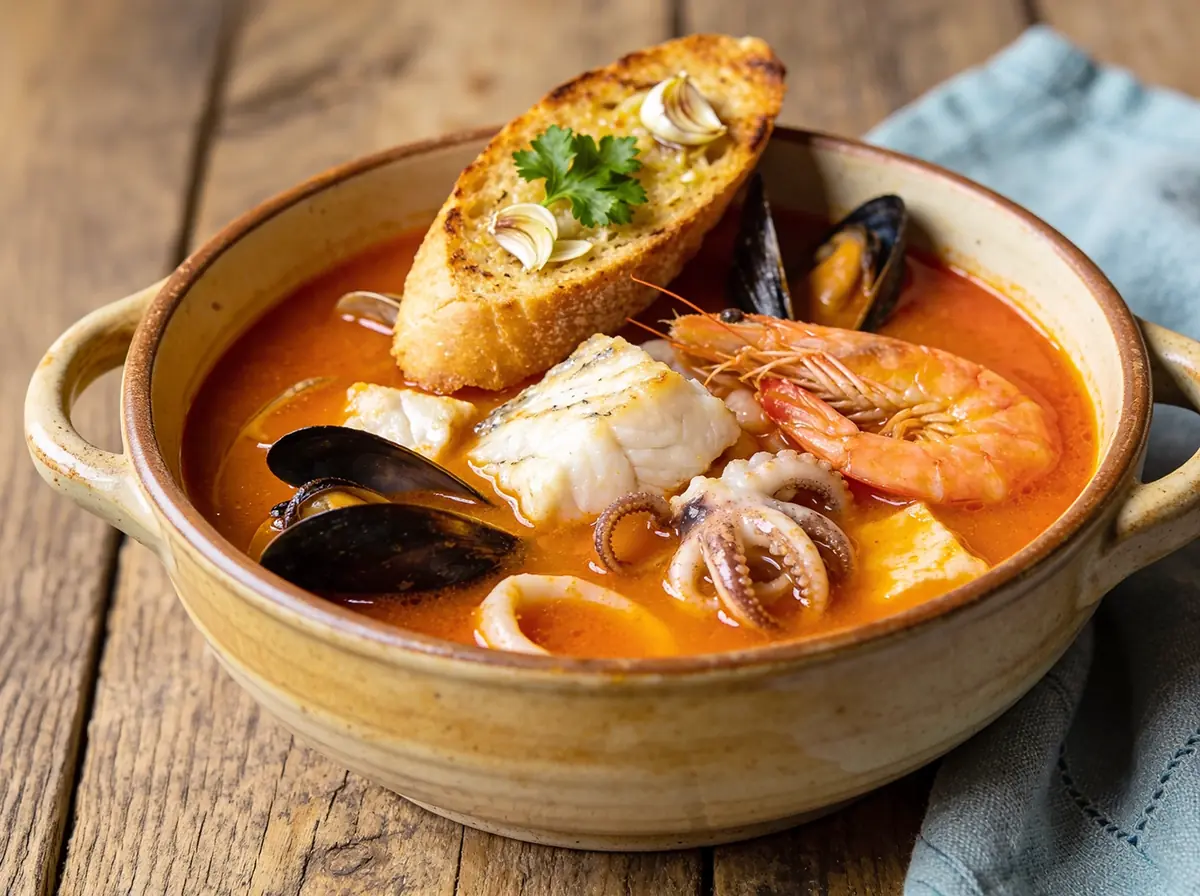
Serve bouillabaisse with rouille at room temperature and croutons (rounds of country baguette toasted in olive oil); grated Gruyère is an optional extra borrowed from everyday fish soup. Each guest spreads rouille on a crouton, adds cheese if they like and floats it in the soup; stirring rouille straight into the bowl is fine too. Cut the croutons about 1 cm thick and toast them until dry right through, otherwise they dissolve in the broth. Without a full bouillabaisse, a simple fish soup with cod, shrimp and mussels, tomatoes, leek, fennel and saffron takes 30–40 minutes and works the same way. Baked or grilled fish with a spoonful of rouille is the quickest alternative.
Rate this
Recipes by email
One letter a week: a recipe picked for your taste, plus whatever is new on the site. Unsubscribe in one click.
Welcome gift: Sergei's cookbook (e-book).
By subscribing you agree to the privacy policy.
Tell us what you like to cook (30 seconds) →Keep browsing
More dishes from the French archive — picked by overlap with what you're cooking now.
Join the conversation
Comments
No comments yet — be the first!