
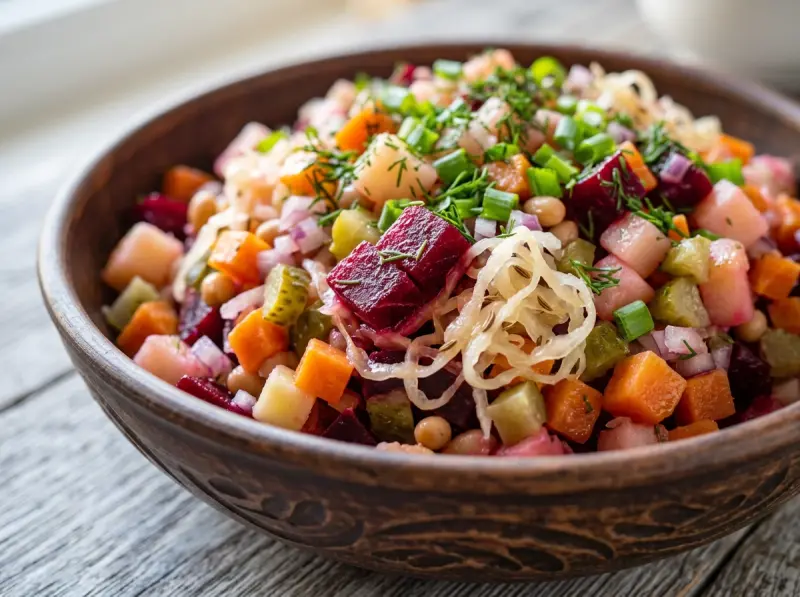
Russian Vinegret Salad
Boiled beets, potatoes, and carrots diced small and tossed with briny dill pickles, sauerkraut, green onions, and a simple sunflower oil dressing. This salad has been on Russian holiday tables for over a century. It is earthy, tangy, and satisfying cold — the kind of thing that gets better by the day and tastes best made a day ahead.
Ingredients
- 500 graw beets, unpeeled
- 400 gwaxy potatoes
- 200 gcarrots
- 200 gdill pickles
- 150 gsauerkraut, drained and roughly chopped
- 1 cangreen peas
- 3 scallion stalks
- 3 tbspunrefined sunflower oil
- 1 tbspwhite wine vinegar or apple cider vinegar
- salt and black pepper to taste
Method
- Cook the beets separately: place unpeeled beets in a pot, cover with cold water, bring to a boil, reduce heat, and simmer 50–70 minutes until a knife slides in without resistance. The skin helps retain color and flavor — do not peel before cooking.
- In a separate pot, cook potatoes and carrots together in salted water 20–25 minutes until just tender. They should hold their shape when cut, not crumble. Drain and cool to room temperature.
- Peel all vegetables once cool. Dice beets, potatoes, and carrots into 1 cm cubes. Dice the pickles to the same size. Uniform dicing matters — each bite should contain a bit of everything.
- Toss the diced beets separately in 1 tablespoon of oil. This creates a thin coating that slows color bleeding into the other vegetables. Then combine everything in a large bowl: beets, potatoes, carrots, pickles, sauerkraut, peas if using, and green onions.
- Add the remaining oil and vinegar. Season with salt and pepper. Toss gently. Taste — the balance should be earthy from the beets, tangy from the pickles and sauerkraut, with the oil bringing it together.
- Cover and refrigerate at least 1 hour before serving. Overnight is better. The vegetables marinate in each other's juices and the flavors fully integrate.
FAQ
Completely preventing color transfer is impossible — beet pigment is water-soluble and will migrate. But you can slow it significantly with one technique: after dicing, toss the beets in one tablespoon of oil and let them sit for a few minutes before adding the other ingredients. The oil coats the cut surfaces and creates a partial barrier. Add the beets last when mixing. The salad will still be slightly pink, but not uniformly red.
Yes, and it works well. Canned beets are softer than home-boiled ones, which changes the texture — the salad will be slightly more uniform and less chunky. The flavor is slightly milder and sweeter. If using canned beets, drain them thoroughly, pat dry with paper towels, then dice. The time saving is substantial: raw beets take 50–70 minutes to boil; canned beets bring assembly time down to under 30 minutes.
They share a name but are completely different things. French vinaigrette is a liquid salad dressing made from oil and acid (vinegar or lemon juice). Russian vinegret is a composed vegetable salad of boiled beets, potatoes, and carrots. The name likely came to Russia in the 18th century as French cuisine became fashionable among the aristocracy, but the dish itself evolved into something entirely distinct — a hearty root vegetable salad with pickled elements that reflects Russian winter cooking.
Yes, and it should be. The vegetables release moisture as they sit, which combined with the oil and vinegar creates a light brine that the whole salad marinates in overnight. The beets, potatoes, and carrots absorb the pickled flavor from the sauerkraut and cucumbers, the vinegar mellows, and the oil rounds out the edges. Made the morning of serving, vinegret is decent. Made the night before, it is at its best. It holds 4–5 days refrigerated, though it gets softer and more uniformly pink with each day.
The sauerkraut adds a fermented sourness that is different from pickles — tangier and more complex. Without it, the salad relies entirely on the pickles for acid. You can omit it, but increase the dill pickles slightly and add an extra teaspoon of vinegar to compensate. Some Russian families also substitute sauerkraut with pickled cabbage or add a tablespoon of brine from the pickle jar, which achieves a similar effect.
Rate this
Recipes by email
One letter a week: a recipe picked for your taste, plus whatever is new on the site. Unsubscribe in one click.
Welcome gift: Sergei's cookbook (e-book).
By subscribing you agree to the privacy policy.
Tell us what you like to cook (30 seconds) →Keep browsing
More dishes from the Russian archive — picked by overlap with what you're cooking now.

Join the conversation
Comments (1)
I make the dressing for russian vinegret salad first and let it sit while I prep everything else. The raw beets and seasonings need at least 10 minutes to meld. Last-second dressing always tastes a bit harsh and disjointed.