


Sauerkraut Shchi
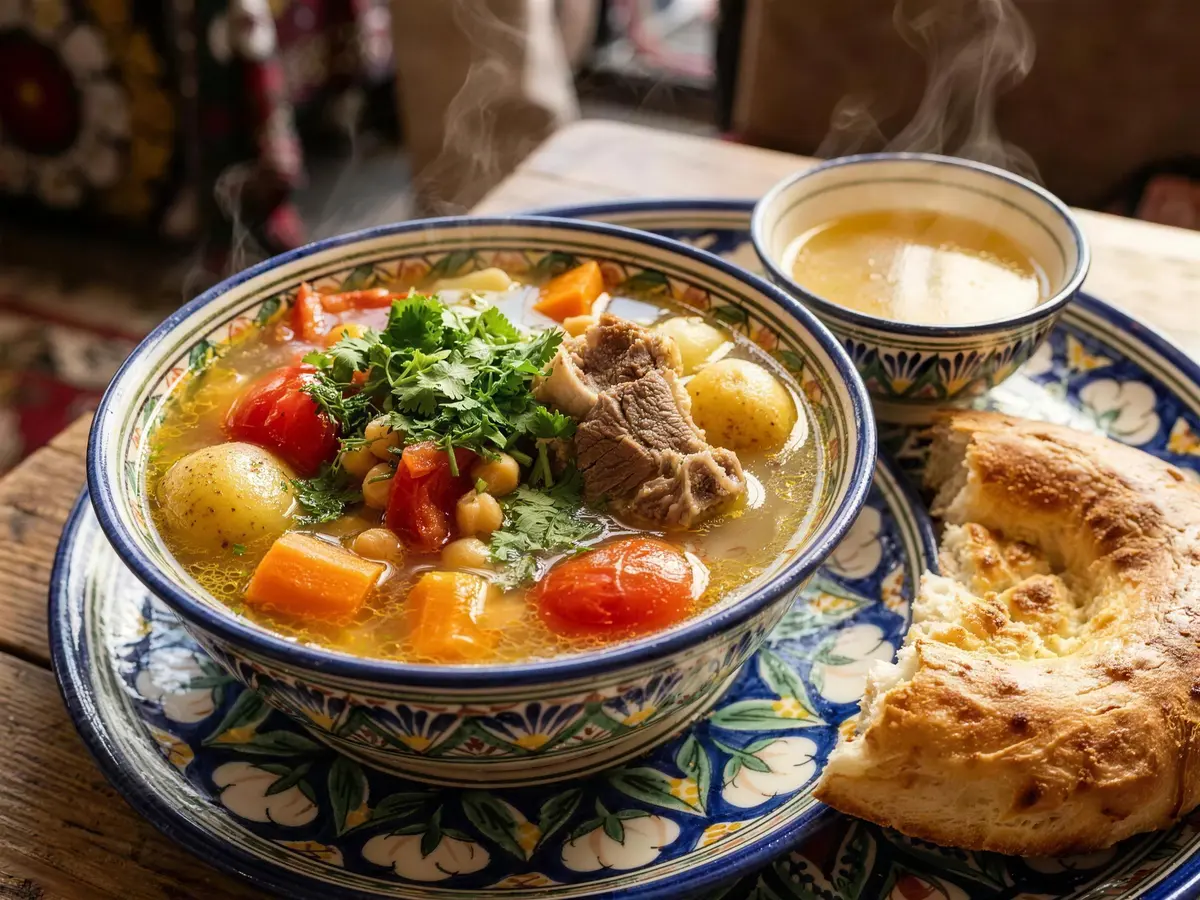
Sauerkraut shchi is the Russian cabbage soup in its sour winter form: beef on the bone simmered for a couple of hours, sauerkraut braised separately with tomato paste, then potatoes, onion and carrot, finished with garlic and dill and served with sour cream. It rests for an hour before serving and is better still the next day. In the 18th and 19th centuries shchi was frozen into big rounds and taken on the road in winter.
Ingredients
- 1 kgbeef on the bone
- 600-700 gsauerkraut
- 4-5 piecespotatoes
- 1 piecelarge carrot
- 1 piecelarge onion
- 2 tbsptomato paste
- 3-4 clovesgarlic
- 3 tbspvegetable oil
- 2 piecesbay leaves
- 5-7 piecesblack peppercorns
- salt to taste
- fresh dill and parsley
- thick sour cream for serving
- 3 lwater
Method
- Rinse the beef, cover with 3 litres of cold water, bring to a boil. Skim foam, reduce to minimum heat. Add peppercorns and cook covered for 2–2.5 hours until the meat is very tender.
- If sauerkraut is too sour, rinse lightly and squeeze, reserving the brine. In a deep pan, heat 2 tbsp of the oil and sauté the cabbage for 5–7 minutes. Add tomato paste, pour in 1–2 ladles of broth, cover and braise on low heat for 1–1.5 hours until soft and fragrant.

- Finely chop onion, grate carrot. Sauté the onion in the remaining 1 tbsp of oil until translucent, add carrot and cook another 5–7 minutes.
- Strain broth and return to pot. Peel and dice the potatoes and cook them in the broth for 10 minutes. Add braised cabbage and sautéed vegetables. Remove meat from bones, slice and return to soup. Add the bay leaves, cook another 10–15 minutes.
- Season with salt and, if you like, ground black pepper. Add a little sauerkraut brine if needed. Turn off heat, take out the bay leaves, stir in the minced garlic and chopped dill and parsley, cover. Let rest for up to 1 hour off the heat, or cool and refrigerate overnight for even better flavor, then bring it back to a full boil before serving.
- Serve with thick sour cream and more dill and parsley.
Cooked it? Rate the recipe
FAQ
Sauerkraut gives the soup a distinctive tang and depth of flavor impossible to achieve with fresh cabbage. Overnight shchi — the legendary 'sutochnye shchi' — is always made with sauerkraut: left to rest overnight, the flavors meld into something extraordinary (for a lighter version with fresh cabbage, see fresh cabbage shchi).
If the sauerkraut is very sour, rinse it briefly under cold water before adding. A pinch of sugar or extra carrots also helps balance the acidity. Don't rinse too thoroughly — some of that sourness is essential to the soup's character.
Overnight shchi ('sutochnye shchi') are made the day before and left to rest overnight — often in a cooling oven in the old days. At home, cool the pot and keep it in the fridge overnight rather than on the stove. During that time the sauerkraut's sourness mellows and the flavors come together. Brought back to a full boil the next day, they are a dish in their own right.
Yes — meatless 'postnye shchi' are a classic of Orthodox fasting. Replace meat with dried or fresh porcini mushrooms and use vegetable oil. Mushroom broth paired with sauerkraut creates a rich, satisfying flavor without any meat.
The most common reasons are too little sauerkraut or a weak broth. Build the broth on beef on the bone rather than boneless meat. Braise the sauerkraut separately with tomato paste and a ladle or two of broth before it goes into the pot — it softens the cabbage and rounds off the sourness. And don't rush: the beef needs 2–2.5 hours (the same beef-on-the-bone broth is the base of borscht).
Keep browsing
More dishes from the Russian archive — picked by overlap with what you're cooking now.




Recipes by email
One letter a week: a recipe picked for your taste, plus whatever is new on the site. You can stop the letters in one click.
Welcome gift: Sergei's cookbook (e-book).
By signing up for the newsletter you agree to the privacy policy.
Tell us what you like to cook (30 seconds) →
Join the conversation
Comments
No comments yet — be the first!