
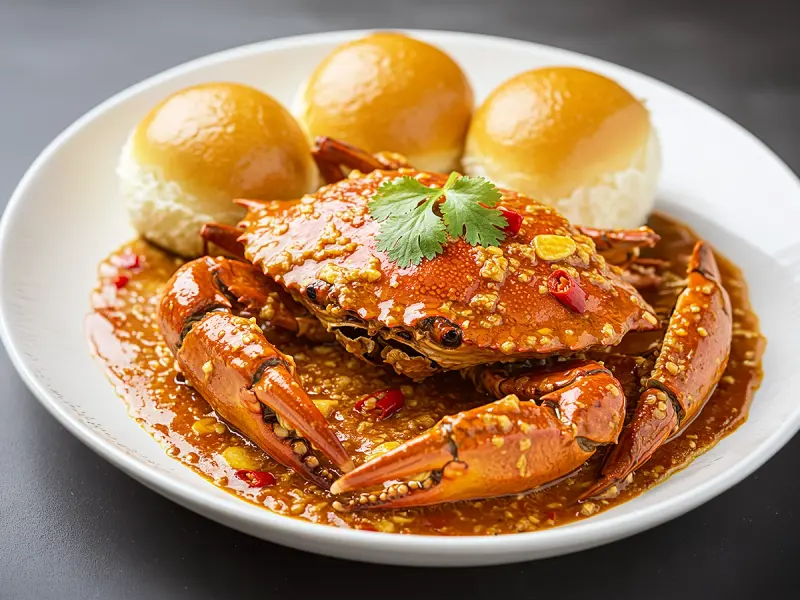
Singapore Chili Crab
Singapore's national dish — whole crab braised in a glossy sweet-spicy tomato-chili sauce with garlic, ginger, and egg ribbons. Created in 1950s Singapore and eaten with your hands, mopping up every drop of sauce with warm mantou buns.
Ingredients
- 800 gcrab meat or 1 whole prepared crab
- 2 tbspvegetable oil
- 3 red chili peppers
- 4 garlic cloves
- 1 large onion or 6-8 shallots
- 30 gfresh ginger
- 3 tbsptomato paste
- 4 tbspketchup
- 2 tbspsweet chili sauce
- 1 tbspoyster sauce
- 3 tbspsugar
- 300 mlchicken or vegetable broth
- 2 eggs
- 1 tsplime juice
- 1 tspcornstarch
- 2 tbspwater
- fresh cilantro for garnish
Method
- Blend chili, garlic, onion, and ginger in a blender with a little water to a smooth paste. This is called 'rempah' — the flavor base of the dish.
- Heat oil in a deep wok or skillet. Fry the paste for 5-7 minutes until fragrant. Add tomato paste, ketchup, sweet chili sauce, and oyster sauce. Cook 2-3 more minutes.
- Pour in the broth, add sugar and bring to a boil. Reduce heat and simmer 5-10 minutes until the sauce starts to thicken. Taste — it should be sweet, spicy, and tangy.
- If using frozen crab, thaw it in the fridge overnight, or seal it in a bag and submerge in cold water, changing the water every 30 minutes, then cook right away — never on the counter. Add the crab to the sauce, stir gently to coat all pieces. Cover and simmer on low heat for 8-10 minutes.
- Dissolve cornstarch in water and pour into the sauce. Beat eggs and pour in a thin stream while stirring — the eggs should form silky ribbons, not scrambled chunks. Add lime juice and turn off heat immediately.
- Transfer to a large plate, drizzle generously with sauce, garnish with cilantro. Serve with warm bread or baguette for dipping. The traditional way is to eat with mantou buns.
FAQ
Fresh or live crab gives the best result — the meat is more tender and flavorful. Frozen raw crab (thawed) is perfectly acceptable. Avoid pre-cooked frozen crab — it turns rubbery when simmered in the sauce.
Two methods: pour beaten eggs in a thin stream into the hot sauce while stirring — they create silky ribbons and thicken the sauce naturally. Or dissolve cornstarch in water and stir in. The egg method is more traditional; cornstarch is simpler.
Mix soy sauce with a little fish sauce and a pinch of sugar — it gives a similar depth of umami. Hoisin sauce also works but is sweeter, so reduce the added sugar.
Eggs poured in a thin stream into the hot sauce create the dish's signature silky ribbons. They transform a plain spicy sauce into something creamy and coating. Without eggs the sauce stays watery and thin.
The dish was created by Singaporean housewife Cher Yam Tian in the 1950s — she swapped tomato sauce for chili paste. It is Singapore's officially recognized national dish. In 2009 a Malaysian tourism minister claimed it as Malaysian — this caused a diplomatic incident. The dish is Singaporean.
Rate this
Recipes by email
One letter a week: a recipe picked for your taste, plus whatever is new on the site. Unsubscribe in one click.
Welcome gift: Sergei's cookbook (e-book).
By subscribing you agree to the privacy policy.
Tell us what you like to cook (30 seconds) →Keep browsing
More dishes from the Singaporean archive — picked by overlap with what you're cooking now.

Join the conversation
Comments (1)
I bring the crab meat to room temperature for 10 minutes before cooking singapore chili crab. Cold fish hitting a hot pan drops the temperature and you lose that crucial initial sear. Just 10 minutes, not more — food safety matters.