

Fried Calamari
Calamari fritti (fried calamari, fried squid) is an Italian seafood starter: squid rings dusted in flour with a little fine semolina and deep-fried until pale gold. The squid cooks in under two minutes, so what matters is drying it well and keeping the oil at 180°C. Serve straight from the pan with lemon.
Ingredients
- 500 gfresh squid
- 70 gall-purpose flour
- 30 gfine semolina (semola rimacinata)
- 1000 mlpeanut or sunflower oil for deep frying
- 1 tspfine salt
- 1 piecelemon
Method
- Clean the squid: pull the head and tentacles out of the body, remove the clear quill inside and rinse well. Cut the bodies into rings about 1 cm wide and keep the tentacles whole. Dry everything thoroughly with paper towels, twice if needed. Wet squid spits in hot oil and turns the flour into paste.
- Pour the oil into a heavy 20 cm pot (it should be about 3 cm deep) and heat it to 180°C. Without a thermometer, drop in a small piece of squid: it should sizzle at once and rise to the surface without darkening right away. Mix the flour and semolina in a bowl, toss the rings in it, then shake them in a sieve so only a thin coat stays on.
- Fry in 3–4 batches, a handful at a time, for 1½–2 minutes, until pale gold. A crowded pot cools the oil and the squid soaks it up; a minute too long and the rings turn rubbery. Let the oil come back to 180°C between batches.
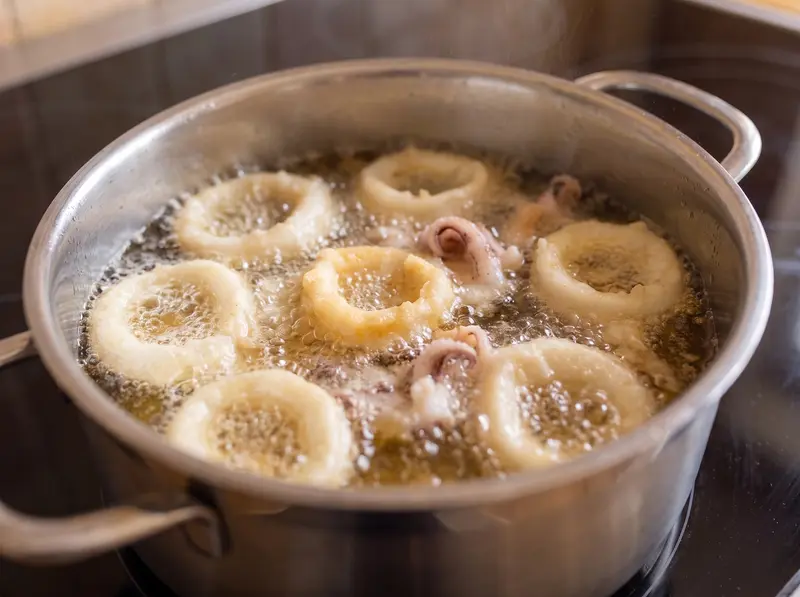
- Lift the calamari out with a slotted spoon onto paper towels and salt them at once, while they still glisten so the salt sticks. Serve immediately with lemon wedges. They lose their crunch within minutes.
FAQ
Rubbery calamari is the result of incorrect frying time. The rule is: either very fast (1.5–2 minutes at 180°C) or very slow (braise for 40–60 minutes). At intermediate times the protein contracts and becomes tough. Fry rings about 1 cm thick for no more than 2 minutes. Do not overcrowd the pot: a handful at a time, because every extra ring lowers the oil temperature.
The closest substitute is cuttlefish cut into strips, or large peeled shrimp, which need about 1½ minutes at 180°C. Scallops and pieces of firm white fish also take the same flour coating; fry them just until pale gold. For a vegetarian version, use zucchini sticks or leek rings dusted with the same flour and fried for 2 minutes.
In Italy the coating is just flour, often 00 flour mixed with fine semolina (semola rimacinata), as in this recipe: 70 g flour and 30 g semolina for 500 g of squid. It gives a thin crisp crust without the heaviness of batter. Beer or sparkling water batter gives a puffier American-style crust. Panko makes a coarser, crunchier texture. For the lightest result, mix flour and cornstarch 1:1.
In Italy the usual answer is a lemon wedge and nothing else, with salt added right out of the fryer. Aioli (garlic mayonnaise) and marinara sauce are common restaurant additions. Tartar sauce, remoulade, or a spicy chili sauce also work well. In Naples fried seafood is traditionally eaten from a paper cone on the street.
Clean, cut and dry the squid up to 24 hours ahead and keep it covered in the fridge; pat it dry again before cooking. Flour the rings only when the oil is at temperature, because flour left on wet squid turns pasty. Fried calamari is best eaten immediately, since reheating makes it lose its crunch. Reheating in the oven at 200°C for 5 minutes partially restores the crust.
Rate this
Recipes by email
One letter a week: a recipe picked for your taste, plus whatever is new on the site. Unsubscribe in one click.
Welcome gift: Sergei's cookbook (e-book).
By subscribing you agree to the privacy policy.
Tell us what you like to cook (30 seconds) →Keep browsing
More dishes from the Italian archive — picked by overlap with what you're cooking now.

Join the conversation
Comments (1)
Fresh seafood should smell like the ocean, not like fish. If your fresh squid smells strongly when you buy it for fried calamari, it's past its prime. Your nose is the most reliable freshness test.