

Korean Spicy Squid Stir-Fry
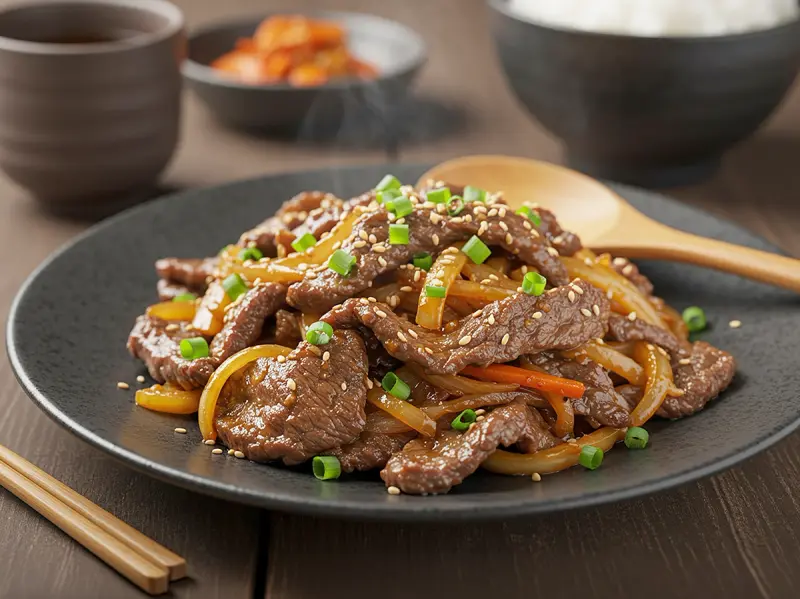
A bold Korean stir-fry of tender squid with carrot, bell pepper, and onion in a spicy-sweet gochujang sauce. Fast, fiery, and deeply savory — ready in under 10 minutes once the vegetables are prepped. Serve with rice and kimchi.
Ingredients
- 300 gsquid, cleaned and sliced into strips
- 1 carrot, peeled and cut into thin strips
- 1 bell pepper, cut into thin strips
- 0.5 onion, thinly sliced
- 2 garlic cloves, finely chopped
- 1 tspfresh ginger, finely grated
- 1 tbspgochujang
- 1 tbspsoy sauce
- 1 tspsesame oil
- 1 tspsugar
- 2 tbspvegetable oil for frying
- 2 scallion stalks, sliced, and sesame seeds for serving
- 2 tspgochugaru (Korean chili flakes)
Method
- Mix gochujang, gochugaru, soy sauce, sesame oil, sugar, grated ginger, and chopped garlic in a bowl to make the sauce. Pat the squid strips dry with paper towels so they sear instead of steaming.

- Heat the oil in a wok or wide skillet over high heat until it shimmers. Stir-fry the carrot, bell pepper, and onion, all cut into thin strips so they cook at the same pace, for 2–3 minutes until softened but still with a bite.
- Add the squid and sauce. Stir-fry for 2–3 minutes, tossing constantly, until the squid turns white and opaque and curls. Take it off the heat right then — a minute longer and it turns rubbery.

- Sprinkle with sesame seeds and sliced green onion. Serve immediately with steamed rice and kimchi.
FAQ
Squid cooks in 2–3 minutes over high heat. The mistakes: low heat (squid steams in its own liquid) and overcooking. The sign it is done: the strips turn white and opaque and start to curl. Take the pan off the heat at that point, because a minute more makes them tough.
Gochujang is a fermented Korean chili paste. Substitute: mix tomato paste + sriracha + a pinch of sugar in a 2:1:0.5 ratio. The flavor will be simpler but acceptable. Gochujang is available in Asian grocery stores and online.
Yes — thawed squid works well. Make sure to fully defrost and pat dry with paper towels before frying — excess water makes the sauce watery and prevents a proper sear.
Gochujang is a thick fermented paste of rice, chili, and soybeans. Korean heat is not just sharp — it delivers a deep sweet-salty-spicy flavor with umami. Unlike Chinese chili oil (direct and bright) or Japanese wasabi (sharp and fleeting), gochujang builds slowly and lingers.
Classically with steamed rice and kimchi. It is also good in tacos, or over cold glass noodles to balance the heat.
Rate this
Recipes by email
One letter a week: a recipe picked for your taste, plus whatever is new on the site. Unsubscribe in one click.
Welcome gift: Sergei's cookbook (e-book).
By subscribing you agree to the privacy policy.
Tell us what you like to cook (30 seconds) →Keep browsing
More dishes from the Korean archive — picked by overlap with what you're cooking now.


Join the conversation
Comments (1)
Fresh seafood should smell like the ocean, not like fish. If your squid smells strongly when you buy it for korean spicy squid stir-fry, it's past its prime. Your nose is the most reliable freshness test.