
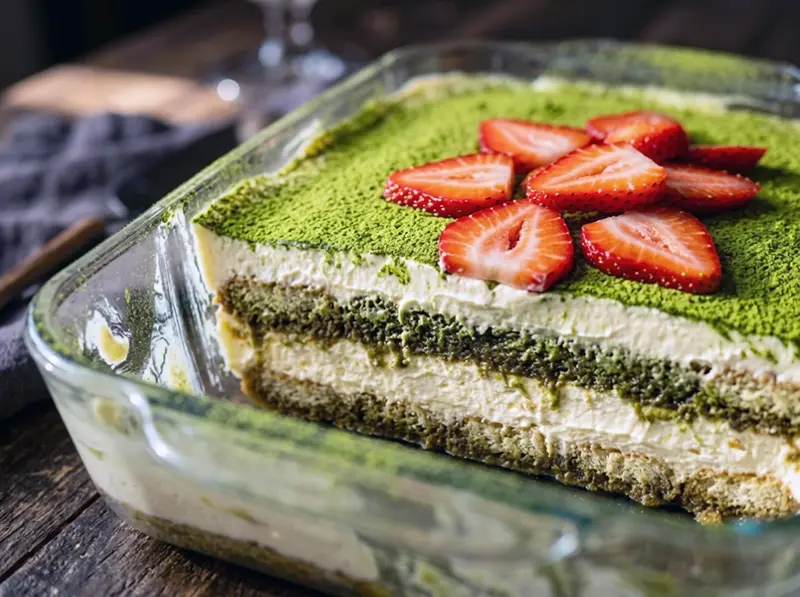
Strawberry Matchamisu
A no-bake layered dessert that swaps the espresso in tiramisu for a bowl of whisked matcha and replaces the cocoa dusting with more matcha on top. Fresh strawberries go in the cream and between the layers. It sets overnight into something silky and cool with a faint bitterness from the green tea that keeps the sweetness in check. The name is a portmanteau, and the dessert earns it.
Ingredients
- 400 gfresh strawberries, hulled
- 3 tbspcaster sugar
- 2 tbspmatcha powder, sifted, plus extra for dusting
- 180 mlhot water, around 80°C
- 4 egg yolks
- 80 gcaster sugar
- 500 gmascarpone
- 200 mlheavy cream
- 1 tspvanilla extract
- 200 gladyfingers
Method
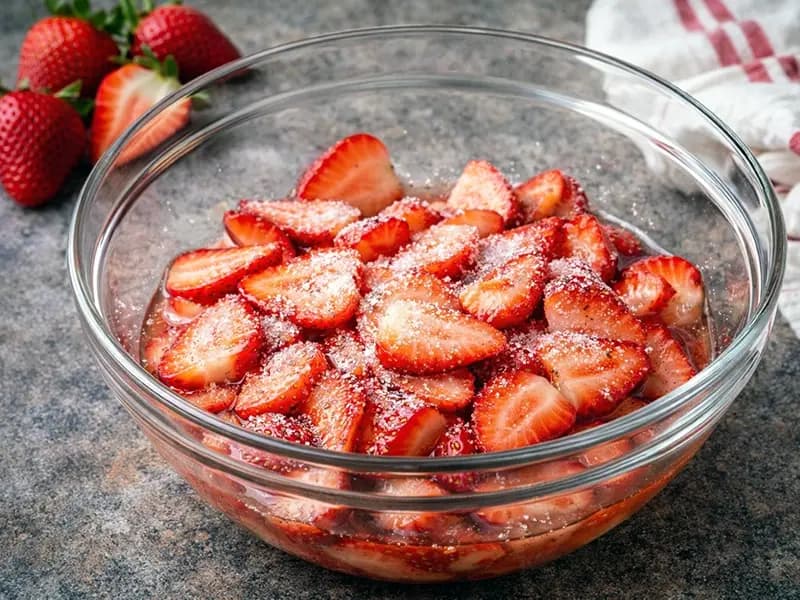
- Macerate the strawberries. Slice 300 g of the strawberries and toss them with 2 tablespoons of caster sugar in a bowl. Set aside for at least 20 minutes — they'll release juice and soften slightly. Reserve the remaining 100 g for slicing and decorating the top just before serving. The macerating juice will go into the cream later, so don't drain it.
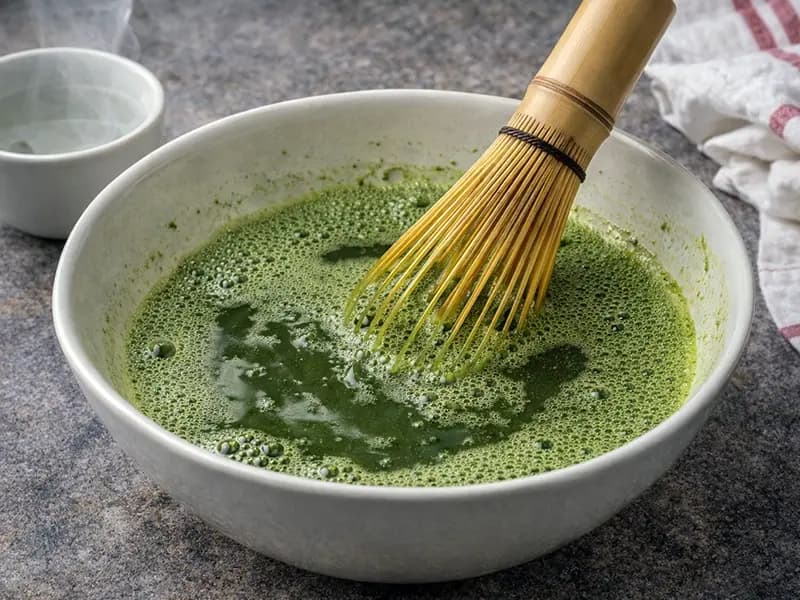
- Make the matcha soak. Sift the matcha powder into a wide, shallow bowl. Add the hot water (80°C is important — boiling water makes matcha bitter and astringent) and whisk vigorously in a zigzag motion until there are no lumps and a thin layer of foam forms on top. Add the remaining 1 tablespoon of caster sugar and stir to dissolve. Let it cool to room temperature before using — warm soak will soften the ladyfingers too fast.
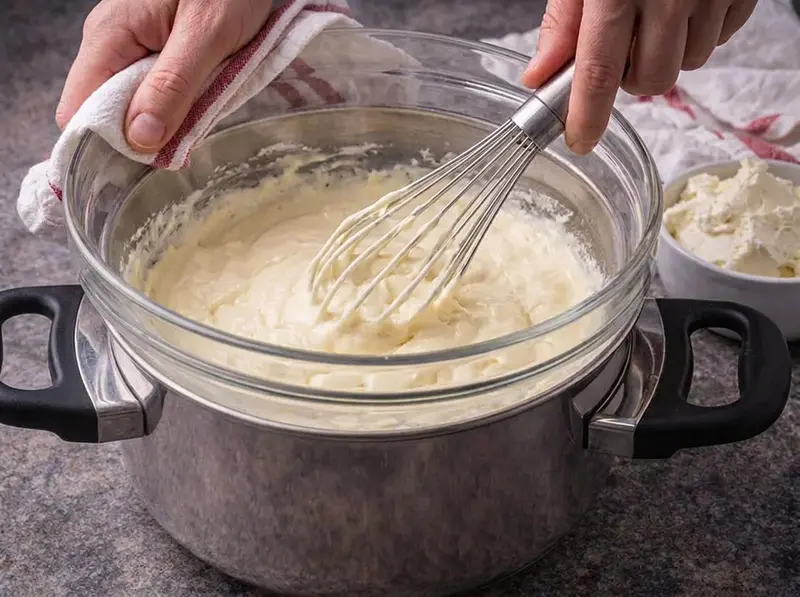
- Make the cream. Set a heatproof bowl over a pot of barely simmering water — the bowl should not touch the water. Add the egg yolks and 80 g of caster sugar. Whisk constantly for 4–5 minutes until the mixture turns pale, thick, and ribbony, and reaches about 70°C. Remove from the heat and keep whisking until the mixture has cooled to room temperature — the outside of the bowl should feel cool, not warm. Setting the bowl in a sink of cold water while you whisk speeds this up. Only then add the mascarpone; warm yolks melt it and make the cream split. Beat in the mascarpone with a spatula until just combined — don't overwork it or it can turn grainy.
- In a separate cold bowl, whip the heavy cream and vanilla extract to soft peaks — the cream should hold its shape but still look glossy, not stiff. Fold the whipped cream into the mascarpone mixture in two additions, using a large rubber spatula and a gentle folding motion. Finally, lift the macerated strawberries out of their juice with a slotted spoon and fold them through the cream. Keep the strawberry juice.
- Assemble the matchamisu. Pour the strawberry juice into the cooled matcha soak and stir to combine — this adds a pink blush to the dipping liquid. Working one at a time, briefly dip each ladyfinger into the matcha-strawberry soak: 2 seconds per side, no more. They should be damp but not saturated — if they fall apart, they've been in too long.
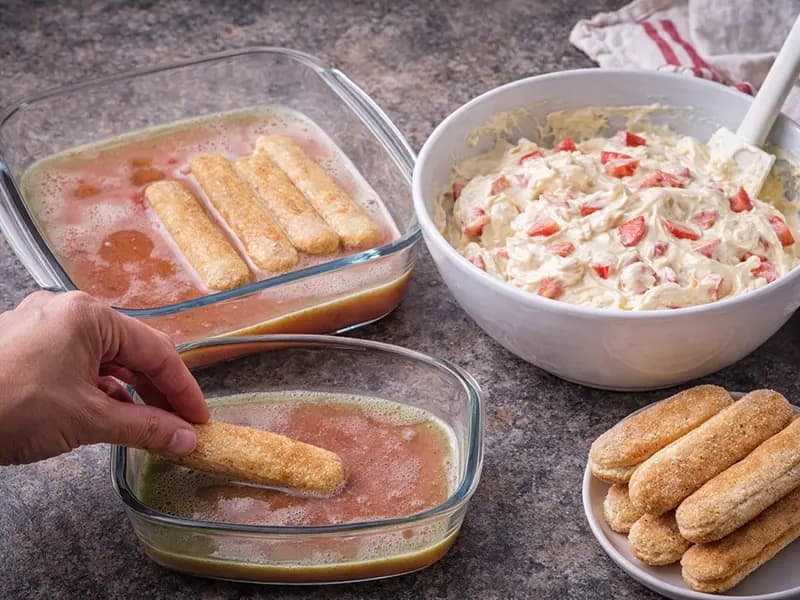
- Arrange a layer of dipped ladyfingers in the bottom of a 23×33 cm dish (or similar). Spread half the mascarpone cream evenly over the top. Add a second layer of dipped ladyfingers. Spread the remaining cream over the top and smooth it flat.
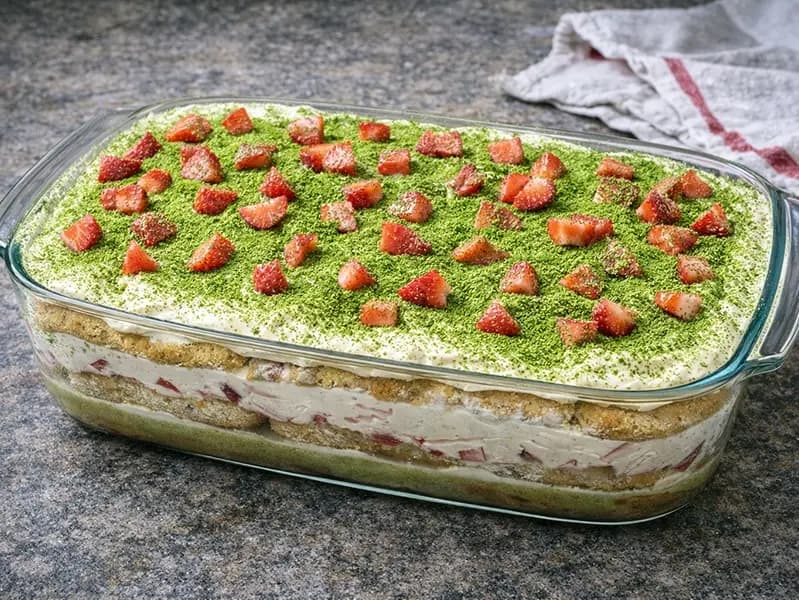
- Cover tightly with plastic wrap and refrigerate for at least 4 hours. Overnight is better — the ladyfingers absorb the cream and everything firms up into clean, sliceable layers. Just before serving, slice the reserved 100 g of strawberries and arrange them on top. Dust generously with sifted matcha powder through a fine sieve. Serve cold.
FAQ
Yes — this is actually the ideal scenario. Assembled matchamisu should rest in the fridge for at least 4 hours before serving, and overnight (8–12 hours) gives the best result: the ladyfingers fully absorb the cream and the layers set firmly enough to slice cleanly. It keeps well for up to 2 days covered in the fridge. Beyond that the ladyfingers get too soft and the strawberries start to weep into the cream. Add the top layer of sliced fresh strawberries and the matcha dusting only right before serving — not the night before.
The recipe already addresses food safety: heating the egg yolks with sugar over a double boiler to around 70°C pasteurizes them. But if you want to skip eggs entirely, replace the yolk-sugar step with 2 tablespoons of icing sugar folded straight into the cold mascarpone. The texture is lighter and sets a little less firmly, so give it at least 6 hours in the fridge. Alternatively, use a store-bought pasteurized egg yolk product.
Culinary grade works well and is significantly cheaper than ceremonial. The key marker to look for is color: good matcha should be vivid grass green, not dull or khaki. Khaki matcha has usually been stored poorly or is old — it will taste bitter and grassy rather than sweet and vegetal. Whatever grade you use, store it in an airtight container away from light, and sift it before use. Clumpy matcha whisked into water will never fully dissolve.
Almost certainly the mascarpone was overworked or the hot egg mixture was added too fast. Mascarpone breaks easily — it goes from smooth to grainy in about 30 seconds of over-mixing. The fix: make sure the egg yolk mixture is fully cooled to room temperature before it touches the mascarpone. Add it in one go and fold gently with a spatula rather than beating. If it does start to look grainy, try folding in 2–3 tablespoons of cold heavy cream — this sometimes brings it back.
Yes. Gluten-free ladyfingers are available in most well-stocked grocery stores and online. You can also use gluten-free sponge cake cut into strips, or gluten-free digestive biscuits — the texture will be different (denser, less absorbent) but the dessert still works. If using a denser substitute, dip for 3–4 seconds instead of 2 so it actually absorbs the matcha soak. All other ingredients in the recipe are naturally gluten-free.
Keep browsing
More dishes from the Japanese archive — picked by overlap with what you're cooking now.
Recipes by email
One letter a week: a recipe picked for your taste, plus whatever is new on the site. Unsubscribe in one click.
Welcome gift: Sergei's cookbook (e-book).
By subscribing you agree to the privacy policy.
Tell us what you like to cook (30 seconds) →
Join the conversation
Comments
No comments yet — be the first!