

Takoyaki with Seafood
Traditional Japanese octopus balls made from a light dashi batter, filled with seafood, green onion, and tempura crumbs, cooked in a special round mold until golden. Topped with takoyaki sauce, Japanese mayo, bonito flakes, and aonori.
Ingredients
- 200 gall-purpose flour
- 500 mldashi broth
- 2 eggs
- 0.5 tspsoy sauce
- 0.25 tspsalt
- 150 gcooked octopus
- 2 tbspscallion
- 2 tbsptempura crumbs
- 1 tbsppickled ginger
- 1 tbspvegetable oil for greasing
- 1 tbsptakoyaki sauce
- 1 tbspJapanese mayonnaise
- bonito flakes for topping
- aonori for topping
Method
- Whisk flour with cold dashi broth, then add eggs, soy sauce, and salt. Beat with a whisk to a smooth, runny batter (like crepe batter).
- Dice the seafood into small cubes. Chop the green onion and prepare the tempura crumbs.
- Heat the takoyaki pan over medium heat and grease each mold well with oil.
- Pour batter almost to the top of each mold. Place a small amount of seafood, tempura crumbs, and green onion in each — add ginger if desired.
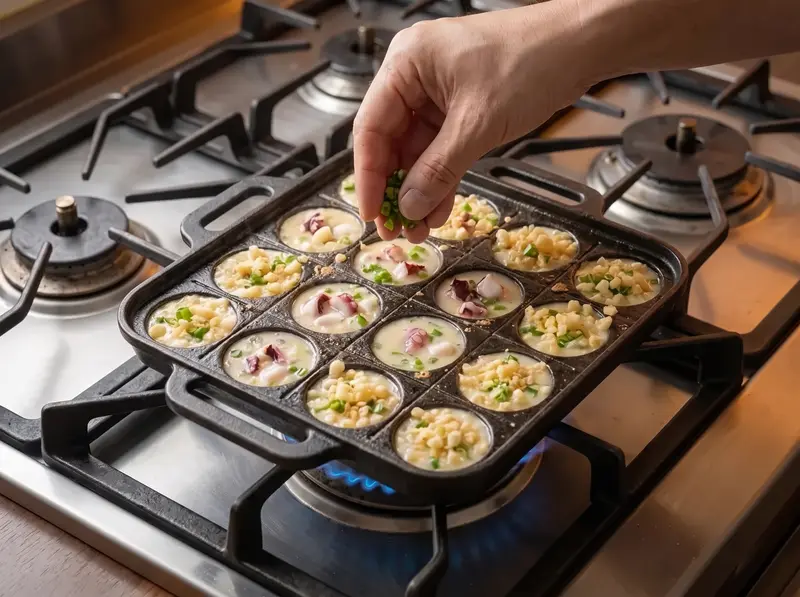
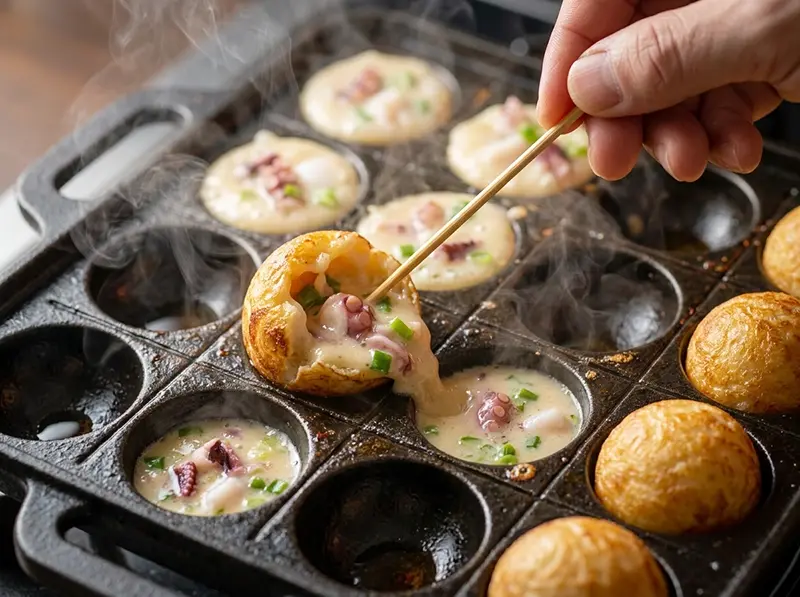
- After 1–2 minutes when the batter sets on the bottom, use a skewer to rotate each ball 90° so the uncooked batter flows to the outside — this creates the round shape. Continue turning until evenly golden all over, about 5–7 minutes total.
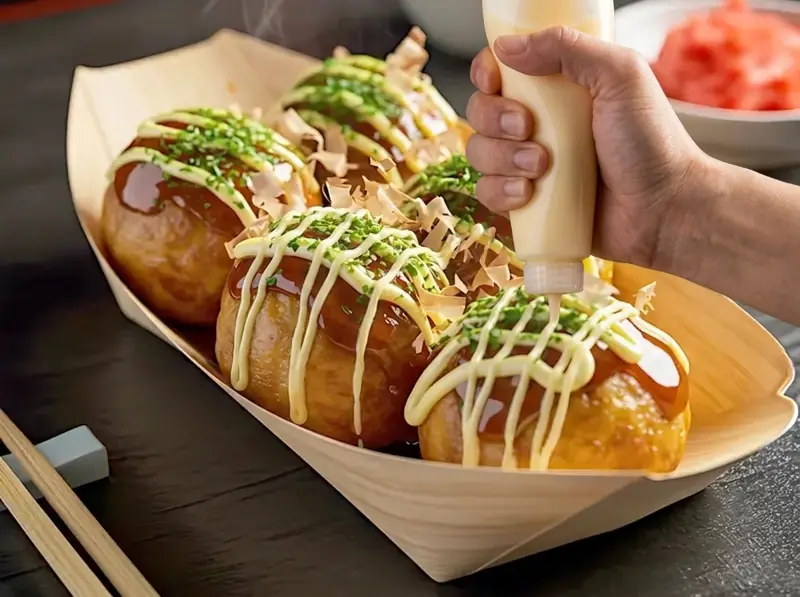
- Transfer hot takoyaki to a wooden boat or plate. Drizzle with takoyaki sauce and mayo in a grid pattern, then sprinkle with aonori and katsuobushi — the heat will make them dance.
FAQ
A mini-donut or nut mold works well — the balls will be similar in shape, though the effect will be slightly different. Takoyaki pans are also easy to find online.
Shrimp, squid, or crab sticks all work perfectly — just dice them small. The texture and flavor stay very close to the original.
Replace dashi with vegetable or chicken broth plus a small dash of soy sauce. The flavor will be less oceanic, but the batter will have the right consistency.
When the batter has set on the bottom (after 1–2 minutes), insert a skewer at the edge and rotate each ball 90° — the uncooked batter flows outward and forms the round shape. Keep turning until evenly golden.
You can skip them, but katsuobushi (bonito flakes) and aonori (seaweed) are what give takoyaki its authentic Japanese flavor and iconic presentation — the flakes wave beautifully from the heat.
Rate this
Recipes by email
One letter a week: a recipe picked for your taste, plus whatever is new on the site. Unsubscribe in one click.
Welcome gift: Sergei's cookbook (e-book).
By subscribing you agree to the privacy policy.
Tell us what you like to cook (30 seconds) →Keep browsing
More dishes from the Japanese archive — picked by overlap with what you're cooking now.

Join the conversation
Comments (1)
Presentation is half the battle with takoyaki with seafood. I serve it on a wooden board rather than a plate — it's more inviting and signals to people that they should reach in and help themselves.