
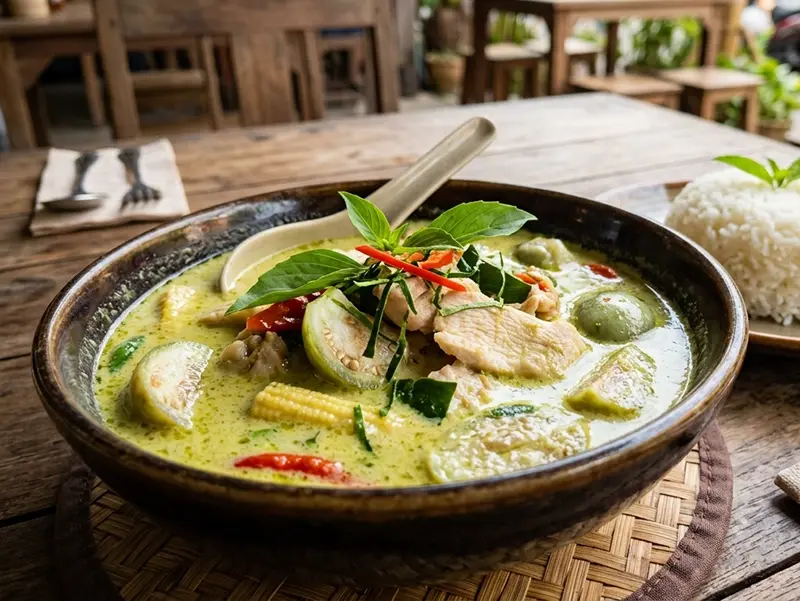
Thai Green Curry (Gaeng Keow Wan)
Gaeng keow wan (แกงเขียวหวาน) — literally 'sweet green curry' — is the most popular curry in Thailand, served everywhere from street stalls to fine restaurants. The green color comes from fresh green chillies in the paste; the 'sweet' in the name refers not to sugar but to the soft pastel shade of green. A quick-fried green curry paste forms the base, bloomed in the thick cream from coconut milk before the liquid is added. The balance is non-negotiable: spicy from the paste, rich from the coconut, salty from fish sauce, and a back note of sweetness from palm sugar. Thai basil and kaffir lime leaves are the aromatics that make it unmistakably Thai. Serve with jasmine rice and nothing else.
Ingredients
- 500 gchicken thighs, boneless
- 400 mlfull-fat coconut milk
- 150 mlchicken stock or water
- 3 tbspgreen curry paste
- 2 tbspfish sauce
- 1 tbsppalm sugar or brown sugar
- 6 kaffir lime leaves, center stem removed
- 1 stalk lemongrass, bruised and cut into 5 cm pieces
- 2 Thai eggplants
- 100 gsnow peas or green beans
- 1 large handful Thai basil leaves
- 1 red chilli
- 1 tbspvegetable oil (only if the coconut cream won't split)
- 1 lime
Method
- Bloom the curry paste. Open the coconut milk without shaking — scoop the thick cream from the top (about 4 to 5 tablespoons) into a wok or wide pan. Heat over medium-high until the cream bubbles and the oil begins to separate and pool on the surface — about 2 minutes. If the cream only bubbles and no oil appears after 3 to 4 minutes (common with coconut milk that contains stabilisers), add the tablespoon of vegetable oil and fry the paste in that instead. Add the green curry paste and stir-fry in the coconut cream for 2 to 3 minutes until intensely fragrant and the paste dries slightly and begins to stick to the pan. This step blooms the spices and cooks out the raw paste flavor.

- Add chicken and build the sauce. Add the chicken pieces and stir to coat in the paste. Cook 1 to 2 minutes. Pour in the remaining coconut milk and the stock. Add the lemongrass and torn kaffir lime leaves. Add the fish sauce and palm sugar. Stir and bring to a simmer.
- Simmer until chicken is cooked. Simmer gently over medium-low heat for 8 to 10 minutes until the chicken is cooked through. Do not boil hard — rapid boiling toughens chicken thighs and can cause the coconut milk to break.
- Add vegetables. Add the eggplant and simmer 3 to 4 minutes until tender but not mushy. Add the snow peas in the final minute. Taste the curry: adjust with more fish sauce for salt, more palm sugar for sweetness. The sauce should be lightly thickened and richly flavoured — not watery.
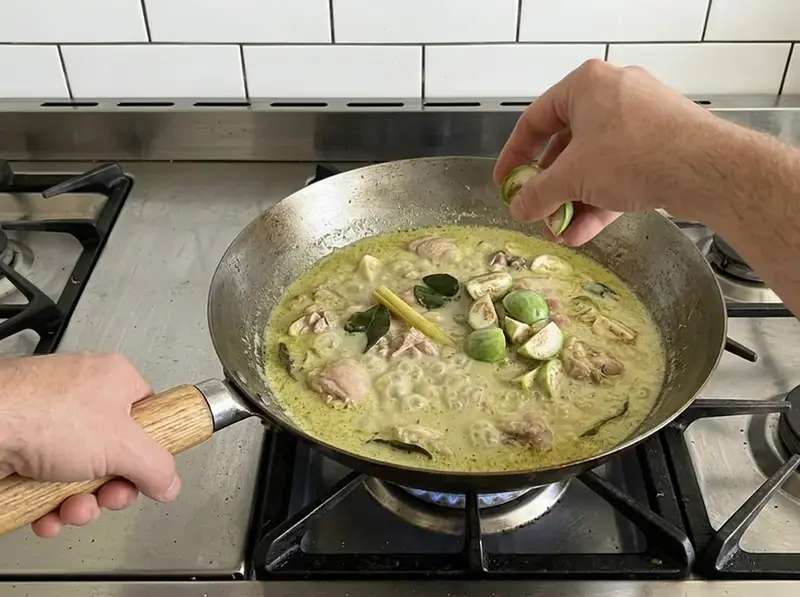
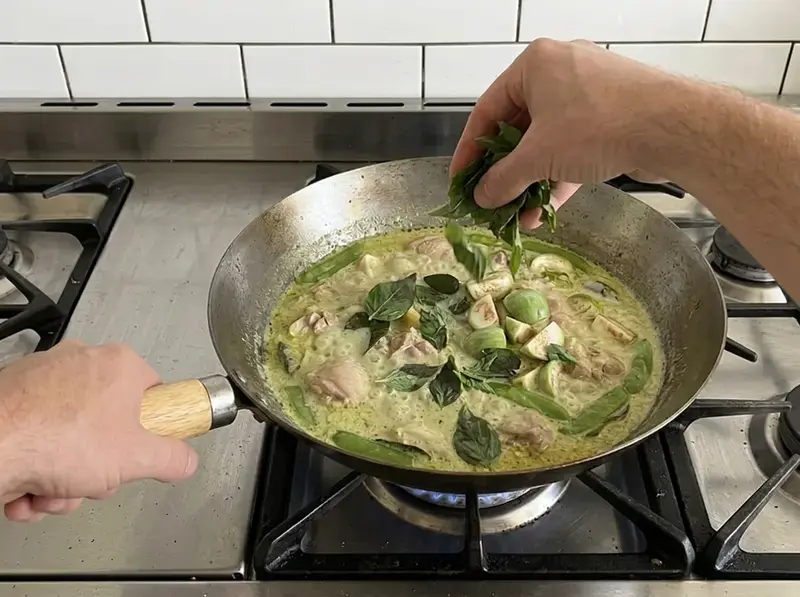
- Finish and serve. Remove from heat. Stir in the Thai basil leaves — they wilt immediately in the residual heat. Add a squeeze of lime if using. Ladle into bowls. Garnish with sliced red chilli and a few extra basil leaves. Serve immediately with steamed jasmine rice. The kaffir lime leaves and lemongrass are for flavor — warn diners not to eat them.
FAQ
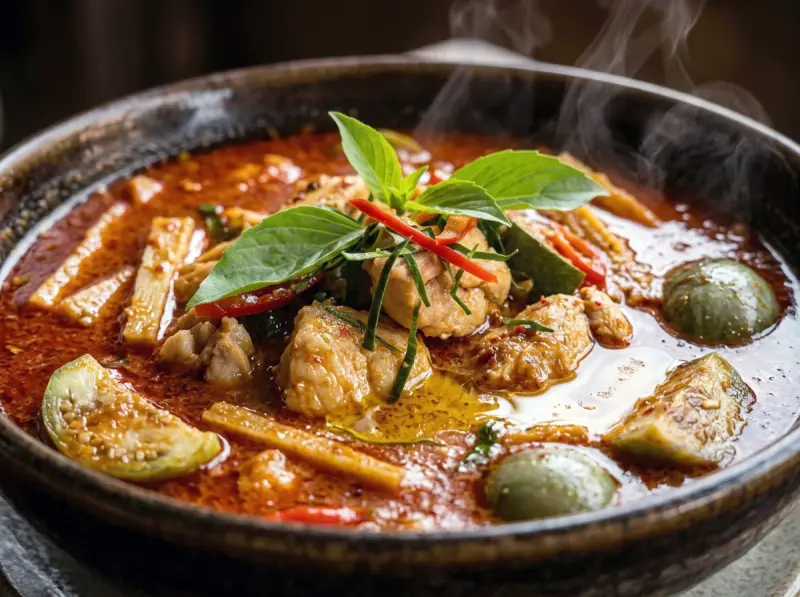
Green curry (gaeng keow wan) uses fresh green chillies in the paste — it is typically the most aromatic and can range from mild to very hot depending on the paste. Red curry (gaeng daeng) uses dried red chillies — deeper, earthier flavor, consistently hot. Yellow curry (gaeng garee) uses dried chillies plus turmeric and more cumin and coriander — the mildest and closest in spice profile to Indian curry. Green curry generally has more herbs (lemongrass, galangal, kaffir lime) and a brighter, more citrus-forward character; red curry is richer and more deeply spiced.
Three most common causes. First: the curry paste was not fried long enough in the coconut cream — the fat must separate and the paste must fry dry before liquid is added. Second: insufficient fish sauce — fish sauce is the salt and the umami of the dish; under-salted curry tastes flat. Third: palm sugar was omitted — the sweetness balances the heat and acidity. Taste the curry at the end and add fish sauce a teaspoon at a time and sugar a pinch at a time until the flavor rounds and deepens. A squeeze of lime at the very end also lifts flat curries dramatically.
Yes. Replace chicken with firm tofu (press it first, cube and pan-fry until golden for better texture), or use mixed vegetables — courgette, baby corn, bamboo shoots, and mushrooms work well. Replace fish sauce with soy sauce or tamari in equal quantity (the flavor is slightly different but the seasoning principle is the same). The green curry paste must be vegan — many store-bought pastes contain shrimp paste. Maesri brand is commonly available without shrimp paste; check the label. Coconut milk and all other ingredients are already plant-based.
Kaffir lime (makrut lime) leaves are the double-lobed leaves of the makrut lime tree, used in Thai, Lao, and Indonesian cooking for their intensely citrusy, floral fragrance. They are used whole to infuse flavor (not eaten) or shredded very finely as a garnish. They are available fresh or dried at Asian grocery stores, and freeze extremely well. Substitutes in order of preference: dried kaffir lime leaves (significantly less aromatic); strips of lime zest (peel only, no white pith — use one lime per 4 leaves); lemongrass. No substitute fully replicates the specific floral-citrus character.
Store the curry (without rice) in an airtight container in the refrigerator for up to 3 days. Green curry actually improves overnight as the flavors integrate. To reheat: warm gently over low heat, stirring — do not boil, as this can cause the coconut milk to separate and toughen the chicken. If the sauce has thickened too much in the fridge, add a splash of coconut milk or water to loosen. Always add the Thai basil fresh when reheating — adding it during storage causes it to blacken and lose flavor.
Rate this
Recipes by email
One letter a week: a recipe picked for your taste, plus whatever is new on the site. Unsubscribe in one click.
Welcome gift: Sergei's cookbook (e-book).
By subscribing you agree to the privacy policy.
Tell us what you like to cook (30 seconds) →Keep browsing
More dishes from the Thai archive — picked by overlap with what you're cooking now.
Join the conversation
Comments (2)
Green curry paste varies wildly between brands. Some are mild, some are volcanic. Taste a tiny bit before deciding how much to use. I fry the paste in the thick coconut cream (the solid part from the top of the can) until oil separates and pools around the edges — that is when you know the paste is properly bloomed. The Thai basil goes in at the very end and wilts in the residual heat. If you cook it, it turns black and bitter.
I have been making green curry for years and this recipe gets the technique right. Frying the paste in the coconut cream first is essential — it blooms the spices and changes the whole flavor profile. One thing I would add: fish sauce at the very end, taste and adjust. Every brand of curry paste has different salt levels so you cant just follow the measurement blindly.