
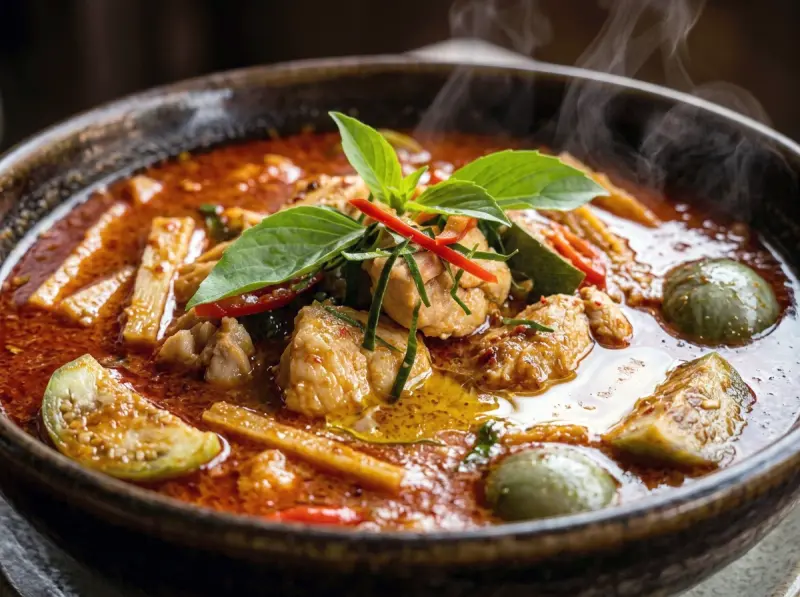
Thai Red Curry (Gaeng Phet)
Gaeng Phet (แกงเผ็ด) — 'spicy curry' — is Thailand's most ubiquitous curry, found on every restaurant menu and in every home. Where green curry uses fresh chillies for a herbal brightness, red curry uses dried red chillies for a deeper, earthier, and more complex heat. The color comes from dried chilli skins; the richness comes from full-fat coconut milk with the cream reduced first to separate the oil before the paste is added — the authentic Thai technique that concentrates the aromatics. Popular with chicken, beef, pork, duck, or prawns. Thai eggplant and bamboo shoots are the classic vegetables; bell peppers and pumpkin are common additions.
Ingredients
- 600 gchicken thighs or beef
- 3 tbspred curry paste
- 400 mlfull-fat coconut milk
- 200 mlchicken stock
- 200 gThai eggplant
- 100 gbamboo shoots
- 6 makrut lime leaves
- 1 lemongrass stalk
- 2 tbspfish sauce
- 1 tbsppalm sugar or brown sugar
- 1 handfulThai basil leaves
- 2 red chillies
- 1 lime
Method
- Reduce the coconut cream first. Open the coconut milk without shaking it — the thick cream will have separated to the top. Spoon the cream into a wok or wide pot and heat over medium heat. Cook, stirring, for 3 to 4 minutes until the cream thickens and the coconut oil visibly separates — you will see small pools of clear oil forming on the surface. This is the authentic Thai technique: cracking the coconut cream releases the fat, which then fries the curry paste.
- Fry the curry paste in the coconut oil. Add the red curry paste to the separated coconut cream and stir-fry for 1 to 2 minutes until deeply fragrant, the red oil is released, and the paste darkens slightly. The paste should sizzle in the coconut oil. Add the lemongrass stalk.
- Add the protein and build the sauce. Add the chicken or beef and stir to coat completely in the paste. Cook 2 minutes until sealed. Pour in the remaining coconut milk and the chicken stock. Add the makrut lime leaves, fish sauce, and palm sugar. Stir well. Bring to a gentle simmer.
- Simmer and add vegetables. Add the Thai eggplant and bamboo shoots. Simmer over medium-low heat for 8 to 10 minutes until the chicken is cooked through and the eggplant is tender. Do not boil hard — this breaks the coconut milk and darkens the color. Taste the sauce and adjust with more fish sauce for saltiness, more sugar for sweetness.
- Finish and serve. Remove from heat. Discard the lemongrass stalk. Stir in the Thai basil leaves — they wilt in the residual heat in seconds. Serve immediately in bowls over jasmine rice. Garnish with sliced red chillies and a drizzle of the thick coconut cream reserved from the top of the can. Lime wedges on the side.
FAQ
Red curry paste uses dried red chillies, which give it a deeper, more complex, and earthier heat compared to the fresh green chilli freshness of green curry paste. The dried chillies also produce the distinctive brick-red color. Red curry paste typically contains the same aromatics as green — lemongrass, galangal, kaffir lime peel, garlic, shallots, coriander root, cumin, and shrimp paste — but the flavor profile is warmer, slightly smokier, and less herbal than green. Red curry is often described as having more body and staying power on the palate, while green curry is brighter and more immediate.
Cracking the coconut cream means cooking the thick cream from the top of an unshaken can of coconut milk over medium heat until the water evaporates and the coconut oil separates — visible as clear pools on the surface of the thickened cream. At this point the cream acts as a frying medium. The curry paste is then fried in this coconut oil rather than simmered in liquid, producing a more aromatic and flavor-concentrated base. It is not strictly necessary — blooming the paste in vegetable oil first is a shortcut that produces a very good result — but the cracked coconut cream method produces noticeably more depth of flavor.
Duck red curry (gaeng phet ped yang) is one of the classic Thai restaurant dishes and considered the luxury version of red curry. Roasted duck — bought from a Chinese barbecue shop — is most commonly used; the skin stays crispy in the sauce and the rich fat enriches the curry base. Classic additions with duck are pineapple chunks (sweet fruit balances the richness) and cherry tomatoes or lychees. For vegetables: pumpkin or butternut squash work particularly well with duck; their sweetness mirrors the fruit additions. Baby corn, bell peppers, and courgette are common alternatives.
Yes. Replace chicken or beef with firm tofu (pressed dry and pan-fried until golden before adding to the curry — this prevents it from becoming waterlogged), tempeh, or chickpeas. Replace fish sauce with soy sauce (use 1.5 times the quantity since soy is less salty per tablespoon) or a dedicated vegan fish sauce. The critical issue is the curry paste: most commercial red curry pastes contain shrimp paste (kapi). Look for specifically vegan-labelled red curry paste, or make your own substituting miso paste for the shrimp paste. The flavor difference is real but manageable.
Red curry improves after resting — the sauce thickens and deepens overnight. Store in an airtight container in the refrigerator for up to 3 days. Reheat gently on the stovetop over medium-low heat, adding a splash of water or stock to loosen if needed. Do not microwave on full power — the coconut milk can separate. The eggplant will soften further with reheating and may break apart; this is acceptable. The curry can be frozen (without basil) for up to 2 months. Freeze the sauce with the protein and vegetables; add fresh basil when serving.
Rate this
Recipes by email
One letter a week: a recipe picked for your taste, plus whatever is new on the site. Unsubscribe in one click.
Welcome gift: Sergei's cookbook (e-book).
By subscribing you agree to the privacy policy.
Tell us what you like to cook (30 seconds) →Keep browsing
More dishes from the Thai archive — picked by overlap with what you're cooking now.


Join the conversation
Comments (3)
The difference between green and red curry is not just colour. Red curry is rounder, deeper, less sharp. The dried red chillies in the paste give it a smoky warmth that green chillies do not have. I always add a tablespoon of palm sugar to balance the heat — regular sugar works but palm sugar has a caramel note that fits better. Makrut lime leaves are the aromatic backbone. Tear them to release the oils, do not chop them.
Der Trick bei jedem Thai-Curry: die Kokosmilch aufteilen. Den dicken Rahm oben zuerst in die Pfanne, darin die Currypaste anbraten bis es duftet und das Öl sich absetzt. Dann erst den Rest der Kokosmilch und das Gemüse. So macht man es in Thailand und der Geschmack ist dreimal so intensiv wie wenn man alles zusammen kippt.
Geschmacklich gut, aber die Zeitangabe stimmt nicht. Mit Reis kochen und Gemüse schneiden braucht man locker 50 Minuten, nicht 35. Und die Currypaste aus dem Asia-Laden ist deutlich besser als die aus dem Supermarkt — da liegen Welten dazwischen. Limettenbätter unbedingt frisch nehmen, getrocknete bringen fast nichts.