
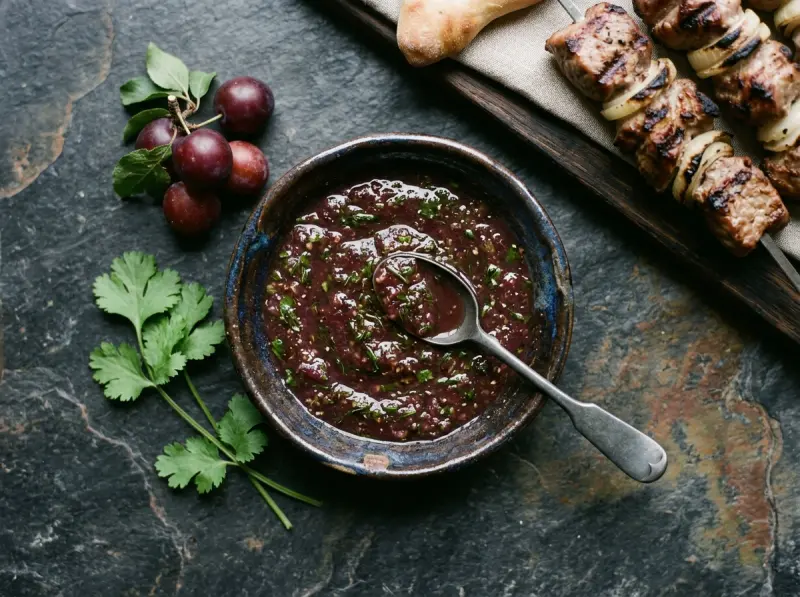
Tkemali
A Georgian sour plum sauce, the country's answer to ketchup: plums simmered soft, sieved smooth, and seasoned with garlic, chili, cilantro, dill, and mint. Tart and herbal, it is served with grilled meat, chicken, and potatoes.
Ingredients
- 1 kgsour plums
- 5 clovesgarlic
- 1 cupfresh cilantro
- 0.5 cupfresh dill
- 1 tbspfresh mint
- 1.5 tspground coriander
- 0.5 tspred pepper flakes
- 1 tspsalt
- 1 tspsugar
- 120 mlwater
1 cup = 240 ml
Method
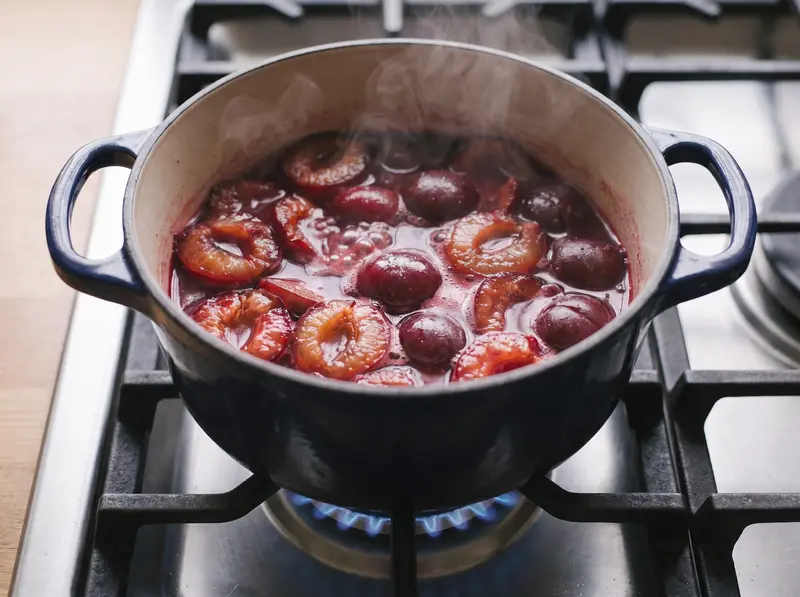
- Halve the sour plums and remove any loose pits. Place them in a pot with the water, bring to a gentle simmer, and cook 15 to 20 minutes until very soft.
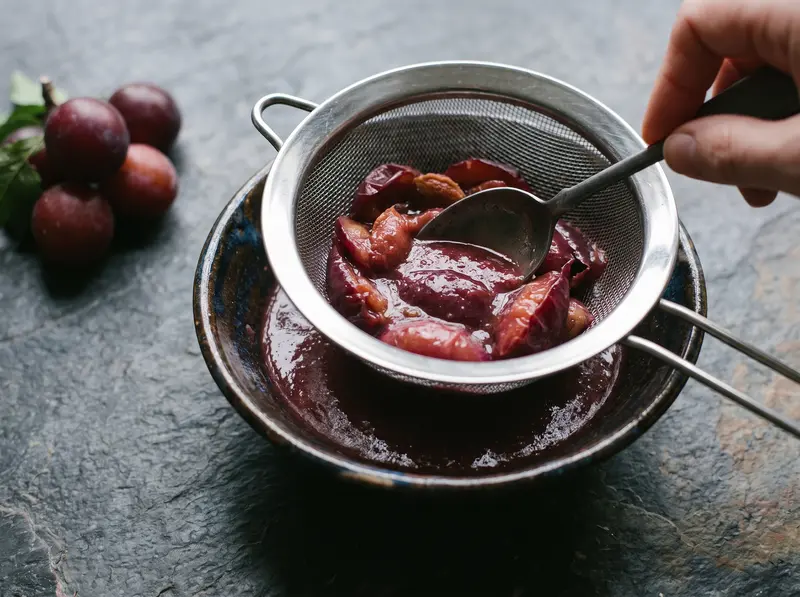
- Press the cooked plums through a fine sieve or a food mill to leave the pits and skins behind. Return the smooth puree to the pot.
- Finely chop the cilantro, dill, and mint, and crush the garlic.
- Stir the garlic, red pepper flakes, ground coriander, and salt into the puree and simmer gently for 5 minutes.
- Stir in the chopped cilantro, dill, and mint and simmer 1 minute more so they keep their aroma.
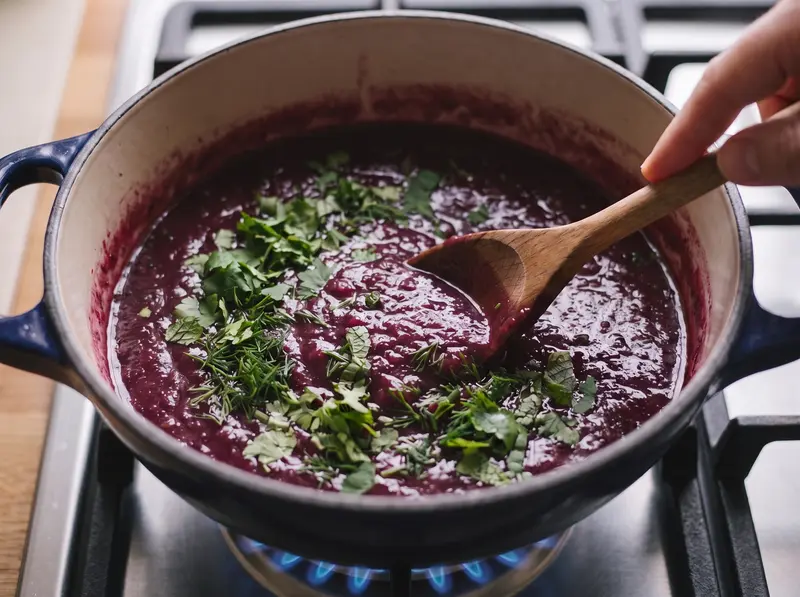
- Taste and add the sugar only if the plums are too sharp; adjust the salt.
- Cool, then store in sterilised jars in the refrigerator. Serve with grilled meat, chicken, or potatoes.
FAQ
Tkemali is the Georgian name for the sour cherry plum (alycha), so if your market sells cherry plums, they are the real thing, not a substitute. If you cannot find them, use any small sour plum — the sourest you can get, ideally a little unripe. Whatever you use, taste the raw fruit first and adjust the sugar at the end: tkemali should stay sharp, and the sugar is there to round the acid, not to sweeten the sauce.
Ombalo is pennyroyal, the wild mint that is a traditional part of Georgian tkemali. Outside Georgia it is hard to find, and ordinary fresh mint, spearmint or peppermint, is the usual substitute: roughly one tablespoon chopped per kilogram of plums. Add it at the very end with the other herbs and simmer for just 1 minute, so the aroma survives. One caution: pennyroyal essential oil is poisonous and must never be used in food.
Season and ripeness, not method. Green tkemali is made in spring from unripe plums and comes out sharper. Red and yellow tkemali come later in the season from riper fruit and are milder. The steps are the same; taste at the end and add the sugar only if the sauce is too sharp.
Keep it in clean, sterilised jars in the fridge and use it within two weeks; scoop it out with a clean spoon each time. A layer of oil on top does not make it last longer — it only hides spoilage underneath. For a longer stash, freeze the sauce in small portions (ice-cube trays or 100–200 ml containers) for up to 3 months and thaw in the fridge. Shelf-stable jars for the whole winter need a tested canning recipe with a set jar size and processing time; this recipe is not written for that.
Tkemali is Georgia's everyday table sauce, used the way ketchup is used elsewhere. It goes with mtsvadi and any grilled meat, with fried or roast chicken, with boiled and fried potatoes, and with beans. A spoonful stirred into kharcho or a vegetable soup adds the sour note those dishes are built on. It is also good cold with cheese and bread, and it keeps its place on the table through a whole meal rather than belonging to one dish.
Keep browsing
More dishes from the Georgian archive — picked by overlap with what you're cooking now.
Recipes by email
One letter a week: a recipe picked for your taste, plus whatever is new on the site. Unsubscribe in one click.
Welcome gift: Sergei's cookbook (e-book).
By subscribing you agree to the privacy policy.
Tell us what you like to cook (30 seconds) →
Join the conversation
Comments
No comments yet — be the first!