
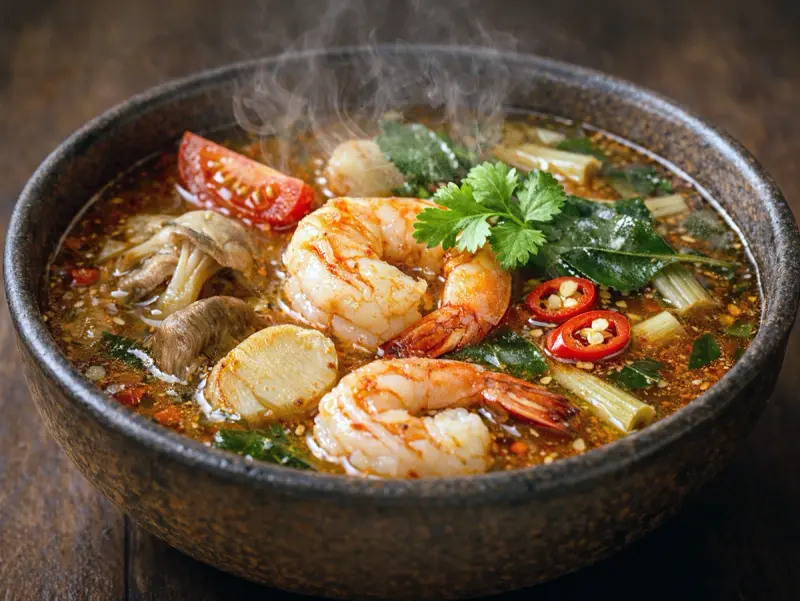
Tom Yum Goong (Thai Hot and Sour Shrimp Soup)
Tom Yum Goong (ต้มยำกุ้ง) is Thailand's hot and sour shrimp soup, one of the country's best-known dishes abroad and, since 2024, on UNESCO's list of the Intangible Cultural Heritage of Humanity. Its clear, fiercely aromatic broth is built on the 'tom yum trinity': lemongrass, galangal, and makrut lime leaves. The broth is simultaneously hot (from Thai bird's eye chillies), sour (fresh lime juice added off the heat), salty (fish sauce), and fragrant (the three herbs). Shrimp heads and shells, simmered first, create a naturally rich stock with a coral-orange color. Two versions exist: the clear broth (nam sai, น้ำใส) — the original — and the creamier version with evaporated milk or coconut milk (nam khon, น้ำข้น). Both are eaten with jasmine rice all over Thailand, from roadside stalls to five-star restaurants.
Ingredients
- 400 gwhole raw shrimp
- 1 lwater or chicken stock
- 2 lemongrass stalks
- 6 slices of galangal
- 6 makrut lime leaves
- 3 Thai bird's eye chillies
- 200 goyster mushrooms or straw mushrooms
- 2 small tomatoes
- 1 small white onion
- 2 tbspfish sauce
- 1 tbspnam prik pao
- 3 limes, juiced
- 1 tspsugar
- 1 handfulcilantro
Method
- Make the shrimp stock. Peel the shrimp and set the meat aside. Put the heads and shells in a pot with the water. Bring to a boil, pressing the heads with a spoon to extract the orange coral oil. Simmer 10 minutes until the stock turns a rich amber-orange. Strain and discard the shells. Return the stock to the pot.
- Infuse the aromatics. Bash the lemongrass with the back of a knife until it splits and cut it into 5 cm pieces. Tear the lime leaves in half, pulling out the tough center rib, and lightly crush the chillies. Add them to the strained stock with the galangal. Bring to a boil, then simmer 5 minutes. The broth should smell intensely of citrus and lemongrass. The aromatics are left in the soup for presentation — warn guests they are not meant to be eaten.
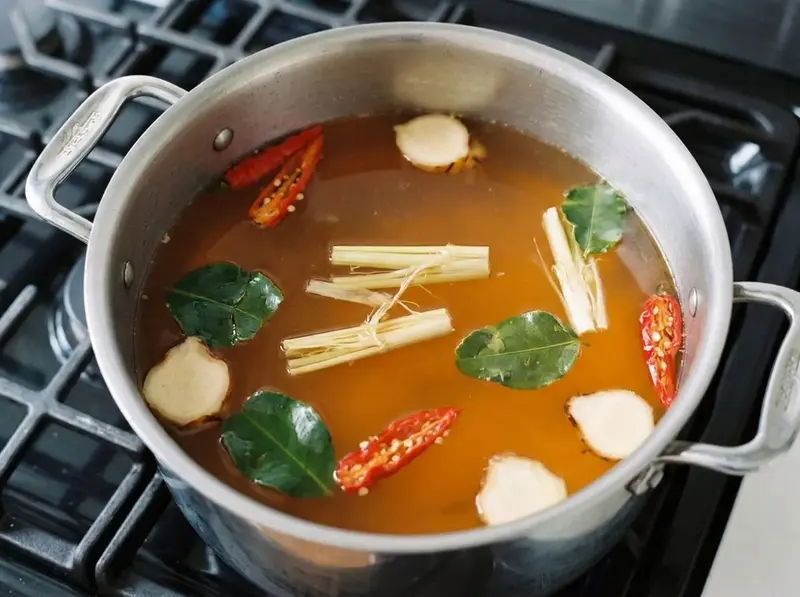
- Add vegetables. Add the onion, mushrooms, and tomato wedges. Simmer 3 minutes until the mushrooms are just tender and the tomatoes begin to soften.
- Add shrimp and season. Add the peeled shrimp and simmer for 1 to 2 minutes, just until they turn pink and the flesh is opaque all the way through. Overcooked shrimp go rubbery. Add the fish sauce, nam prik pao (if using), and sugar. Stir to dissolve the chilli paste. Taste the broth: it should be intensely savory, slightly sweet, and hot from the chillies. The sourness comes next.
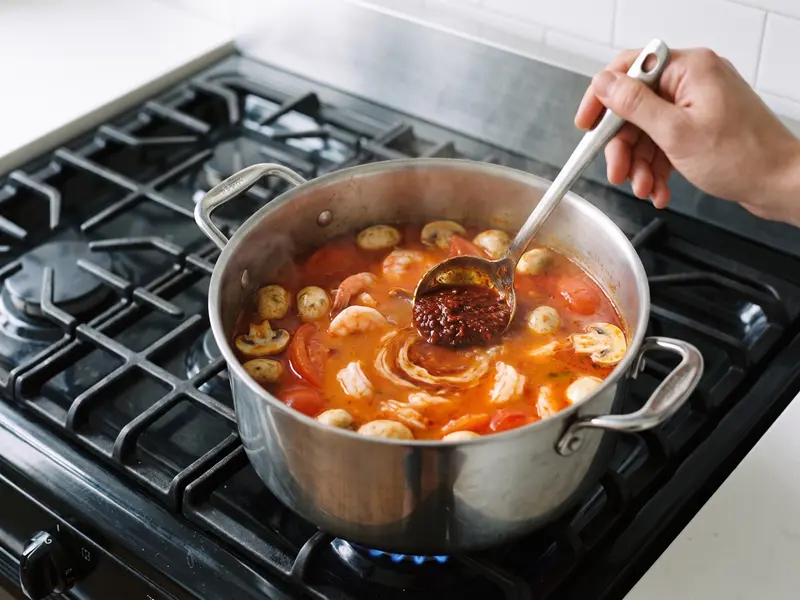
- Add lime juice off the heat and serve. Turn off the heat, then add the lime juice to the pot, or squeeze it into each bowl and ladle the soup over it. Lime juice added while the soup is still on the stove loses the volatile citrus compounds that make the sourness fresh. Taste and adjust with more fish sauce, lime, or sugar, then ladle into bowls. Garnish with fresh cilantro. Serve immediately with jasmine rice.
FAQ
Nam sai (น้ำใส) means 'clear water' — the original, classic version with a transparent, intensely aromatic broth. The flavor is clean, sour, hot, and deeply herbal with no dairy. Nam khon (น้ำข้น) means 'thick/creamy water' — the same soup finished with evaporated milk or coconut milk, producing a pale, opaque, slightly richer broth. Nam sai is the older form: Thai cooks say tom yum goong used to mean the clear soup, and the creamy version came later, when river prawns, whose rich heads gave the broth body, were replaced by sea shrimp. Both are made from the identical base; the milk is added per bowl at the end, not into the pot, so one batch of soup can serve both preferences.
Ginger is the most common substitute but produces a noticeably different result. Galangal has a sharper, more peppery, piney, almost medicinal flavor compared to the warm, floral heat of ginger. The difference in tom yum is significant because galangal is one of the three defining herbs. If using ginger as a substitute, add a grind of black pepper to approximate the peppery note. Frozen galangal is an excellent alternative to fresh and is widely available at Asian supermarkets — it can be sliced from frozen and used directly in the soup.
In Thai serving tradition, these aromatics are left in the soup for visual presentation and to continue releasing flavor as the soup cools slightly at the table. They are not meant to be eaten — they are woody, fibrous, or too leathery to chew pleasantly. Thai diners naturally push them to the side of the bowl when eating. When serving guests unfamiliar with the dish, it is polite to mention: 'the lemongrass, thick slices, and double leaves are for flavor only.' Some cooks prefer to strain and remove the aromatics before serving — this produces a visually cleaner bowl and makes eating easier, with no loss of flavor.
Yes. Tom yum chicken (tom yum gai) uses chicken sliced thinly and simmered 5 to 6 minutes. Tom yum fish uses firm white fish in 3 cm pieces added in the final 2 minutes. Tom yum mushroom (tom yum hed) is vegetarian: use vegetable stock, omit the shrimp, add a larger variety of mushrooms (oyster, enoki, king oyster), replace fish sauce with soy sauce (tamari keeps it gluten-free), and leave out the nam prik pao or use a vegetarian chilli paste, since most jars contain shrimp paste. The shrimp stock step is skipped for non-seafood versions. The soup base and herb profile remain identical.
Citrus juice contains volatile aromatic compounds that give it freshness and brightness. These compounds evaporate rapidly when heated — lime juice added to a simmering pot loses most of its top-note aroma within seconds, leaving only a flat, one-dimensional sourness and slight bitterness. Adding lime juice off the heat — or directly into the bowl before ladling the soup over it — preserves the floral, sharp citrus character that is one of the defining flavors of tom yum. This is not a minor detail: the difference between heated and fresh lime juice in the bowl is clearly perceptible.
Keep browsing
More dishes from the Thai archive — picked by overlap with what you're cooking now.

Recipes by email
One letter a week: a recipe picked for your taste, plus whatever is new on the site. Unsubscribe in one click.
Welcome gift: Sergei's cookbook (e-book).
By subscribing you agree to the privacy policy.
Tell us what you like to cook (30 seconds) →
Join the conversation
Comments
No comments yet — be the first!