
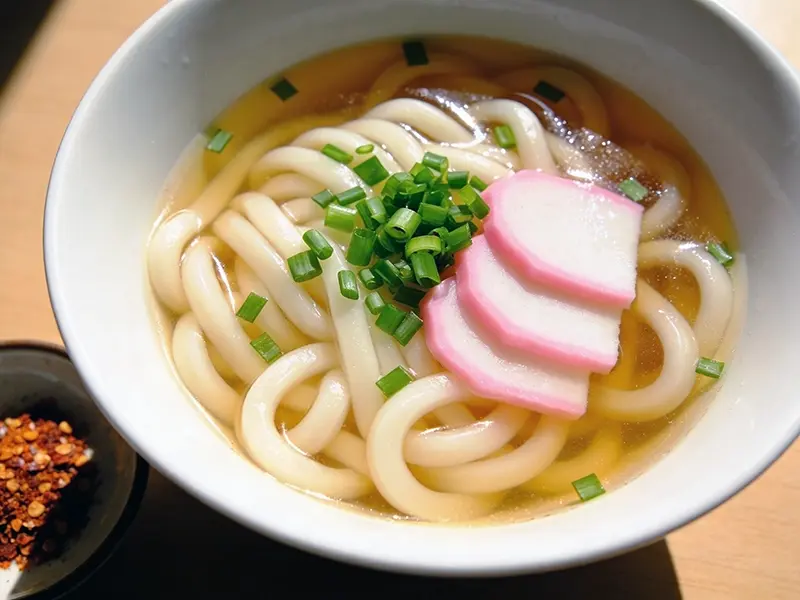
Udon Noodle Soup (Kake Udon)
Kake udon (かけうどん) is the plainest bowl of Japanese udon noodle soup: thick, chewy wheat noodles in a clear golden dashi broth seasoned with soy sauce and mirin, topped with scallion and little else. The broth is pale gold but deep in umami, lightly sweet from the mirin. Udon is a specialty of the Kagawa region (Sanuki udon) and is eaten everywhere in Japan; the Kansai version uses a lighter broth, the Kanto version a darker, more assertive soy, and this recipe follows Kansai. The 20 minutes is hands-on time with dashi packets or powder; homemade dashi adds 20 to 30 minutes of passive kombu soaking. Make the broth right and the noodles take care of themselves.
Ingredients
- 500 gfresh or frozen udon noodles
- 700 mldashi stock
- 2 tbspsoy sauce
- 2 tbspmirin
- 1 tspsake or dry sherry
- 0.5 tspfine salt
- 2 scallions
- 1 tspshichimi togarashi or ichimi togarashi
- 2 sliceskamaboko or soft-boiled egg
- 1 sheetnori, cut into rectangles
Method
- Make the dashi. The broth is everything in udon soup — the noodles and toppings are secondary. For homemade dashi: place a 10 cm piece of kombu in 800 ml cold water and soak for 20 to 30 minutes. Place over medium-low heat and slowly bring toward a simmer. Remove the kombu just before it reaches a full boil (boiled kombu gives the dashi a heavy kelp smell). Add 10 to 15 g of katsuobushi (bonito flakes), turn off the heat, and let steep for 5 minutes. Strain through a fine-mesh sieve without pressing. The result should be a pale amber, clear, subtly oceanic stock. For dashi powder: dissolve 1 teaspoon in 700 ml of hot water. For dashi packets: follow the packet instructions. Homemade gives the cleanest, most complex result; dashi powder is the quickest shortcut.
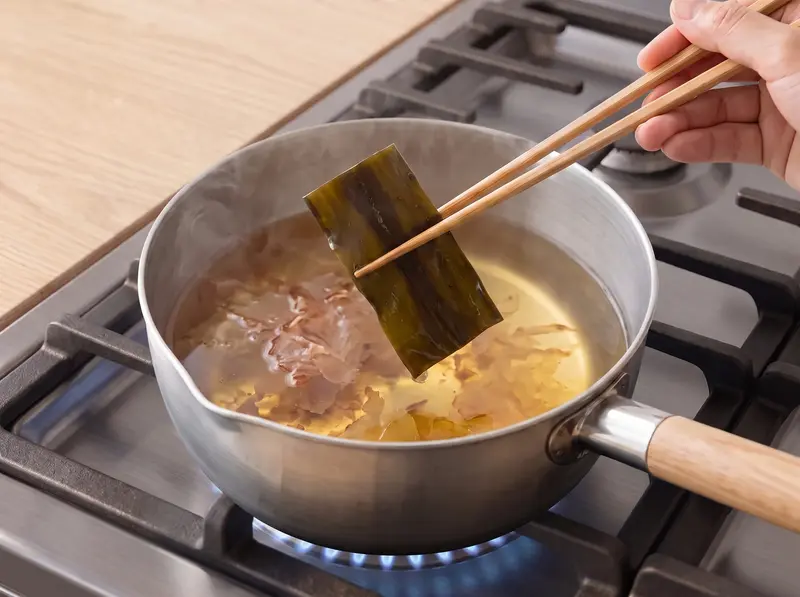
- Season the broth. Pour the dashi into a clean saucepan. Add the soy sauce, mirin, sake, and salt. For the pale Kansai broth this recipe describes, use usukuchi (light-coloured Japanese soy sauce); with regular dark soy sauce (koikuchi) the same 2 tablespoons give a darker, amber Kanto-style broth, which is just as correct. Bring to a gentle simmer over medium heat — not a rolling boil. Taste: the broth should be savoury, lightly sweet, and clean. If it tastes flat, add a pinch more salt; if too salty, add a splash of water. The colour should be a clear pale gold for Kansai-style or a deeper amber for the Kanto version. Keep warm over the lowest heat while the noodles cook. The broth must be very hot when served — udon soup goes cold quickly.
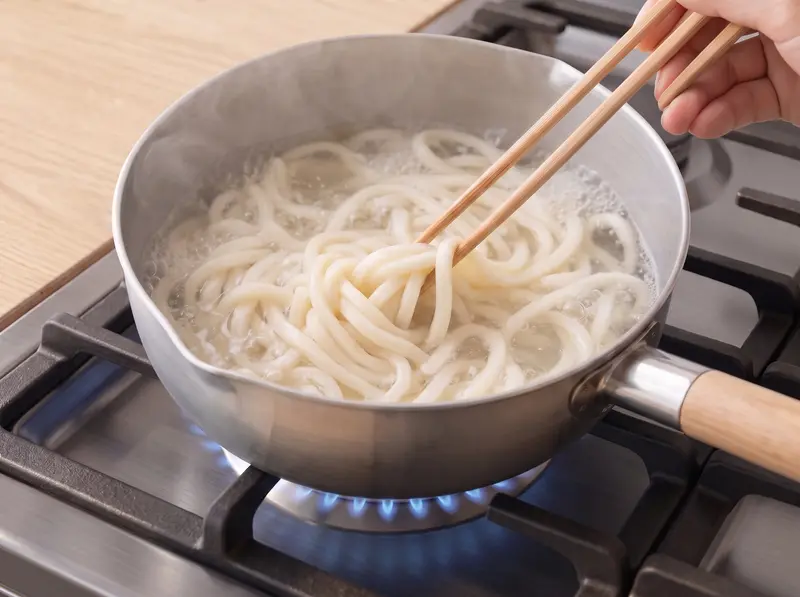
- Cook the noodles separately. If you are topping the bowls with egg, soft-boil it first: 6.5 minutes in boiling water, then straight into cold water, peel and halve. Cook the udon in a separate pot of boiling unsalted water — not in the broth, because the noodles release starch that clouds it. Dried and uncooked fresh udon must always be boiled this way; pre-cooked udon (vacuum-packed or frozen) can also be warmed straight in the broth if you do not mind it slightly cloudy. For frozen udon: add to boiling water for 1 to 2 minutes until just loosened and heated through. For fresh vacuum-packed: 2 to 3 minutes. For dried: follow the package, but cook 1 minute less than stated. Drain well. Rinse briefly with hot water to remove surface starch. Divide between two deep bowls, about 250 g of noodles in each.
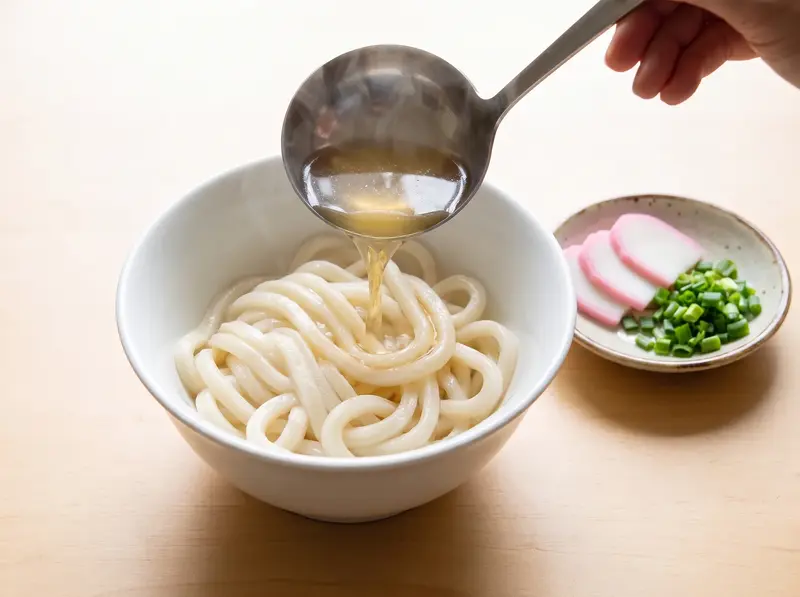
- Assemble and serve immediately. Ladle the very hot broth over the noodles — enough to mostly submerge them. Scatter the sliced scallions over the top. Add any additional toppings: kamaboko fish cake, soft-boiled egg, nori, or tempura (if making Tempura Udon). Serve shichimi togarashi on the side for each person to add to their own taste. Udon soup must be served and eaten immediately — the noodles continue absorbing broth and soften as they sit. This is not a dish that waits.
- Variations. Kitsune udon: place an aburaage (fried tofu pouch, simmered briefly in soy, mirin, and dashi) on top of the noodles before pouring the broth. Tempura udon: add a piece of shrimp or vegetable tempura on top. Niku udon (meat udon): cook thin slices of beef or pork in the broth for 1 to 2 minutes before ladling over the noodles. Curry udon: add 1 tablespoon of Japanese curry paste (from a roux block) to the broth and whisk until dissolved.
FAQ
Dashi is Japan's foundational soup stock, made primarily from two ingredients: kombu (dried kelp, which provides glutamic acid umami) and katsuobushi (dried bonito flakes, which provide inosinic acid umami). The combination is synergistic — together they produce an umami more powerful than either provides alone. To make: soak kombu in cold water 20 to 30 minutes, heat gently to just below boiling, remove kombu, add katsuobushi, steep 5 minutes, strain. Vegan dashi: use kombu only, or kombu plus dried shiitake mushrooms. The result is a very different flavour profile but still excellent. Instant dashi powder is available widely as a quick substitute. The same dashi is the base of miso soup.
Frozen Sanuki-style udon noodles (from Kagawa prefecture, the 'kingdom of udon') are widely considered the gold standard for home cooking — they cook in 1 to 2 minutes and have the characteristic thick, round, extremely chewy texture. Vacuum-packed fresh udon are a good second choice. Dried udon noodles work but produce a significantly softer, less chewy result — the texture gap between dried and frozen is considerable. If only dried are available, cook them 1 minute less than the package instructs.
The most traditional is simply sliced scallion (negi), which appears in virtually every bowl. Kamaboko (fish cake, the pink-and-white semicircle) is classic. Beyond these, toppings define the named varieties: aburaage (fried tofu pouch) = Kitsune Udon; tempura = Tempura Udon; thin beef = Niku Udon; udon simmered and served in its own clay pot with egg, tempura prawn, kamaboko and vegetables = Nabeyaki Udon. Plain kake udon with only scallion is the simplest and arguably the purest form. To make the tempura topping yourself, see the tempura recipe.
Yes, easily. Replace the standard dashi (made with bonito) with kombu-only dashi (soak kombu in cold water for 30 minutes, heat to just below boiling, remove) or kombu-shiitake dashi (add dried shiitake to the kombu water during soaking). The resulting broth has a different flavour — earthier, slightly more intense — but is very good. Use tamari instead of soy sauce if also gluten-free. Tofu, aburaage, wakame seaweed, mushrooms, and spinach are all excellent vegan toppings.
Not dried or uncooked fresh udon: they release a lot of starch as they cook, which clouds the broth, and a properly made udon broth is clear — you should be able to see the noodles through it. Boil them separately in plain water, drain them, then pour the hot broth over them in the serving bowl. Pre-cooked udon, vacuum-packed or frozen, can be warmed straight in the broth if you do not mind it slightly cloudy. If you want very thick, almost gravy-like soup, this is a different dish called ankake udon, where the broth is intentionally thickened with potato starch or cornflour.
Keep browsing
More dishes from the Japanese archive — picked by overlap with what you're cooking now.
Recipes by email
One letter a week: a recipe picked for your taste, plus whatever is new on the site. Unsubscribe in one click.
Welcome gift: Sergei's cookbook (e-book).
By subscribing you agree to the privacy policy.
Tell us what you like to cook (30 seconds) →
Join the conversation
Comments (1)
класс!!! Приготовил - получилось!