
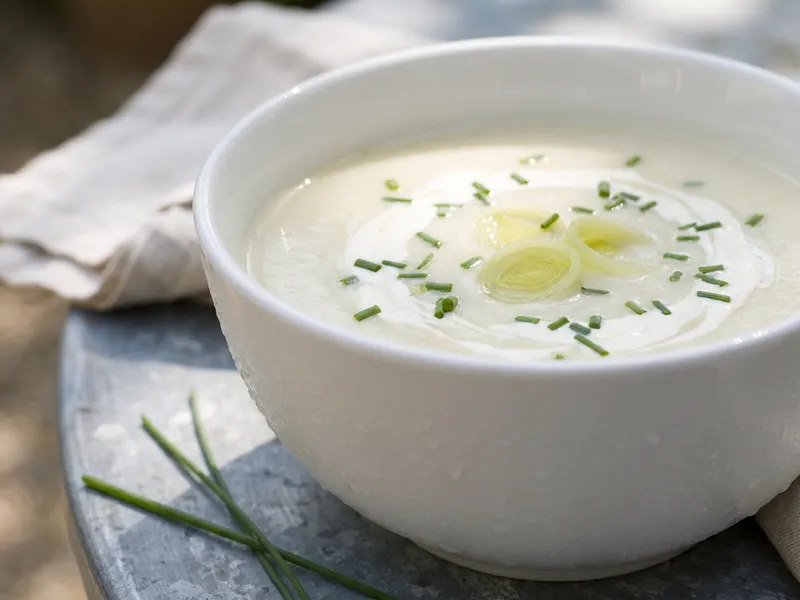
Vichyssoise (Cold Leek and Potato Cream Soup)
Vichyssoise is a cold, velvety cream soup of leeks, potatoes, and cream, served ice-cold and garnished with chopped chives. It is essentially a chilled, cream-enriched version of the French classic potage parmentier (leek and potato soup). The paradox of its origin: despite the French name and French roots, the cold version was created in America. Vichyssoise was invented in 1917 by French chef Louis Diat for the guests of the Ritz-Carlton in New York. Diat drew on the leek and potato soup his mother and grandmother had made near the town of Vichy, a spa town in central France; as a boy he and his brother would cool the hot soup with cold milk. Building a summer menu, he recreated that memory, enriched it with cream, served it ice-cold, and named it creme vichyssoise glacee. It became his most famous dish, mentioned even in his 1957 New York Times obituary, and was Julia Child's favorite soup. Two things define quality: a pale, ivory color and a silky texture. The leeks are sweated, never browned, so the soup stays cream-white; only the white and pale-green parts are used; starchy potatoes give creaminess without any flour; and the soup is puréed until silky, classically passed through a fine sieve. Because cold dulls the palate, vichyssoise must be seasoned boldly. Serve it well chilled after at least four hours in the fridge, with chives on top. About 45 minutes of active work, then chilling.
Ingredients
- 4 leeks
- 3 potatoes
- 1 lchicken broth
- 200 mlheavy cream
- 50 gbutter
- 2 tbspchives
- 1 tspsalt
- 0.25 tspwhite pepper
Method
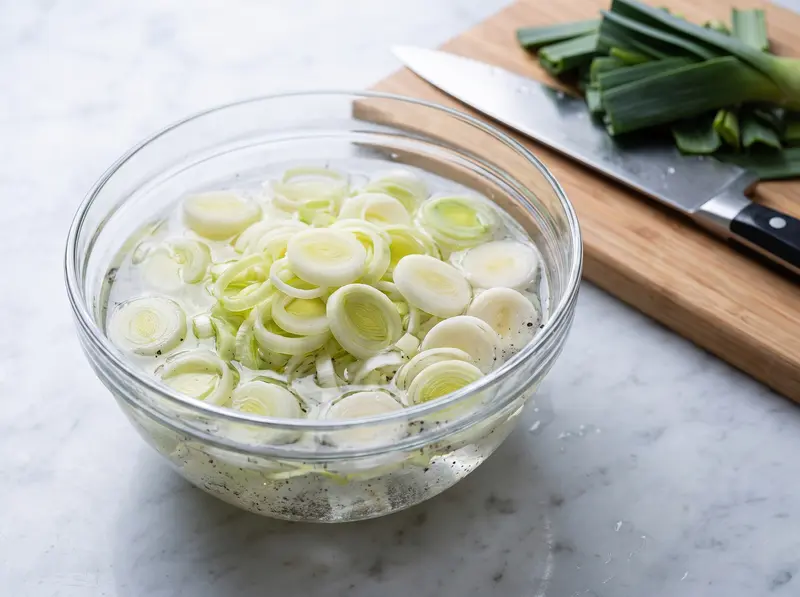
- Clean and slice the leeks. Trim off the dark green tops and the root ends of 4 leeks, keeping only the white and pale-green parts — the dark green is bitter and fibrous. Slice them lengthwise, then crosswise, and rinse thoroughly under running water, fanning the layers apart, because grit hides between them. Drain well. Properly cleaned leeks are the difference between a smooth soup and a gritty one.
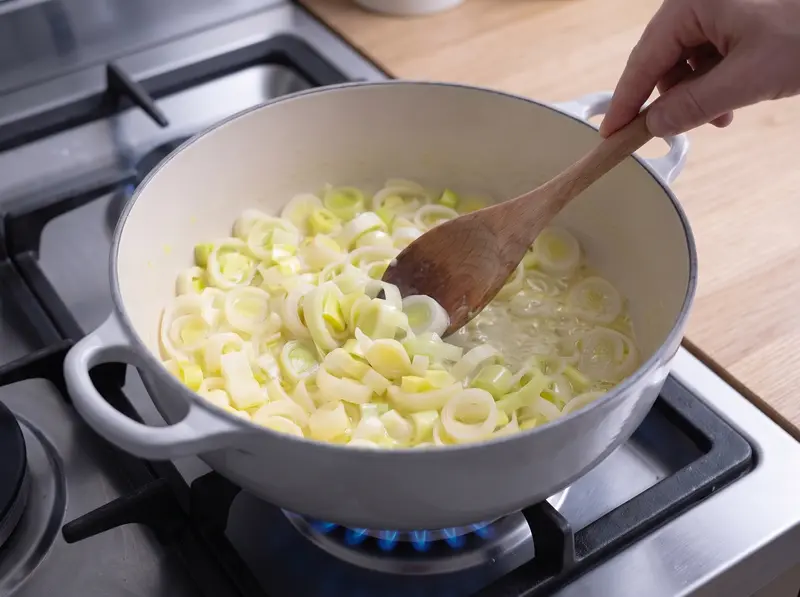
- Sweat the leeks without browning. Melt 50 g of butter in a heavy pot over medium-low heat. Add the sliced leeks with a pinch of salt, cover, and sweat gently for 10-15 minutes, stirring occasionally, until soft and translucent but with no color at all. This is the key step for vichyssoise: the soup must stay pale ivory, so do not let the leeks brown. If they start to take on color, lower the heat and add a splash of water.
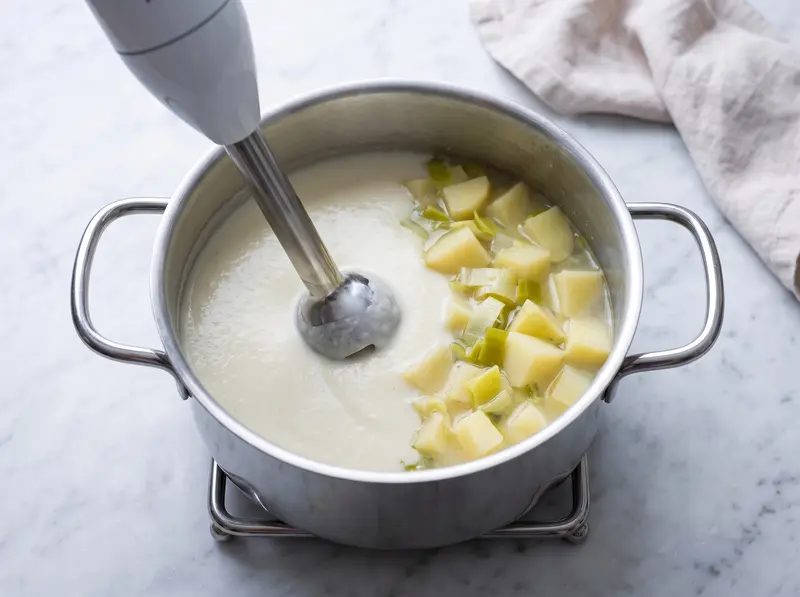
- Add the potatoes and broth. Peel 3 starchy potatoes (Russet or Yukon Gold) and cut them into small chunks so they cook evenly. Add them to the pot with about 1 litre of chicken broth — enough to cover the vegetables. Bring to a boil, then lower the heat and simmer, partly covered, for 20-25 minutes, until the potatoes are completely tender and pierce easily with a knife.
- Purée until silky. Let the soup cool slightly, then purée it thoroughly with an immersion blender or in a stand blender until completely smooth. For a true restaurant texture, pass the purée through a fine-mesh sieve (chinois) to remove any leek fibers — this is the difference between a home soup and a Ritz-Carlton one. The starch from the potatoes gives a creamy body with no need for flour.
- Stir in the cream and chill. Let the base cool, then stir in 200 ml of heavy cream. Season with salt and white pepper — use white, not black, so there are no dark specks in the pale soup. Cover and refrigerate for at least 4 hours, ideally overnight, until thoroughly cold. To speed it up, set the bowl in an ice bath and stir. The potato starch will thicken the soup as it chills; thin it with cold broth or milk to the consistency you like.
- Season boldly and serve. Taste the cold soup and adjust the salt — cold dulls the palate, so vichyssoise needs more seasoning than it seems when warm; be bolder than you think. Ladle into chilled bowls, scatter chopped chives over the top, and finish with an optional swirl of cream. Serve ice-cold as an elegant summer starter. It keeps 3-4 days in the fridge, covered; do not freeze, as the cream and potato separate into a grainy texture.
FAQ
Vichyssoise (pronounced 'vee-she-SWAHZ') is a cold, velvety cream soup of leeks, potatoes, and cream, served ice-cold and sprinkled with chopped chives. It is essentially a chilled, cream-enriched version of the French classic potage parmentier (leek and potato soup). The paradox of its origin: despite the French sound and French roots, the cold version of the soup was created in America. Vichyssoise was invented in 1917 by French chef Louis Diat for the guests of the Ritz-Carlton in New York. Diat was inspired by the leek and potato soup his mother and grandmother made near the town of Vichy (a spa town in central France). In summer, he and his brother would cool the hot soup by adding cold milk. Building the Ritz-Carlton summer menu, Diat recreated that memory, enriched the soup with cream, served it ice-cold, and named it creme vichyssoise glacee, in honor of Vichy. Recognition: the soup became Diat's most famous dish and was mentioned even in his 1957 New York Times obituary. Through the 20th century vichyssoise became a calling card of fine dining. It was the favorite soup of Julia Child, whose recipe appeared in 'Mastering the Art of French Cooking.' Disputed legends: there are earlier versions too — that the soup was invented by chef Jules Gouffe in 1859, or that King Louis XV ate cooled potato soup (fearing poisoning, he waited for servants to taste it). But the most reliable account is Louis Diat, 1917. Ancestor: potage parmentier, named after Antoine-Augustin Parmentier, who popularized the potato in French cuisine (the potato was once thought poisonous).
Vichyssoise rests on four elements: leeks, potatoes, broth, and cream. Proportions (for 6 servings): 3-4 large leeks (white and pale-green part only), 2-3 starchy potatoes, about 1 litre of chicken broth, 200-250 ml heavy cream, 50 g butter, chopped chives for serving. Choosing the leek: (1) Use only the white and pale-green part — the dark green leaves are bitter and fibrous. (2) Clean thoroughly — grit and dirt hide between the layers of the leek; slice lengthwise and rinse under running water. (3) Some add a little onion for sharpness — a matter of taste (Julia Child allows replacing the leek with onion, but the classic is leek). Choosing the potato: use a starchy variety — Russet, Yukon Gold, Idaho. The starch gives the soup a creamy, velvety texture with no added flour or thickeners. A waxy potato (new, red) will not give the same smoothness. Broth: classically chicken (as Diat used). For a vegetarian version, a quality vegetable broth. Cream vs milk: Diat used milk as a child, but in the restaurant version he added heavy cream for richness. You can combine milk and cream for a lighter version. What you do not need: flour, starch, low-quality bouillon cubes. The creaminess comes entirely from the potato and the cream. Ratio: there should be enough liquid to cover the vegetables; final thickness is adjusted with the amount of cream and broth when puréeing.
Two things define the quality of vichyssoise: a pale color and a silky texture. Why not brown the leeks: vichyssoise should be cream-white, almost ivory. If the leeks brown, you get brown specks and a caramelized note that ruin both the delicate color and the delicate flavor. So the leeks are sweated in butter over low heat, covered, for 10-15 minutes — they should become soft and translucent but not golden. If you see them starting to brown, lower the heat and add a splash of water. How to get a silky texture: (1) Cut the potatoes into smallish pieces — they cook faster and more evenly. (2) Simmer the vegetables in broth until completely soft (the potato should pierce easily, about 20-25 minutes). (3) Purée thoroughly — with an immersion blender or in a stand blender until perfectly smooth. (4) The classic trick for restaurant smoothness is to pass the soup through a fine-mesh sieve (chinois) to remove any leek fibers and bits. This is the difference between 'homemade' and 'like at the Ritz.' (5) Stir in the cream after puréeing. Important about seasoning: cold food dulls the perception of salt and flavor, so a cold vichyssoise needs to be seasoned more boldly than seems right when warm. Taste after chilling and add more salt. Recovery: if the soup is too thick after chilling (potato starch thickens it), thin it with cold broth or milk to the right consistency before serving.
Cold — that is the very essence of vichyssoise. The word in its name is glacee (iced). The soup is served well chilled, and it is precisely the cold, velvety, creamy quality that creates the effect so many remember (Anthony Bourdain in 'Kitchen Confidential' described vichyssoise as the first dish he truly remembered enjoying — 'cool, tasty, surprisingly cold'). Can you serve it hot? Technically yes — and then it is a tasty warm leek and potato soup. But the hot version is essentially potage parmentier / soupe bonne femme, not vichyssoise. Vichyssoise is defined precisely by the cold serving plus cream. How vichyssoise differs from potage parmentier: (1) Temperature — vichyssoise is cold, potage parmentier is usually hot. (2) Cream — vichyssoise is always enriched with heavy cream; basic potage parmentier may be without it. (3) Texture — vichyssoise is strained to perfect silkiness (classically through a sieve); potage parmentier can be coarser, sometimes with chunks. (4) Serving — vichyssoise always has chopped chives on top. Related soups: potage bonne femme (the same leek and potato, 'home-style'), creme vichyssoise glacee (Diat's full original name). Cold 'cousins': in spirit vichyssoise is a distant relative of gazpacho and chilled beet soup (cold summer soups), but creamy and filling rather than refreshingly tart. Key rule: if you serve it cold with cream and strained to silk, it is vichyssoise; if hot and simpler, it is potage parmentier.
Chilling is a mandatory step. After puréeing and stirring in the cream, the soup must chill for at least 4 hours, ideally overnight, in the fridge, so it becomes truly ice-cold and the flavors come together. To speed it up, set the bowl of soup in an ice bath and stir. Serving: (1) Ladle into chilled bowls (keep the bowls in the fridge for 15 minutes — a nice touch). (2) The mandatory garnish is chopped chives on top. (3) Optionally — a swirl of cream or olive oil, freshly ground white pepper (so there are no dark specks in the light soup), a pinch of nutmeg. (4) Serve as an elegant starter in summer or a primo at dinner. Storage: vichyssoise keeps 3-4 days in the fridge in a covered container — it is an ideal make-ahead dish. Freezing is not recommended — the cream and potato separate on thawing into a grainy texture. Before serving, stir (it may separate) and thin with cold broth/milk if needed, adjusting the salt. Variations: (a) Vegetarian — vegetable broth instead of chicken. (b) Lightened — replace part of the cream with milk or whole-milk yogurt. (c) With greens — add a handful of watercress or sorrel at the purée stage (gives color and bite). (d) Warm — serve hot as potage parmentier (the winter version). (e) Vegan — plant cream (coconut/oat) plus vegetable broth, but the flavor changes noticeably. What to serve with: crisp croutons, a light dry white wine (Sancerre, Chablis), or simply as is on a hot day. Key principle: serve it genuinely cold and boldly seasoned — a warm or under-salted vichyssoise loses all its charm.
Keep browsing
More dishes from the French archive — picked by overlap with what you're cooking now.

Recipes by email
One letter a week: a recipe picked for your taste, plus whatever is new on the site. Unsubscribe in one click.
Welcome gift: Sergei's cookbook (e-book).
By subscribing you agree to the privacy policy.
Tell us what you like to cook (30 seconds) →
Join the conversation
Comments
No comments yet — be the first!