

Whipped Feta with Hot Honey and Pistachio
Whipped feta with hot honey and pistachio is a creamy salty-sweet mezze dip — block feta blended with Greek yogurt, lemon zest, and olive oil into a fluffy spread, then drizzled with chili-infused honey and topped with toasted pistachios. The contrast is the whole point: salty fermented sheep's milk against sweet floral honey with a slow chili burn, and crunchy pistachio against the silky base. It takes about 15 minutes of hands-on work in a food processor (plus 15 minutes for the honey to infuse and 30 minutes for the cheese to come to room temperature) and serves six on a mezze board with warm pita, crackers, or sliced pear. The hot honey is easy to make at home if you cannot find it in shops.
Ingredients
- 200 gfeta cheese
- 150 gGreek yogurt
- 30 mlextra virgin olive oil
- 1 clovegarlic
- 1 tsplemon zest
- 0.25 tspblack pepper
- 80 ghoney
- 1 tspred pepper flakes
- 0.5 tspapple cider vinegar
- 40 gpistachios
- 2 gthyme
Method
- Take the feta and yogurt out of the fridge 30 minutes before you start — cold cheese resists blending and turns gritty. Cut the feta block into 4 chunks; do not use pre-crumbled feta, which is coated with anti-caking starch, whips worse and gives a grainy cream. Toast the pistachios in a dry pan over medium heat for 2 to 3 minutes, shaking often, until they smell nutty and turn one shade darker. Tip them onto a board, cool, and chop coarsely.
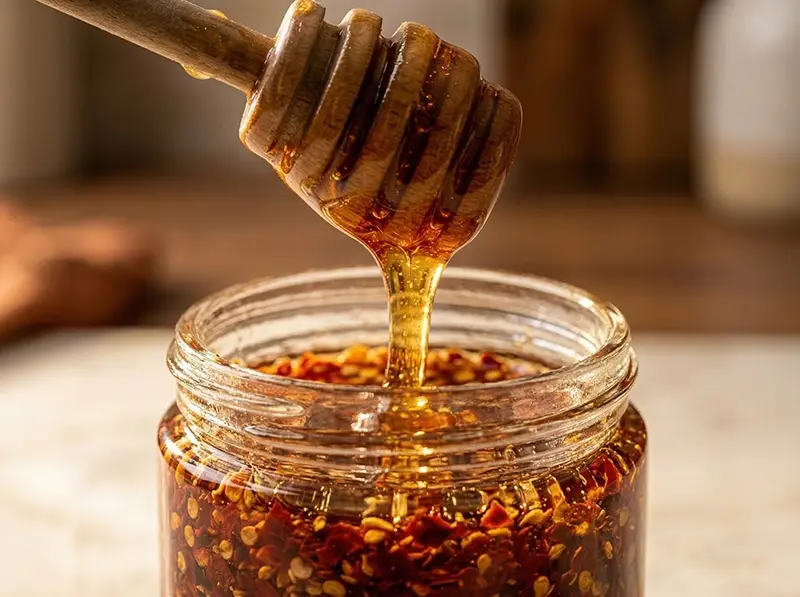
- Make the hot honey while the pistachios cool. Combine the honey and red pepper flakes in a small saucepan over medium-low heat. As soon as you see the first small bubbles around the edge — about 2 minutes — turn off the heat. Do not let the honey boil or it will turn bitter and stiff once cooled. Let it rest 15 minutes to infuse, then stir in the apple cider vinegar. The vinegar wakes up the honey and stops it from being one-note sweet.

- Put the feta chunks, Greek yogurt, olive oil, peeled garlic clove, lemon zest, and black pepper in a food processor. Pulse 5 or 6 times to break the feta into rough crumbs, then run the machine continuously for 1 to 2 minutes. Stop and scrape down the sides at least once — feta sticks to the walls and the centre will stay lumpy if you do not. The finished texture should look like thick whipped cream cheese: smooth, glossy, slightly elastic when you lift a spoon.

- Taste and adjust. Most fetas are salty enough that you will not need extra salt; if your feta is mild, add a small pinch. If the dip feels too thick, add a tablespoon of yogurt or a splash of cold water and pulse once. Too thin: pulse in another small piece of feta. Aim for spreadable, not pourable.
- Spoon the whipped feta into a shallow bowl or onto a serving plate. Use the back of a spoon to spread it in a thick layer with a wide swirl pattern, pulling the spoon in arcs from the centre outward — these grooves catch the honey and make the presentation. Leave a few millimeters of space at the rim so the honey does not spill.
- Drizzle the warm hot honey over the surface, letting it pool in the swirls. Scatter the toasted pistachios across the top, focus them slightly off-centre rather than spreading evenly. Strip the leaves from the thyme sprigs and sprinkle them over. Add a final drizzle of olive oil and a few extra red pepper flakes if you like more heat. Serve right away with warm pita, crackers, or sliced pear.
FAQ
The main culprit is using crumbled feta instead of a block in brine. Pre-crumbled feta is coated with anti-caking agents (cellulose, rice starch) that keep the cheese from blending into a creamy mass — you get a grainy, sandy cream no matter how long you blend. The second cause is too little liquid: feta is dense and salty, and without Greek yogurt (150 g for 200 g of feta) the food processor cannot grab the mass. The third is cold cheese straight from the fridge — pull it out 30 minutes before blending, soft feta works much better. If your dip is already grainy, add a tablespoon of yogurt or a splash of ice water and run the processor another full minute until completely smooth.
The fastest fix is to make hot honey in 5 minutes: 80 g of honey plus 1 tsp of red pepper flakes warmed in a small pan until first bubbles, off the heat, rest 15 minutes, finish with ½ tsp apple cider vinegar — almost identical to Mike's Hot Honey. Without chili: regular honey plus a pinch of cayenne and a drop of soy sauce gives a sweet-spicy umami note. For a vegan adaptation, swap honey for agave syrup with the same chili infusion (the dip still won't be vegan because of the feta). Match heat to the honey's sweetness: very floral honey (acacia, clover) takes more chili; dark honey (buckwheat, forest) needs less.
The whipped feta itself keeps in an airtight container for 4 to 5 days, and the texture even improves overnight as the lemon zest and garlic integrate. The rule: add the hot honey and pistachios only just before serving. Honey will soak into the cheese within an hour and lose its glossy pools, and pistachios will soften from the moisture. Make the dip 1 to 2 days ahead, transfer to a flat bowl in front of guests, swirl the surface with the back of a spoon, then add toppings. Do not freeze — feta releases water on thawing and the grainy texture comes back.
These are three different dishes that all use feta. Tirokafteri (τυροκαυτερή, 'spicy cheese') is a traditional Greek mezze of mashed feta with roasted red pepper and Florina chili, dense in texture and scooped with pita. Htipiti (χτυπητή, 'whipped') is a close cousin with the same base plus yogurt or olive oil for a slightly lighter texture. Whipped feta with hot honey is a contemporary American dish, a Greek-American fusion that emerged around 2018 to 2020 in restaurant menus in the Carbone style; it is not served in Greece. The key differences are the warm honey and pistachios on top, the absence of roasted pepper, and the focus on the salty-sweet contrast. All three are excellent mezze, but they belong to different traditions.
The best base is mildly tangy or neutral: warm pita, sea-salt crackers, toasted ciabatta slices, thinly sliced green pear (Bartlett, Conference) or Granny Smith apple — the apple's acid cuts the honey's sweetness. From vegetables, celery sticks, cucumber, and radish add crunch without competing flavours. What does not work: salty crackers (the feta is already salty, so it doubles down), sweet biscuits, or dry crispbreads that crumble under the dip's weight. On a charcuterie board the whipped feta sits well next to prosciutto and salami — the cured salt plays against the honey. Drink alongside dry rosé, chilled Riesling, or craft ginger beer. As mezze for a crowd, plan about 80 g of dip per person.
Rate this
Recipes by email
One letter a week: a recipe picked for your taste, plus whatever is new on the site. Unsubscribe in one click.
Welcome gift: Sergei's cookbook (e-book).
By subscribing you agree to the privacy policy.
Tell us what you like to cook (30 seconds) →Keep browsing
More dishes from the Greek archive — picked by overlap with what you're cooking now.


Join the conversation
Comments
No comments yet — be the first!