

Цеппелины
Традиционные литовские клёцки в форме дирижабля — тесто из тёртого и толчёного картофеля с мясной начинкой, отваренное и поданное со сметаной и хрустящими шкварками.
Ингредиенты
- 1000 гкартофель
- 3 ст. л.картофельный крахмал
- 300 гмясной фарш
- 1 шт.небольшая луковица
- 100 гсметана
- 100 гсвиные шкварки или жареный лук
Приготовление
- Разделите 1 кг картофеля: 250 г отварите, разомните в пюре и остудите. 750 г натрите на мелкой тёрке.
- Натёртый картофель выложите в марлю и максимально отожмите жидкость в глубокую миску. Жидкость НЕ ВЫЛИВАЙТЕ — дайте постоять 10–15 минут, чтобы крахмал осел на дно.
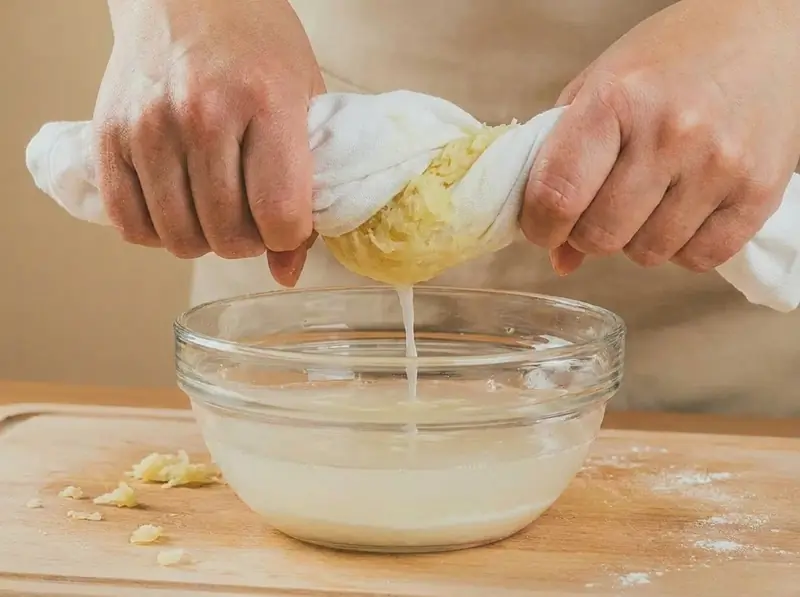
- Аккуратно слейте воду, но крахмал сохраните. Соедините его с отжатым картофелем и пюре. Добавьте 3 ст. л. крахмала и соль. Замесите гладкое пластичное тесто.
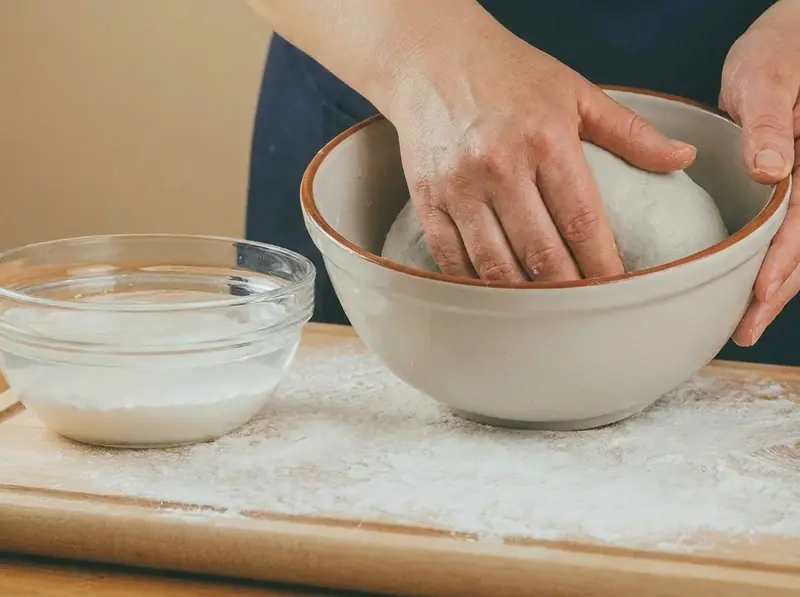
- Смешайте фарш с мелко нарезанным луком, солью, перцем и 2–3 ст. л. холодной воды или сливок, чтобы начинка была сочной.
- Возьмите порцию теста с кулак, слепите лепёшку толщиной 1 см. В центр положите 2 ст. л. (около 40 г) начинки. Тщательно скрепите края и, катая между ладонями, придайте форму дирижабля. Сначала отварите один цеппелин 5 минут — если не развалился, тесто готово.
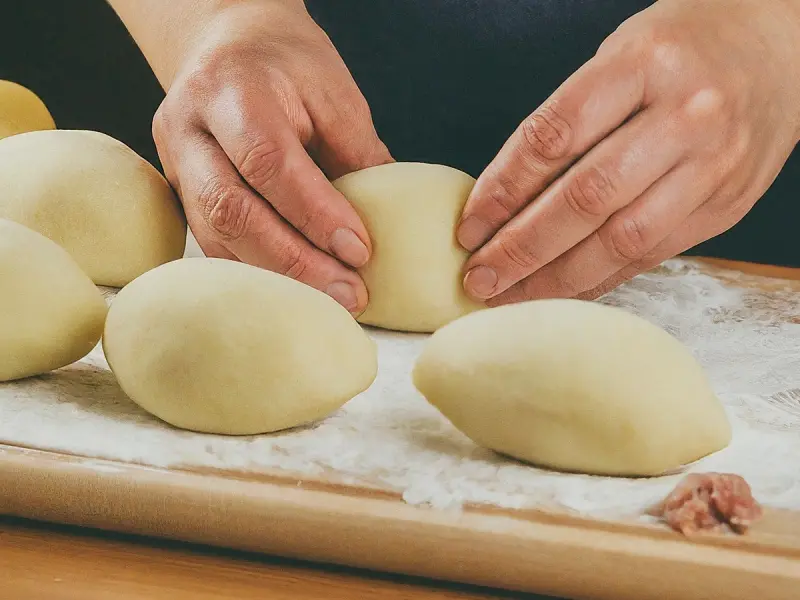
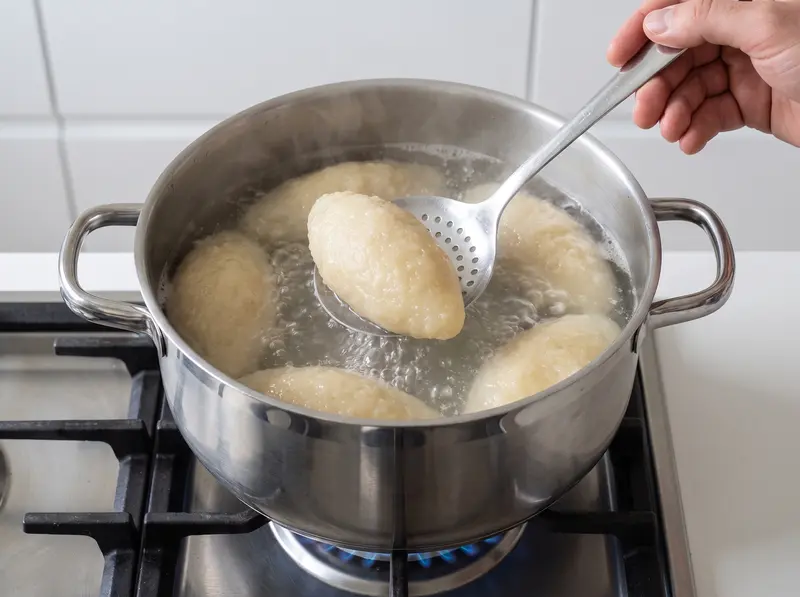
- Осторожно опустите цеппелины в кипящую подсоленную воду небольшими партиями. Варите на слабом огне 15–20 минут после всплытия. Подавайте горячими со сметаной и шкварками.
Вопросы
Цеппелины разваливаются почти всегда из-за избытка влаги в картофельном тесте или нехватки природного крахмала для связки. После натирания сырого картофеля выжмите как можно больше жидкости через чистую ткань или мелкое сито — этот шаг критически важен. Дайте выжатой жидкости отстояться 5 минут, затем аккуратно слейте воду и верните белый крахмал, осевший на дне, обратно в тёртый картофель. Этот восстановленный крахмал — главное связующее. Тесто должно быть упругим и слегка липким, а не влажным. Ещё одна причина распадания — опускать клёцки в воду, не доведённую до кипения: всегда кладите цеппелины в активно кипящую подсоленную воду, а затем сразу убавляйте огонь до слабого кипения.
Используйте рассыпчатые, богатые крахмалом сорта — например, Russet, Беллароза или любой картофель для запекания. Восковые салатные сорта не подходят: в них слишком много влаги и мало крахмала, тесто получается липким и разваливается. Отжимание убирает лишнюю воду, чтобы тесто не было слишком мокрым; а сбор белого крахмала, осевшего из слитой жидкости, принципиально важен — именно этот природный крахмал является «клеем», который удерживает вареники в течение долгой варки. Никогда не пропускайте сбор крахмала со дна чаши.
Готовые цеппелины хранятся в холодильнике до 2 суток. Чтобы при разогреве они не стали резиновыми, не варите повторно — вместо этого обжарьте на небольшом количестве сливочного масла или свиного жира на среднем огне по 3–4 минуты с каждой стороны до золотистой корочки и равномерного прогрева. Это создаёт лёгкую хрустящую корочку, которая на самом деле улучшает текстуру. Можно также разогреть на пару 8–10 минут. Микроволновка подойдёт в крайнем случае, но может сделать текстуру неравномерной и слегка клейкой — накройте влажным бумажным полотенцем и грейте интервалами по 30 секунд. Сырые сформованные цеппелины можно сначала заморозить на подносе, затем сложить в пакет на срок до 1 месяца; варите прямо из заморозки около 30–35 минут.
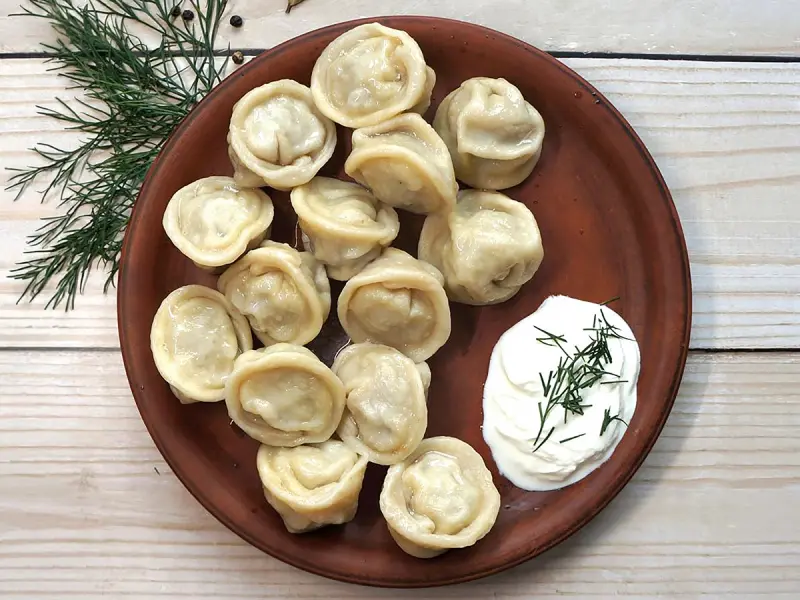
Да, картофельная оболочка хорошо сочетается с разными начинками. Самый традиционный вегетарианский вариант — обжаренные грибы (300–400 г шампиньонов или лесных грибов, мелко нарубленных и жаренных до полного испарения влаги) с карамелизованным луком. Творог с жареным луком — ещё один классический литовский постный вариант. Чечевичная начинка тоже хороша: отварите 200 г зелёной чечевицы до готовности, хорошо откиньте, смешайте с жареным луком, чесноком, солью, перцем и щепоткой копчёной паприки. В любом случае начинка должна быть суховатой — лишняя влага намочит тесто и вызовет растрескивание при варке. Если хочется попробовать другой тип клёцок, русские пельмени лепят из простого мучного теста, а если картофельную основу хочется сохранить, но без начинки — обратите внимание на драники.
Жидкое тесто — результат недостаточного отжима воды из тёртого сырого картофеля, это самая распространённая ошибка. Исправление: отожмите ещё раз — переложите тесто в чистую ткань и снова хорошо выкрутите. Если тесто всё ещё влажное, добавьте 1–2 столовые ложки картофельного или кукурузного крахмала, хорошо вмешайте и дайте тесту постоять 5 минут, чтобы крахмал впитал влагу. Небольшое количество муки (1–2 столовые ложки) поможет в крайнем случае, но изменит текстуру. Также проверьте сорт картофеля — восковые сорта содержат значительно больше воды, чем рассыпчатые. Свежесобранный картофель обычно влажнее; если возможно, используйте картофель, хранившийся несколько месяцев.
Оцени
Рецепты на почту
Одно письмо в неделю: рецепт под ваш вкус и всё новое на сайте. Отключить рассылку можно в один клик.
В подарок — книга рецептов Сергея (epub).
Нажимая кнопку, вы соглашаетесь с политикой конфиденциальности.
Расскажите, что любите готовить (30 секунд) →Смотри дальше
Ещё блюда из архива — подобраны по пересечению с тем, что ты сейчас готовишь.

Обсудить рецепт
Комментарии (1)
Rest the beef for at least 5 minutes after cooking cepelinai. Cutting immediately lets all those precious juices run onto the board. A loose foil tent keeps it warm without steaming the crust.