

Хачапури по-аджарски
Лодочка из дрожжевого теста, наполненная расплавленным сыром, с яйцом, вбитым в центр, и кусочком сливочного масла. Желток остаётся жидким — отламываете бортики, всё перемешиваете и макаете. Самое узнаваемое грузинское блюдо.
Ингредиенты
- 500 гпшеничная мука
- 400 гсулугуни или моцарелла
- 6 яйца
- 200 млмолоко
- 100 гсливочное масло
- 7 гсухие дрожжи
- 1 ч.л.сахар
- 1 ч.л.соль
Приготовление
- Подогрейте молоко до 38–40°C — тёплое на запястье, но не горячее. Растворите дрожжи и сахар, оставьте на 10 минут до появления пены. В большой миске смешайте муку и соль. Добавьте дрожжевую смесь и 30 г растопленного масла. Замесите тесто и вымешивайте 8 минут — оно должно быть мягким, гладким и слегка липким, не тугим. Накройте и оставьте в тёплом месте на 1–1,5 часа до удвоения.
- Пока тесто подходит, натрите сыр на тёрке. Смешайте с 1 яйцом, щепоткой соли и 30 г мягкого сливочного масла. Начинка должна быть кремовой — при необходимости добавьте 2–3 ст.л. творога.
- Разделите тесто на 4 части. Раскатайте каждую в овал примерно 30×20 см. Распределите сырную начинку, отступив 2 см от краёв. Плотно скрутите оба длинных края к центру, закручивая их поверх начинки. Концы крепко защипните и скрутите — именно это удерживает форму лодочки в духовке.
- Переложите на противни с пергаментом. Взбейте одно яйцо и смажьте им бортики. Дайте расстояться 15 минут пока разогревается духовка до 220°C.
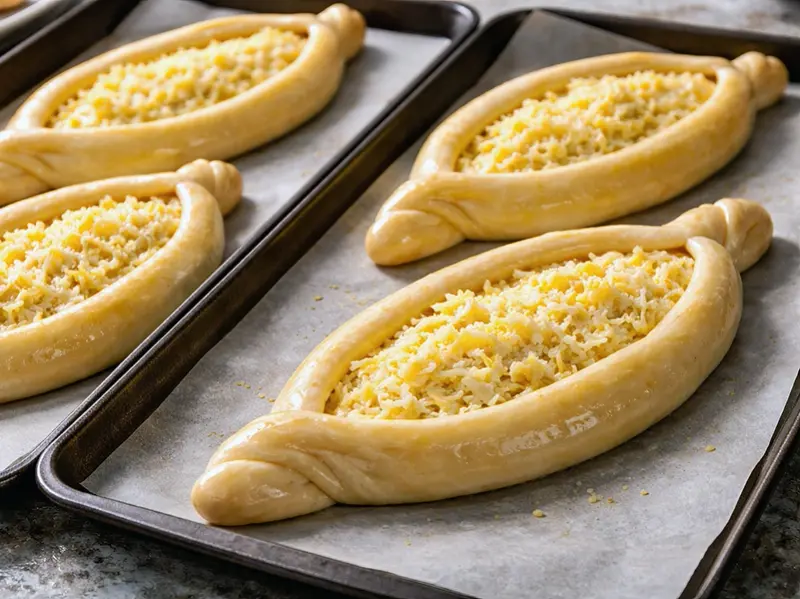
- Выпекайте 13–15 минут до глубокого золотистого цвета бортов и полностью расплавленного, пузырящегося сыра. Выньте из духовки. Ложкой сделайте углубление в центре начинки. Осторожно вбейте по одному яйцу в каждую лодочку, не нарушая желток.

- Верните в духовку на 3–4 минуты: белок должен схватиться, желток остаться жидким. Немедленно выньте. Положите в каждую лодочку по 10 г сливочного масла. Подавайте сразу. Перемешайте масло, яйцо и сыр вилкой, затем отламывайте кончики и бортики руками и макайте в начинку.
Вопросы
Лучшая замена: 300 г твёрдой моцареллы (в вакуумной упаковке, не в рассоле) + 100 г феты или брынзы. Моцарелла даёт тягучесть, фета — солёность и лёгкую кислинку сулугуни. Добавьте 2–3 ст.л. творога для кремовой консистенции. Твёрдые выдержанные сыры не подходят — они зернятся при плавлении вместо тягучести. Тёртый сыр из пакета не берите: антислёживатели мешают однородному плавлению.
Раскатайте тесто в овал и плотно скрутите длинные стороны к центру — не просто загните, а закрутите поверх начинки. Концы — ключевой момент: защипните крепко, скрутите как выжимаемую тряпку, слегка вытянув наружу, и прижмите к противню. Смажьте борта взбитым яйцом — оно запаивает края и даёт золотистый цвет. Дайте лодочкам расстояться 15 минут перед духовкой — тесто зафиксирует форму.
Первый этап: 13–15 минут при 220°C до золотистых бортов и полностью расплавленного пузырящегося сыра. Выньте, сделайте углубление ложкой, вбейте яйцо не нарушая желток, верните в духовку на 3–4 минуты — белок схватится, желток останется жидким. Для полностью готового желтка — 5–6 минут. Не передерживайте: яйцо доходит ещё 1–2 минуты на горячем сыре. Подавайте немедленно.
Три частые ошибки. Первая: молоко было горячим — выше 45°C дрожжи погибают, нужно 38–40°C (тёплое на запястье). Вторая: слишком много муки — тесто должно быть мягким и немного липким, добавляйте муку постепенно. Третья: недостаточное время или холодное место для подъёма — нужен 1–1,5 часа у батареи или в выключенной духовке с включённой лампочкой. Готовность: при нажатии пальцем ямка медленно выравнивается наполовину.
Подают прямо из духовки — через 5 минут сыр начинает застывать. Положите кусочек масла (10 г) в горячую начинку рядом с яйцом. Вилкой перемешайте масло, жидкий желток и расплавленный сыр до однородной кремообразной массы. Затем отламывайте кончики и бортики хлеба руками и макайте в смесь. Никаких ножей, никаких тарелок — только руки. Форма лодочки существует именно для этого способа еды.
Оцени
Рецепты на почту
Одно письмо в неделю: рецепт под ваш вкус и всё новое на сайте. Отключить рассылку можно в один клик.
В подарок — книга рецептов Сергея (epub).
Нажимая кнопку, вы соглашаетесь с политикой конфиденциальности.
Расскажите, что любите готовить (30 секунд) →Смотри дальше
Ещё блюда из архива — подобраны по пересечению с тем, что ты сейчас готовишь.
Обсудить рецепт
Комментарии (2)
Каждый второй рецепт хачапури в интернете делает лепёшку с сыром. Аджарский хачапури — это лодочка, и тесто должно быть мягким, дрожжевым, пышным по краям. Яйцо кладётся в самом конце и не должно быть полностью готовым — его размешивают в горячем сыре за столом. Если яйцо сварилось в духовке — вы опоздали.
Ingredient temperature matters enormously for adjarian khachapuri. Unless the recipe says otherwise, everything should be at room temperature. Cold flour doesn't cream properly, and the texture suffers throughout.