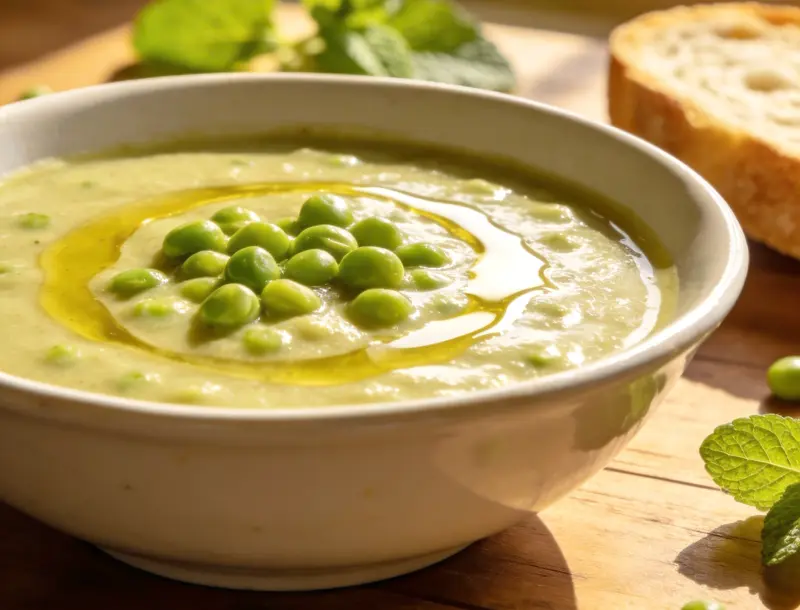
Creamy Pea Soup
Pea puree soup is a classic dish appreciated for its rich flavor, nutrition and ease of preparation. Made from dried peas, rich in vegetable protein and fiber.
Key Ingredients
What you'll need
Ingredients
- 200 gSee recipes with dried peas
dried peas
i - 1.5 liters
- 1 largeSee recipes with onion
onion, chopped
i - 1 largeSee recipes with carrot
carrot, chopped
i - 2 tbspSee recipes with butter
butter
i - 5See recipes with black peppercorns
black peppercorns
i - 2See recipes with bay leaves
bay leaves
i - to taste
- optionalSee recipes with croutons
croutons, fresh herbs, sour cream or crispy bacon (for serving)
i
How to make it
Instructions
- 1
Rinse the peas with cold water and soak for 3-4 hours (or overnight).
- 2
Pour the soaked peas into 1.5 liters of cold water and bring to a boil. Remove the foam, reduce the heat and cook for 1-1.5 hours until the peas are soft.
- 3
Peel and finely chop the onion and carrot. In a frying pan, melt the butter and fry the onion until golden. Add the carrots and fry for another 5 minutes.
- 4
Drain the peas. Add the fried vegetables, salt, pepper, bay leaf and 200 ml of water to the pot with the peas.
- 5
Bring to a boil, then puree with a blender until smooth. Return to heat, bring to a boil and simmer for 5 minutes. Serve with croutons and herbs if desired.
Frequently Asked Questions
Creamy pea soup is too thick — how to achieve the right smooth consistency?
The ideal consistency is like thin cream: the soup flows off a spoon but isn't watery. If it's too thick, add hot broth or water in 50 ml increments, blending after each addition. If too thin, simmer uncovered over medium heat for 5–10 minutes to reduce excess water. The main secret to creaminess is blending as long as possible (2–3 minutes), then straining through a sieve — the starch from the peas creates a naturally velvety texture.
Creamy pea soup turned out bland — how to add depth of flavor without making it heavier?
Peas are naturally sweet but neutral — flavor is built on the base. Key boosters: sauté the onion and garlic until golden before adding the peas (caramelization adds sweetness and depth), use chicken or vegetable broth instead of water. Acid at the end — lemon juice or a splash of white wine — lifts the flavor and makes it brighter. Nutmeg, white pepper, and fresh mint added during blending make a big difference. If it still tastes flat, a teaspoon of white miso dissolved in broth adds umami without changing the color.
Can you make creamy pea soup from dried split peas — how does it differ from fresh pea soup?
You can, but it's a different soup. Dried split peas give a richer, earthier flavor and a thick starchy texture — they need 4–6 hours of soaking and 45–60 minutes of cooking. Fresh or frozen peas are sweet and delicate, cook in 3–5 minutes, and give a bright green color. Split pea soup will be yellow or grey-green. If you want a creamy green soup, use frozen peas. If you want a hearty traditional pea soup, use dried split peas and add smoked meats or bacon for aroma.
What can replace cream in creamy pea soup — how to make it dairy-free?
Coconut cream is the most delicious option: it adds richness and a gentle sweetness that pairs well with peas. Cashew cream (soaked cashews blended with water) also works well, as does oat cream or simply good olive oil — stir in 2–3 tablespoons while blending. Plain water or extra broth work too, but the soup will be less rich. Fat content affects texture: 10% cream gives lightness, 33% gives restaurant-quality velvetiness.
What to serve with creamy pea soup — which toppings and accompaniments work best?
Classic toppings: garlic croutons, crispy bacon or pancetta, toasted pumpkin seeds, fresh mint, lemon zest. For a more filling bowl, add a poached egg or a spoonful of ricotta. Unexpected combinations that work: a few drops of truffle oil, crispy chickpeas, thin radish slices. The soup pairs well with sourdough bread or focaccia. Serve immediately — the soup thickens as it sits; when reheating, add a splash of broth and warm over low heat.


Join the conversation
Comments
Loading comments…