Photo coming soon
The butter goes under the skin, not just on top. That's the difference between a good roast chicken and a forgettable one. Push it as far back over the breast as you can without tearing the skin.
If you have time, salt the chicken uncovered in the fridge the night before. The skin dries out completely and turns genuinely crispy — not just golden.
Roast Chicken
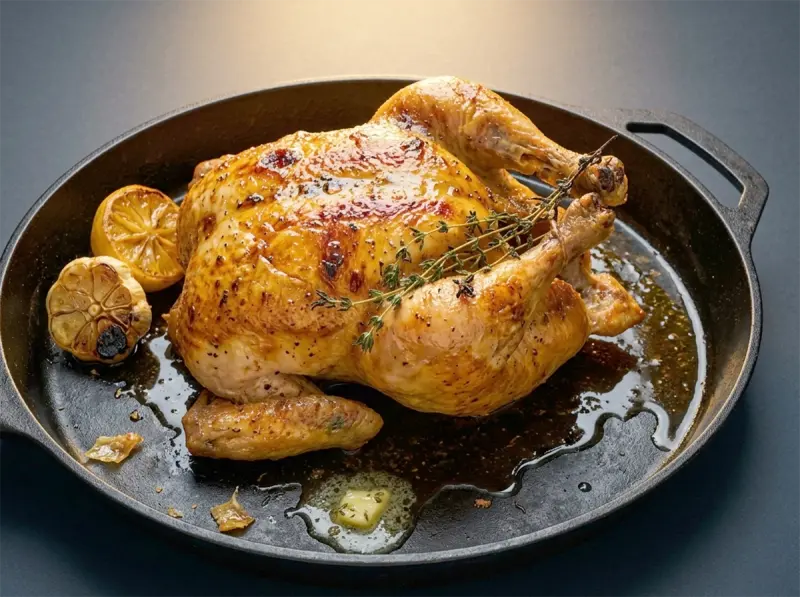
A whole chicken roasted with herb butter under the skin, lemon and garlic in the cavity. The skin crisps at high heat first, then the bird finishes low and slow — the simplest way to get juicy meat and a proper crackling skin.
Key Ingredients
What you'll need
Ingredients
- 1500 gSee recipes with whole chicken
whole chicken
i - 50 gSee recipes with butter
butter
i - 1See recipes with head of garlic
head of garlic
i - 1
- 5See recipes with thyme sprigs
thyme sprigs
i - 1 tsp
- 0.5 tspSee recipes with black pepper
black pepper
i
How to make it
Instructions
- 1
Take the chicken out of the fridge 30 minutes before cooking. Pat it completely dry inside and out with paper towels — this is the single most important step for crispy skin. Preheat the oven to 220°C (425°F).
- 2
Let the butter soften to room temperature. Strip the leaves from 2–3 thyme sprigs and mix them into the butter with a pinch of salt and pepper. Carefully slide your fingers under the breast skin and push most of the butter underneath, spreading it as far back as you can. Rub the rest over the outside of the bird.
- 3
Season the cavity with salt. Cut the lemon in half, squeeze a little juice inside, then stuff both halves in along with the remaining thyme sprigs and the garlic head cut crosswise. The steam from the lemon and garlic keeps the breast from drying out.
- 4
Place the chicken breast-side up in a roasting pan or cast-iron skillet. Roast at 220°C for 15 minutes until the skin starts to colour and smell good.
- 5
Reduce heat to 180°C (350°F). Roast for another 65–70 minutes. To check: pierce the thickest part of the thigh — juices should run completely clear, not pink. The leg should feel loose in the joint. For a 1.5 kg bird, total time is around 80–85 minutes.
- 6
Transfer the chicken to a board and leave it uncovered for 15 minutes before carving. Don't skip this — the juices redistribute and the meat stays moist. Spoon the pan juices over each serving.
Frequently Asked Questions
Why does my roast chicken have soft, rubbery skin instead of crispy — what am I doing wrong?
The main reason is moisture. If you don't pat the chicken completely dry before roasting, it steams instead of roasting and the skin never crisps. The second issue is oven temperature — start at 220°C for 15 minutes to set the crust, then drop to 180°C. Never cover the bird with foil while it roasts; the trapped steam will undo all your work. For the crispiest skin possible, leave the salted, uncovered chicken in the fridge overnight. The skin dries out completely and the difference is dramatic.
Do I need to baste a whole roast chicken every 20 minutes or is it an unnecessary step?
It's unnecessary if you put butter under the skin — that layer protects the breast from drying out far better than basting does. Every time you open the oven door the temperature drops 10–15°C, which directly hurts the crust. If you want to baste, do it once, at the halfway point, using the buttery juices from the bottom of the pan. That's enough.
How do I know when a whole roast chicken is done without a meat thermometer?
Pierce the thickest part of the thigh with a knife or skewer. Clear juice means it's done; pink juice means another 10–15 minutes. A second check: the leg should move freely in the joint when you wiggle it. A 1.5 kg chicken roasted at 220°C for 15 minutes then 180°C takes about 65–70 minutes more, so 80–85 minutes total. If you cook often, a cheap instant-read thermometer is worth buying — you're looking for 74°C at the thigh.
What to put inside a whole chicken before roasting to keep the meat juicy?
Cut a lemon in half, squeeze a little juice inside the cavity, then stuff both halves in along with a head of garlic cut crosswise and a few sprigs of thyme or rosemary. The role of the filling is to create aromatic steam that keeps the breast from drying out from the inside. Don't pack the cavity too tightly — air needs to circulate. Garlic inside the cavity is fine; garlic on the outside surface burns before the chicken is cooked through.
Why does the chicken breast dry out before the legs are cooked through in a regular oven?
Legs and thighs have more fat and connective tissue — they need more heat to finish than the breast. Two things help: pushing butter under the breast skin insulates it and slows moisture loss; and starting the bird at high heat (220°C) for 15 minutes before dropping the temperature means the skin seals quickly and holds the juices in. Some cooks start the chicken breast-side down for the first 20 minutes and flip it — this gives the breast a head start in absorbed heat. Resting for 15 minutes after the oven is also non-negotiable: the juices move back into the meat.


Join the conversation
Comments
Loading comments…