The cheap cuts are the good cuts, and most people get this backwards. Chuck, brisket, pork shoulder, duck leg, beef shank — they come from the parts of the animal that worked hard, which means they're packed with collagen, the connective tissue that holds muscle together. Cook them fast and they're rubber. Cook them low and slow and that collagen does something remarkable: it slowly breaks down into gelatin, the same stuff that gives good stock its body. That gelatin coats every fiber, holds moisture in, and turns a tough hunk of meat into something you can pull apart with a fork.
This is why rushing never works. Collagen doesn't start melting in earnest until the meat hits around 70°C internally, and it needs hours of sitting in that range to fully convert. Crank the heat to speed things up and you just squeeze the moisture out of the muscle before the connective tissue has a chance to soften. You get dry and chewy at the same time, which seems impossible until you've done it. The two big methods below — wet braising and dry smoking — both buy you that time at gentle heat. Here are six dishes that prove the patience pays off.
Birria Tacos with Consommé — the braise you drink afterward
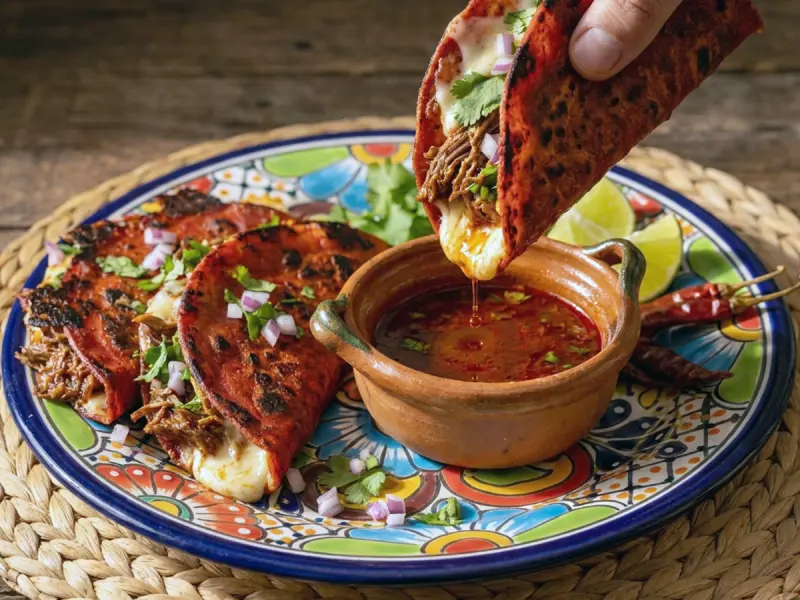
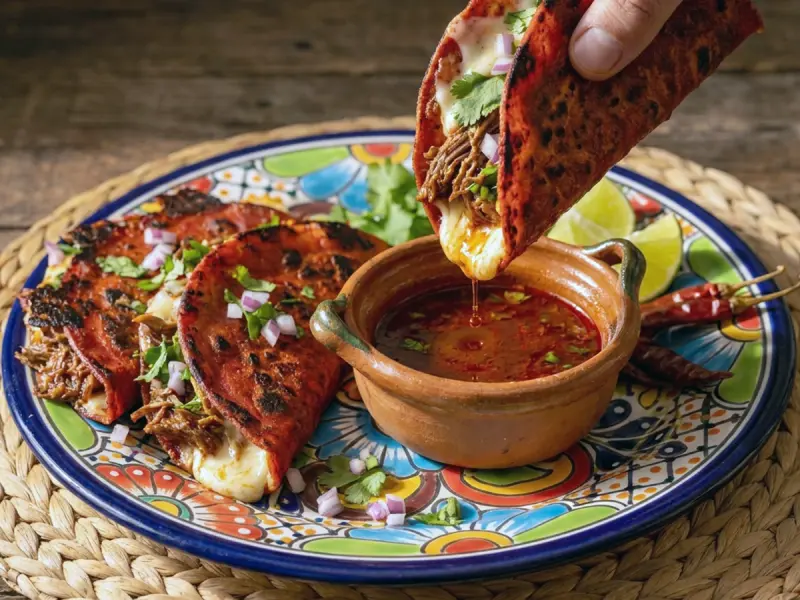
Birria is a Mexican stew, traditionally goat but now usually beef, simmered for hours in a deep red chili adobo until the meat shreds into ribbons. The genius part is the broth. As the collagen melts out of the chuck and shank, the cooking liquid turns into a rich, fatty consommé that you serve alongside the tacos for dipping. Crisp the filled tortillas on a griddle, then dunk.
The chilies need real attention, not a shortcut. Toast the dried guajillos and anchos in a dry pan until they're fragrant and just starting to darken, then soak them before blending. Toast too long and the whole adobo turns bitter; skip the toasting and it tastes flat and raw. That blended chili paste is doing double duty as seasoning and as the base of your consommé, so it's worth getting right.
→ Birria Tacos with Consommé recipe
Beef Bourguignon — the stew that justifies a whole afternoon
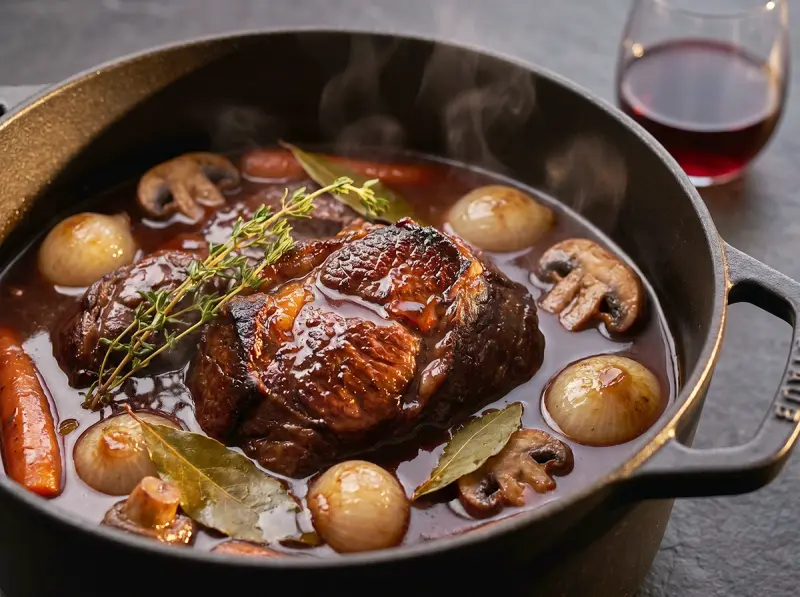
Beef braised slowly in red wine with mushrooms, pearl onions, and bacon. It's the dish that taught generations of home cooks that a "boring" cut, given three hours and a bottle of wine, turns into something you'd happily pay for at a restaurant. The chuck slowly surrenders its collagen into the wine, and the sauce thickens on its own as a result.
Brown the beef properly before it goes in the pot, and do it in batches. Crowd the pan and the meat steams grey instead of searing, and you lose the deep, savory crust that flavors the whole braise. Use a wine you'd actually drink — the alcohol cooks off, but whatever character is left in the bottle ends up in the sauce. Cheap, harsh wine makes a cheap, harsh stew.
Duck Confit — preservation that happens to taste incredible
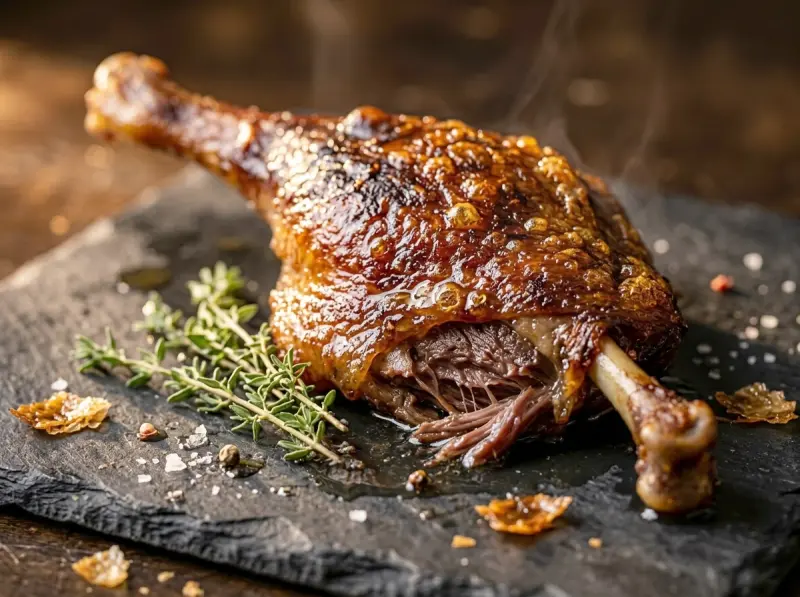
Duck legs cured overnight in salt, then cooked slowly submerged in their own fat until the meat slides off the bone and the skin crisps to glass. This started as a way to keep meat through winter, and the technique survives because nothing else gives you that silky, deeply seasoned texture.
The salt cure is not optional and not a quick step. Overnight, minimum. It seasons the meat all the way through and draws out moisture so the texture turns dense and tender rather than waterlogged. When you crisp the skin at the end, lay the legs skin-side down in a cold pan and let the fat render slowly as it heats. Throw a cold leg into a screaming hot pan and you'll scorch the skin before the inside ever warms.
BBQ Pulled Pork — the shoulder that rewards a long day
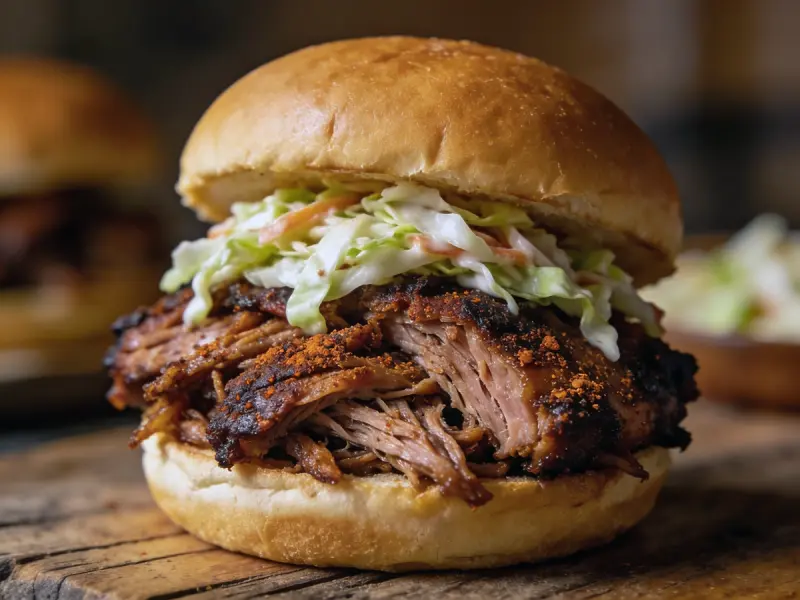
A whole pork shoulder rubbed with spice and cooked low until it falls apart under a fork. Shoulder is laced with fat and collagen, which is exactly why it can handle eight or ten hours of heat without drying out — the rendering fat bastes the meat from inside while the collagen turns to gelatin.
Watch for the stall. Somewhere around 70°C the internal temperature stops climbing, sometimes for an hour or two, because moisture evaporating off the surface cools the meat as fast as the heat goes in. This is normal and it's where the magic happens. Don't panic and crank the heat. Wrap it in foil or butcher paper to push through if you're impatient, then let it ride until it probes soft, around 90°C.
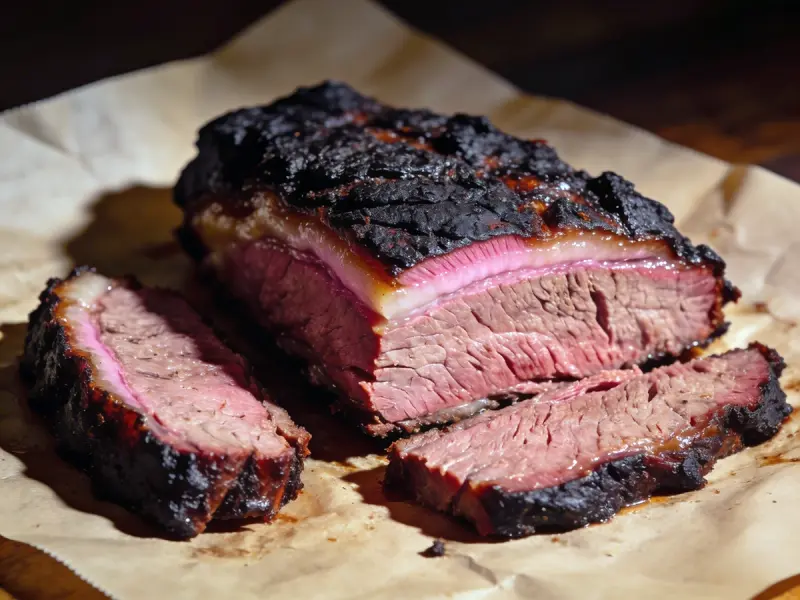
Smoked Brisket — the long game of barbecue
Brisket is two muscles separated by a seam of fat, and it's one of the toughest cuts on the steer. Smoked over wood at low temperature for ten to fourteen hours, all that connective tissue melts and the lean part stays moist thanks to the fat cap rendering down through it. Done right, a slice should hold together when you lift it but pull apart with no resistance.
Manage your fire and your patience, not the clock. Brisket is done by feel, not time — when a probe slides into the thickest part like it's going into warm butter, it's ready, whether that's at hour eleven or hour fourteen. Slicing too early, before the gelatin has set up during the rest, gives you tough, dry meat that crumbles. Let it rest wrapped for at least an hour.
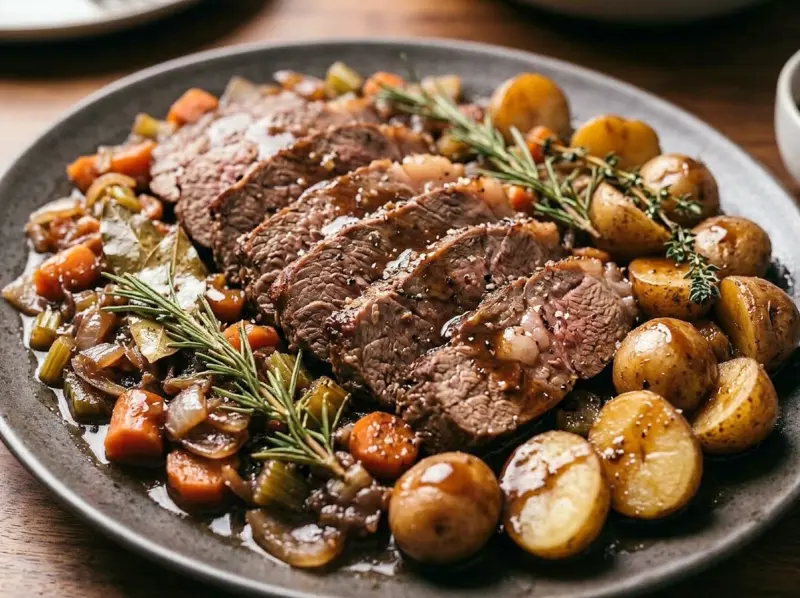
Pot Roast — Sunday dinner with no babysitting
A chuck roast browned hard, then braised in stock with carrots, onions, and potatoes until the whole thing is spoon-tender. This is the most forgiving dish on the list and the best place to start if low-and-slow is new to you. The oven does the work while you do anything else.
Keep the liquid at a bare simmer, not a boil. A rolling boil sounds productive but it tightens the muscle fibers and squeezes water out faster than the collagen can soften, leaving you with stringy meat in a thin broth. You want lazy bubbles, the lid on, and a couple of undisturbed hours. The braising liquid reduces into a jus rich with dissolved gelatin — spoon it over everything.
The science of low and slow
It all comes down to one trade: time for tenderness. Collagen needs hours in the 70–90°C range to convert into gelatin, and there's no heat hot enough to skip that wait — high heat just dries the meat before the connective tissue gives up. The resting step matters as much as the cooking, because that's when the melted gelatin and redistributed juices firm back into the meat instead of running out onto the board. And never throw away the cooking liquid. Whether you call it consommé, jus, or just pan drippings, it's carrying all the flavor and body the collagen released, and it's the best sauce you'll ever not have to make.