
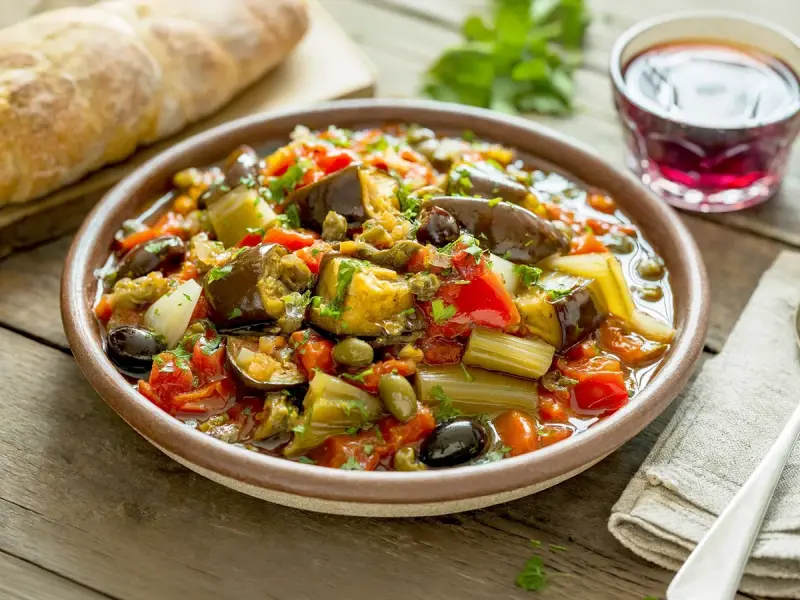
Caponata
Auberginenwürfel goldbraun gebraten, dann mit Tomaten, Sellerie, Kapern und Oliven in einer süß-sauren Agrodolce-Sauce geschmort. Dieses sizilianische Gericht schmeckt am nächsten Tag noch besser, wenn alle Aromen verschmolzen und vertieft sind.
Zutaten
- 1 Aubergine, in 2, 5 cm große Würfel
- nach Geschmacknatives Olivenöl extra
- 1 gelbe Zwiebel
- 1 rote Paprikaschote, geschält und in Streifen
- 2 small stalksStangensellerie, dünn
- 1 Tassegehackte Tomaten
- 2 ELKapern
- 1/4 Tassegrüne Oliven ohne Stein, grob
- 1/4 TasseRosinen
- 2 TLHonig
- 1 Lorbeerblatt
- 1/4-1/2 TLChiliflocken
- 1/4 TasseRotweinessig
- 1/4 Tassetrockener Weißwein
- 2 ELfrische Petersilie
- 2 ELfrische Minze
- nach GeschmackSalz und schwarzer Pfeffer
1 Tasse = 240 ml
Zubereitung
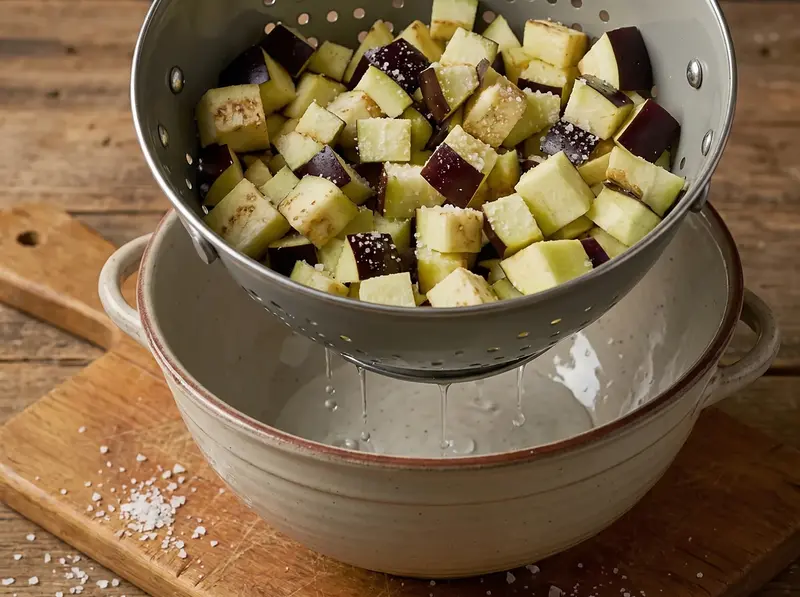
- Den Backofen auf 200 °C vorheizen. Die Auberginenwürfel salzen und 20–30 Minuten in einem Sieb abtropfen lassen, damit die Bitterstoffe austreten. Mit Küchenpapier trocken tupfen.
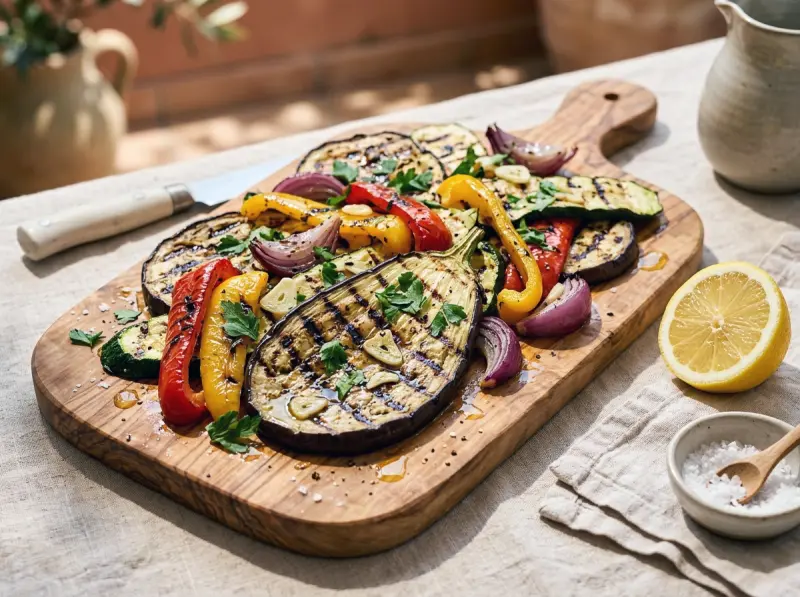
- Die Auberginenwürfel auf ein Backblech geben, mit 3 Esslöffeln Olivenöl beträufeln und vermengen. 25–30 Minuten im Ofen rösten, bis sie goldbraun sind.
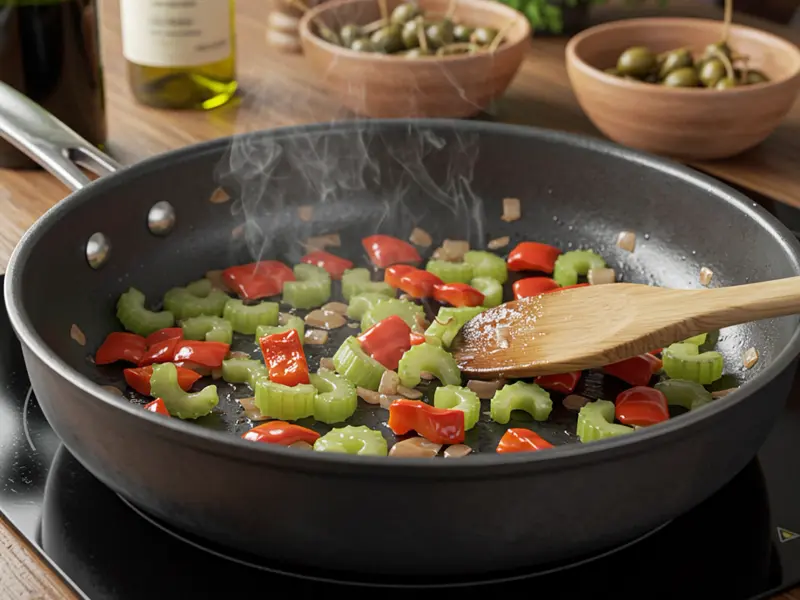
- In einer großen Pfanne 2 Esslöffel Olivenöl erhitzen. Die Zwiebel, Paprika und den Sellerie hineingeben. Mit einer Prise Salz und schwarzem Pfeffer würzen. Unter Rühren ca. 5–7 Minuten dünsten, bis das Gemüse weich ist.
- Die Tomaten, Kapern, Oliven, Rosinen, den Honig, das Lorbeerblatt und die Chiliflocken hinzufügen. Mit Essig und Weißwein ablöschen. Umrühren und bei mittlerer Hitze ca. 10 Minuten köcheln lassen.
- Die gerösteten Auberginen in die Pfanne geben und weitere 2–3 Minuten mitgaren, damit sie die Sauce aufnehmen. Vom Herd nehmen und die frische Petersilie und Minze unterheben.
Fragen
Beide sind Gemüseeintöpfe, aber Caponata ist typisch sizilianisch mit einem süß-sauren Geschmack (agrodolce) durch Essig und Zucker oder Honig sowie Oliven, Kapern und Rosinen. Ratatouille ist ein provenzalisches Gericht mit einem sauberen Kräutergeschmack — kein Essig, keine süßen Noten. Caponata wird fast immer kalt als Antipasto serviert; Ratatouille warm als Beilage.
Weil die süß-saure Sauce beim Ruhen vollständig in die Aubergine und das Gemüse eindringt — die Aromen verschmelzen und der Essig mildert sich. Deshalb wird Caponata immer einen Tag im Voraus zubereitet. Bei Raumtemperatur servieren, nicht kalt aus dem Kühlschrank — das dämpft das Aroma.
Kapern sind eines der wichtigsten Geschmackselemente der Caponata, können aber ersetzt werden. Grüne Oliven (fein gehackt) geben eine ähnliche salzig-würzige Note. Gewürzgurken oder Cornichons fügen Säure hinzu. Wenn Sie Kapern ganz weglassen, etwas mehr Essig und eine Prise Salz hinzufügen, um die verlorene Komplexität auszugleichen.
Die Auberginenwürfel salzen, 20–30 Minuten stehen lassen, dann abspülen und gut trocknen — das kollabiert die Zellstruktur und reduziert die Ölaufnahme um die Hälfte. In heißem Öl (180°C) in kleinen Portionen braten, damit die Temperatur nicht fällt. Alternative: die Aubergine im Ofen bei 200°C mit nur einem Spritzer Öl rösten statt braten.
Ja. Alle Gemüse (Aubergine, Sellerie, Paprika) separat im Ofen bei 200°C goldbraun rösten, dann mit der Tomaten-Essig-Honig-Sauce auf dem Herd kombinieren. Das Ergebnis ist weniger reichhaltig, aber genauso schmackhaft, mit deutlich weniger Öl. Diese Methode ist vorzuziehen, wenn man ein leichteres Gericht möchte.
Bewerten
Rezepte per E-Mail
Ein Brief pro Woche: ein Rezept nach Ihrem Geschmack und alles Neue auf der Seite. Abmelden mit einem Klick.
Als Geschenk: Sergeis Kochbuch (E-Book).
Mit der Anmeldung akzeptieren Sie die Datenschutzerklärung.
Verraten Sie uns, was Sie gern kochen (30 Sekunden) →Weiter stöbern
Weitere Gerichte aus dem Archiv — ausgewählt nach Überschneidung mit dem, was du gerade kochst.
An der Diskussion teilnehmen
Kommentare (2)
Капоната — открытие этого года для меня. Раньше не знала такое блюдо а тепрь готовлю постоянно. Баклажаны обжариваю отдельно чтоб были мягкие, потом всё вместе тушу. На следующий день ещё вкуснее становиться.
Cook the eggplant until it just barely yields to a knife for caponata. It continues softening from residual heat for 2-3 minutes. Cooking until fully soft in the pan means mush on the plate.