
Caprese-Salat
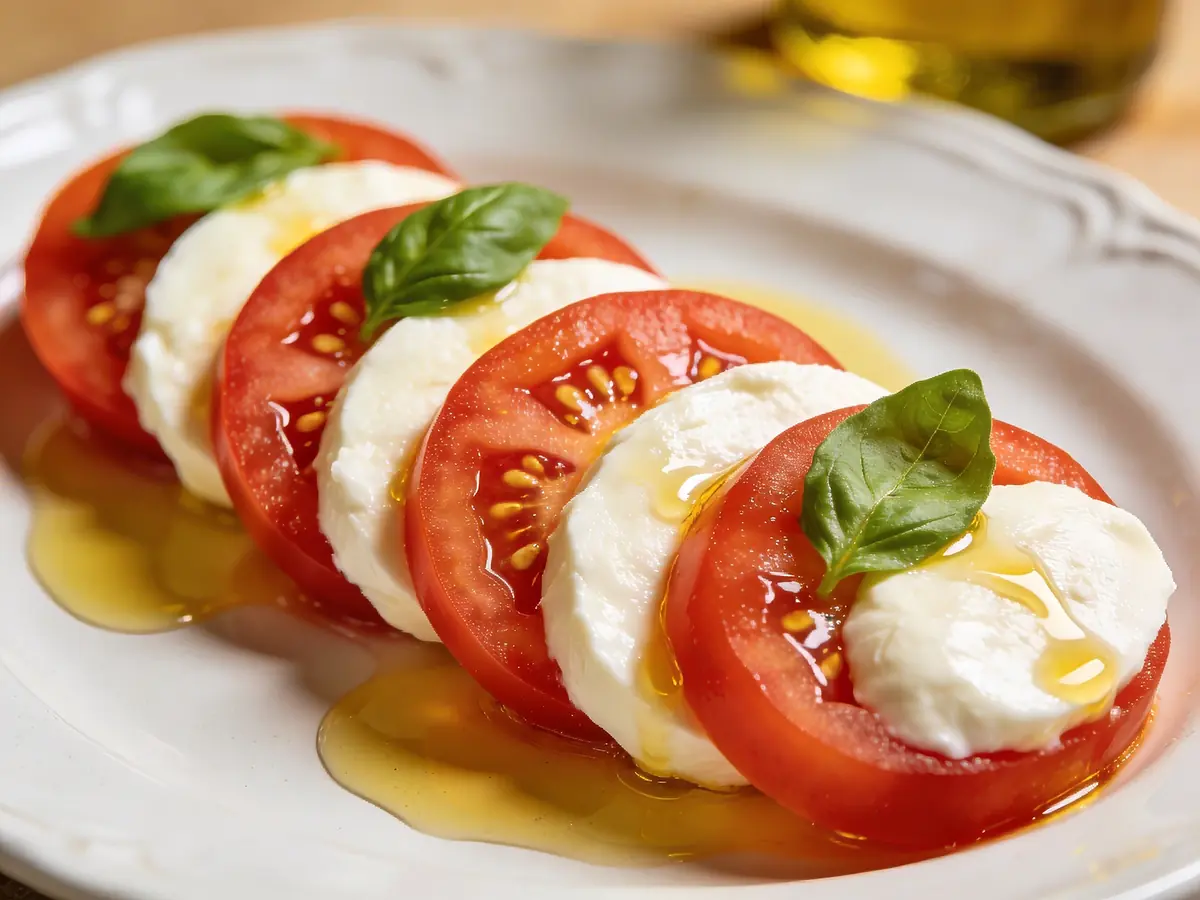
Caprese-Salat ist ein einfacher und erfrischender italienischer Salat, der perfekt für Sommertage geeignet ist. Er besteht aus frischen Tomaten, Mozzarella, Basilikum und Olivenöl.
Zutaten
- 3 reife Tomaten
- 250 gfrischer Mozzarella
- einigefrische Basilikumblätter
- 3 ELnatives Olivenöl extra
- 1 ELBalsamico-Essig
- nach GeschmackSalz und schwarzer Pfeffer
Zubereitung
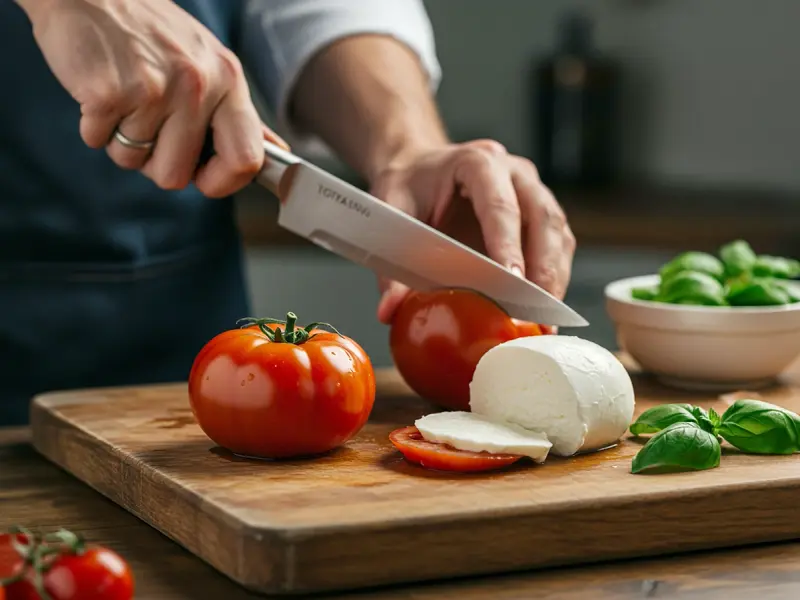
- Wählen Sie tiefrote Tomaten, die auf leichten Druck etwas nachgeben — hier zählt der Geschmack mehr als das Aussehen. Schneiden Sie sie in etwa 5–6 mm dicke Scheiben. Den Mozzarella ebenso dick schneiden, damit die Schichten gleichmäßig aufliegen.
- Auf einer großen flachen Platte Tomaten- und Mozzarellascheiben abwechselnd leicht überlappend in einer Reihe oder einem Kreis auslegen. Jede Scheibe leicht schräg ansetzen, damit sich die Schichten fächerartig öffnen — so erreicht das Dressing jede Fläche.
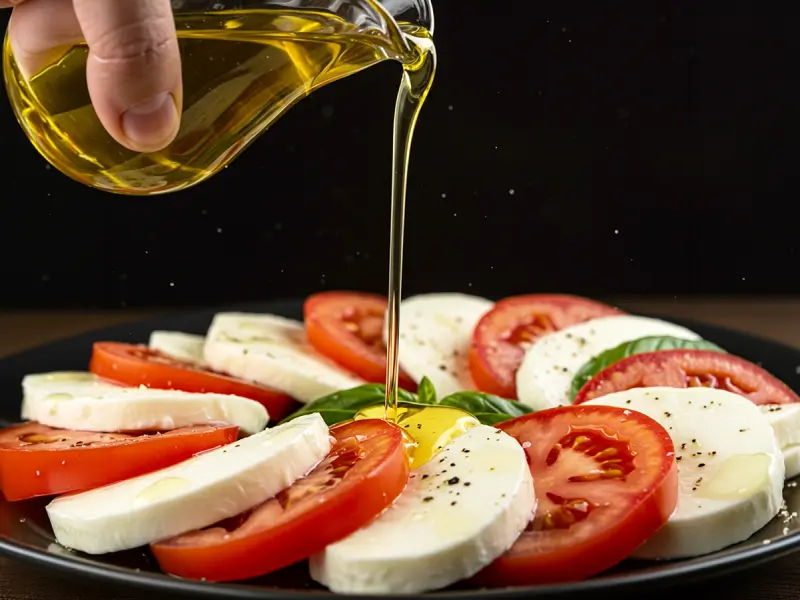
- Ganze Basilikumblätter zwischen die Scheiben stecken. Kleine Blätter für enge Stellen und große dort verwenden, wo ein kräftiger grüner Akzent gewünscht ist. Basilikum nicht hacken — beim Schneiden werden Bitterstoffe freigesetzt und die Ränder werden schwarz.
- Großzügig natives Olivenöl extra in einem dünnen, gleichmäßigen Strahl über die gesamte Platte träufeln. Bei Wunsch Balsamico-Essig hinzufügen — ein leichter Zickzack darüber. Mit Flockensalz und frisch gemahlenem schwarzem Pfeffer würzen.
- Den Salat vor dem Servieren 5–10 Minuten bei Zimmertemperatur ruhen lassen. In dieser Zeit geben die Tomaten etwas Saft ab, der sich mit dem Öl zu einem natürlichen Dressing auf dem Tellerboden verbindet.
Fragen
Ein wässriger Caprese wird fast immer dadurch verursacht, dass frische Mozzarella direkt aus ihrer Flüssigkeit ohne Abtropfen verwendet wird, oder dass der Salat zu weit im Voraus zusammengestellt wird. Frische Mozzarella enthält viel Molke und Wasser — aus der Verpackung nehmen, auf ein gefaltetes Küchentuch oder Küchenpapier legen und mindestens 20-30 Minuten vor dem Schneiden abtropfen lassen. Nach dem Schneiden die Scheiben nochmals mit Küchenpapier abtupfen. Tomaten sind die zweite Flüssigkeitsquelle: reife aber feste Tomaten verwenden, kurz vor dem Servieren schneiden und erst im allerletzten Moment salzen — Salz zieht Saft schnell heraus. Den Caprese auf einem leicht geneigten Brett oder Teller anrichten und sofort nach dem Beträufeln mit Öl servieren. Bei Vorbereitung die Komponenten getrennt halten und höchstens 5 Minuten vor dem Servieren zusammenstellen.
Mozzarella di bufala campana g.U. ist der Goldstandard für Caprese und die traditionellere Wahl. Sie hat einen reicheren, komplexeren Geschmack, einen leicht säuerlicheren Geschmack, ein cremigeres Inneres und eine zartere Haut. Sie enthält mehr Fett und Feuchtigkeit als Kuhmilch-Mozzarella, was ihr eine überlegene Textur für einen Salat verleiht. Kuhmilch-Mozzarella (Fior di latte) ist eine durchaus akzeptable und günstigere Alternative — sie hat einen milderen, neutraleren Geschmack und eine etwas festere Textur, die manche bevorzugen, weil sie nach dem Schneiden besser ihre Form hält. Block-Mozzarella für Pizza vermeiden — zu trocken und gummiartig für Caprese. Was auch immer verwendet wird, Qualität ist alles: frisch kaufen, in Molke oder Wasser, und am Kauf- oder Folgetag verwenden.
Die klassische Anrichtung wechselt Tomaten- und Mozzarellascheiben überlappend wie Dachschindeln ab. Beide auf eine gleichmäßige Dicke von etwa 0,8-1 cm schneiden — zu dünn und die Mozzarella fällt auseinander, zu dick und der Salat ist schwer zu essen. Für Tomaten ein scharfes Messer (Wellenschliff funktioniert gut), für Mozzarella ein dünnes glattes Messer verwenden, um sie nicht zu zerreißen. Bei den Proportionen ungefähr gleich viele Tomaten- und Mozzarellascheiben anstreben — 1 Mozzarellakugel (125 g) und 1 mittelgroße Tomate (150-180 g) pro Person ist die Standardportion. Ein frisches Basilikumblatt zwischen jedes Tomaten-Mozzarella-Paar legen oder unter die Scheiben schieben. Kurz vor dem Servieren großzügig mit nativem Olivenöl extra beträufeln und Meersalzflocken sowie frisch gemahlenen schwarzen Pfeffer hinzufügen. Einfach halten — die Qualität der Zutaten erledigt die ganze Arbeit.
Frisches Basilikum ist das definierende Kraut des Caprese und genuinerweise schwer gleichwertig zu ersetzen. Wenn nicht verfügbar: Rucola ist der häufigste Ersatz — er fügt eine pfeffrige Bitterkeit hinzu, die angenehm mit dem cremigen Mozzarella und der süßen Tomate kontrastiert. Frische Minze in kleinen Mengen funktioniert überraschend gut und fügt Frische hinzu ohne zu dominieren. Glattblättriger Petersil ist neutral und überdeckt die anderen Aromen nicht. Ein kleiner Löffel gutes Pesto darübergegossen kann den kräuterartigen Charakter des Gerichts ohne frisches Basilikum erhalten. Getrocknetes Basilikum ist kein Ersatz — es hat ein völlig anderes Aromaprofil und wird in einem frischen Salat unangenehm zäh.
Der traditionelle Caprese aus Kampanien verwendet nur natives Olivenöl extra, Salz und frisches Basilikum — kein Balsamico. Balsamico hinzuzufügen ist eine populäre moderne Ergänzung die sich verbreitet hat, besonders außerhalb Italiens, aber Puristen betrachten es als nicht traditionell. Das heißt, ein dünner Faden gereiften Balsamicos (der dicke, sirupartige, der 12+ Jahre gereift ist) kann den Geschmack wirklich verbessern, indem er Süße und Säure hinzufügt, die die Tomaten ergänzen. Was vermieden werden sollte: billiger, dünner Balsamico der sauer und scharf ist und die zarten Aromen des Salats überdeckt. Balsamicoglaze (Reduktion) ist milder und funktioniert besser als roher Essig. Wer es traditionell halten möchte, lässt den Balsamico weg und konzentriert sich auf das beste native Olivenöl extra — das Öl ist genauso wichtig wie Tomaten und Mozzarella in einem richtigen Caprese.
Bewerten
Rezepte per E-Mail
Ein Brief pro Woche: ein Rezept nach Ihrem Geschmack und alles Neue auf der Seite. Abmelden mit einem Klick.
Als Geschenk: Sergeis Kochbuch (E-Book).
Mit der Anmeldung akzeptieren Sie die Datenschutzerklärung.
Verraten Sie uns, was Sie gern kochen (30 Sekunden) →Weiter stöbern
Weitere Gerichte aus dem Archiv — ausgewählt nach Überschneidung mit dem, was du gerade kochst.


An der Diskussion teilnehmen
Kommentare (1)
I make the dressing for caprese salad first and let it sit while I prep everything else. The tomatoes and seasonings need at least 10 minutes to meld. Last-second dressing always tastes a bit harsh and disjointed.