
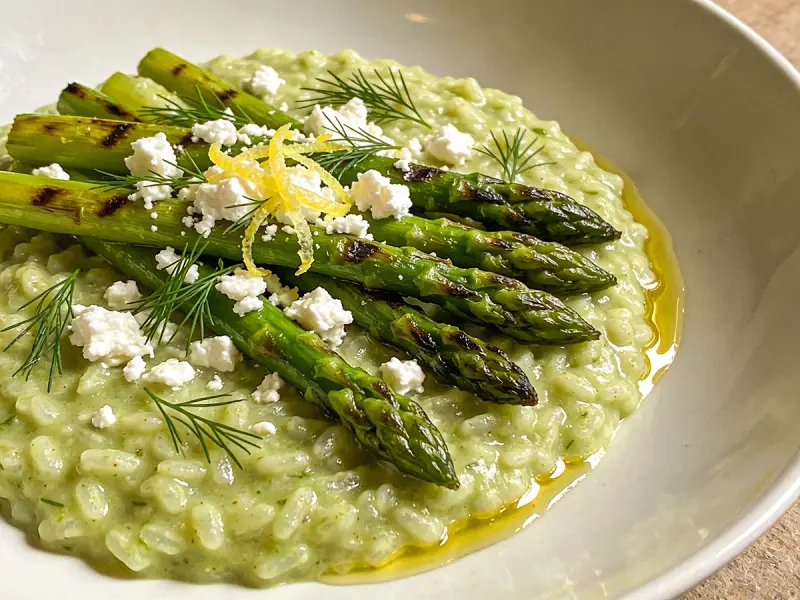
Asparagus Risotto with Lemon, Dill and Goat Cheese
Spring asparagus, fresh dill, a hit of lemon, and a pile of goat cheese stirred in at the end — this is risotto that actually tastes like the season. The technique is the same as any risotto: soften aromatics, toast the rice until it smells nutty, add wine, add warm stock ladle by ladle, stir often enough to keep it moving. Where this version diverges is the finish. Goat cheese instead of the usual Parmesan-only approach gives a tang that cuts through the starchiness; dill, stirred in off the heat, stays bright and grassy. The asparagus goes in two ways: the stalks get folded into the risotto in the last few minutes so they stay slightly firm, and the tips get reserved and sautéed separately so they have some color and texture for the top.
Ingredients
- 450 gfresh asparagus
- 300 gArborio or Carnaroli rice
- 1.2 lvegetable or chicken stock
- 1 medium white onion
- 3 garlic cloves
- 150 mldry white wine
- 3 tbspunsalted butter
- 2 tbspolive oil
- 1 lemon
- 3 tbspfresh dill
- 120 gfresh goat cheese
- 40 gParmesan
- 1 tspsalt
- 0.5 tspblack pepper
- extra olive oil, for frying the asparagus tips and drizzling
Method
- Get everything ready before you start. Risotto doesn't wait. Have your stock hot on a back burner. Snap the woody ends from the asparagus where they naturally break, then cut the stalks into 2 cm rounds and set the tips aside separately — they cook differently and you want them to look good on top. Dice the onion small. Mince the garlic. Zest the lemon into a small bowl, then cut it in half and keep the juice ready. Measure out the wine, have the goat cheese and dill nearby. Once the rice starts absorbing stock, you can't leave it.
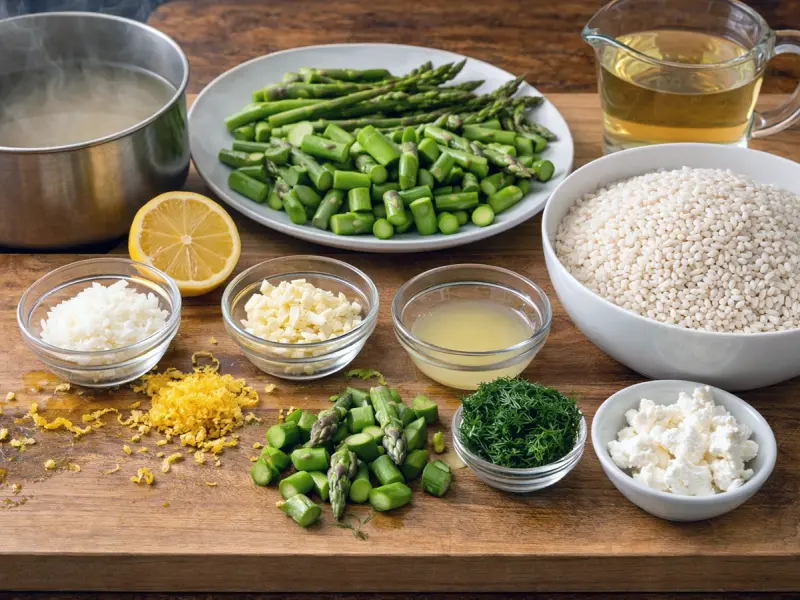
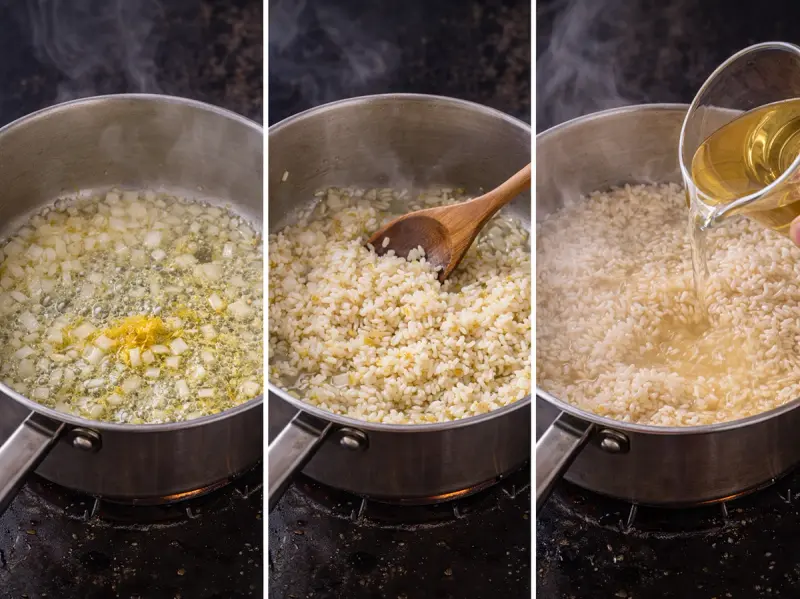
- Build the base and toast the rice. In a wide, heavy pan, heat 2 tablespoons of olive oil and 1 tablespoon of butter over medium heat. Add the onion and a pinch of salt. Cook for 6 to 7 minutes, stirring occasionally, until soft and translucent — don't rush this, under-cooked onion leaves a raw edge in the finished risotto. Add the garlic and half the lemon zest. Cook 1 minute more. Add the rice and stir well to coat every grain in the fat. Toast for 2 minutes, stirring frequently, until the edges of the grains look slightly translucent and the whole pan smells faintly nutty. Pour in the wine — it should hiss and bubble. Stir until it's completely absorbed, about 1 minute.
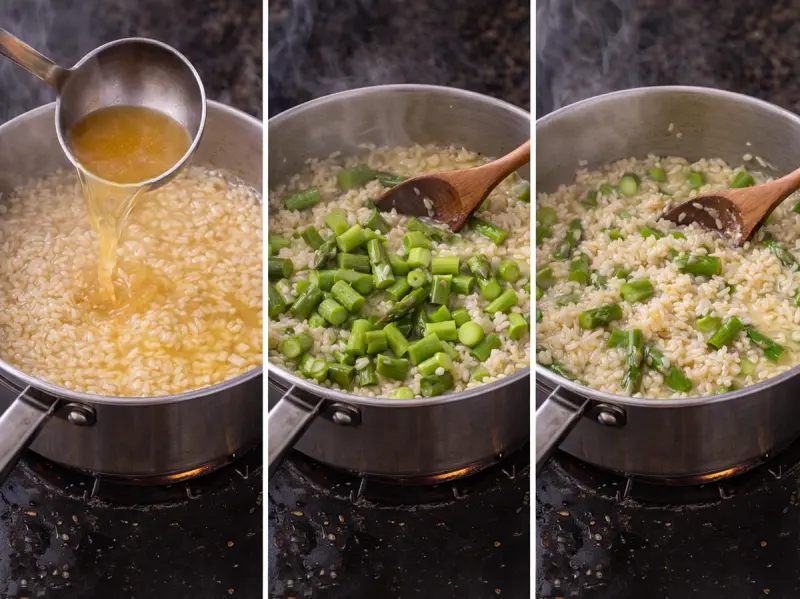
- Add the stock, ladle by ladle. Add one ladle of hot stock (about 120 ml) and stir. The risotto shouldn't be swimming, but it shouldn't be dry either. Let it come to a low simmer and stir fairly regularly, not constantly — the myth about never stopping stirring is overstated, but you do need to keep it moving. When the stock is nearly absorbed, add another ladle. Continue this way for about 16 to 18 minutes, until the rice is almost cooked but still has a small amount of resistance at the center. Add the asparagus stalk pieces with the second-to-last ladle of stock, so they cook through in those final 4 to 5 minutes. The risotto should be loose enough to move slowly when you tilt the pan.
- Finish off the heat. Pull the pan off the heat. Add the remaining 2 tablespoons of butter, the Parmesan, half the goat cheese, all of the dill, lemon juice, salt, and pepper. Stir vigorously for 30 to 60 seconds — this is the mantecatura, the step that makes risotto creamy through emulsification rather than cream. The butter melts into the starchy cooking liquid and creates a glossy sauce. Taste, and adjust lemon juice, salt, and pepper. The risotto should be fluid enough to spread slowly on a plate. If it's too stiff, add a small splash of hot stock and stir again.
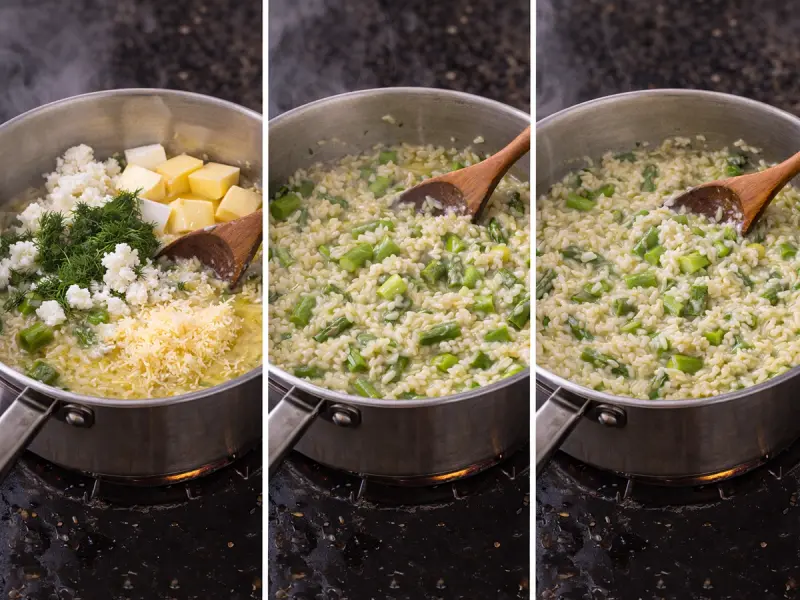
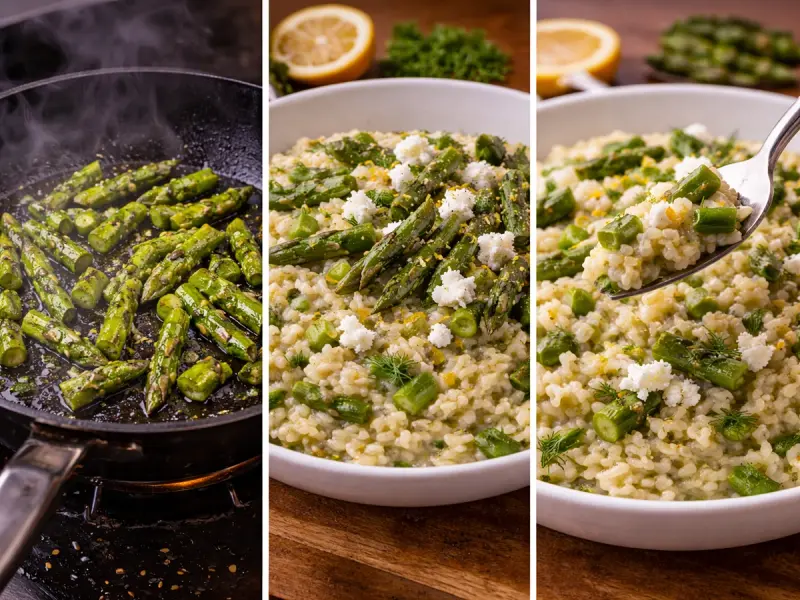
- Cook the asparagus tips and serve. In a small pan, heat a little olive oil over high heat. Add the reserved asparagus tips, season with salt, and cook for 2 to 3 minutes, tossing once or twice, until they're bright green and slightly charred at the tips. Spoon the risotto into warm shallow bowls immediately — it keeps cooking in the residual heat of the pan and will thicken fast. Top each bowl with the sautéed asparagus tips, the remaining goat cheese crumbled over the top, the reserved lemon zest, and a few extra fronds of dill. Black pepper, a drizzle of good olive oil. Serve straight away.
FAQ
No — constant stirring is the most overstated advice in risotto recipes. What stirring does is help release the surface starch from the rice grains into the cooking liquid, which thickens it. Too much stirring can actually make risotto gluey and overworked. The right frequency is somewhere between occasionally and frequently — add stock, stir for 30 seconds, let it simmer mostly undisturbed for 90 seconds, stir again. The key is to not let the bottom dry out or catch. Stay in the kitchen, don't go watch TV, but don't stand over it manically either. Many Italian cooks add all the stock at once for a slightly looser, soupier result (the Veneto style).
Risotto should move. When you spoon it into a shallow bowl and tilt the bowl slightly, the risotto should slowly spread and fill the bowl — this is all'onda, the 'wave' consistency that Italian cooks refer to. It should not be a stiff mound that holds its shape. It should not be soup. Somewhere in the middle, closer to a thick porridge that moves reluctantly. Risotto tightens up quickly once it's off the heat and in the bowl, because the starch continues to gelatinise as it cools. This is why risotto must be served immediately. What looked fluid in the pan will be firmer in the bowl in 2 minutes.
Restaurants use the parcooked method: cook the risotto about 70% of the way through — rice is still quite firm, stock mostly absorbed — then spread it on a baking sheet to cool quickly and stop the cooking. Refrigerate for up to 24 hours. To finish, add hot stock and the final ingredients and cook for 5 to 6 minutes. The result is almost identical to made-to-order. For home cooking, this means you can handle the 20-minute prep stage before guests arrive and finish the last 6 minutes while they sit down.
Ricotta is the closest substitute — creamy, mild, slightly grainy, adds richness without tang. Labneh (strained yoghurt) is tangier than ricotta and works very well with dill and lemon. Feta gives a more pronounced saltiness and firm crumble but melts less smoothly. Cream cheese is richer and less tangy but achieves a similar creaminess. For a fully dairy-free option, cashew cream (raw cashews blended with water and lemon juice) adds creaminess, though it lacks the goat cheese tang entirely. The Parmesan in this recipe can also simply be increased to compensate if you remove the goat cheese.
They do different things. Parmesan is used during the mantecatura (the off-heat butter emulsification at the end) — its salty umami depth and aged protein structure help the sauce bind and become cohesive. Goat cheese is added in two ways: some melts into the risotto and enriches it with tang; some is crumbled on top raw for creaminess and visual contrast. Using only Parmesan produces a more classic, nutty risotto. Using only goat cheese makes it tangier and slightly lighter. Both together gives you a risotto that is richer and more complex than either alone.
Rate this
Recipes by email
One letter a week: a recipe picked for your taste, plus whatever is new on the site. Unsubscribe in one click.
Welcome gift: Sergei's cookbook (e-book).
By subscribing you agree to the privacy policy.
Tell us what you like to cook (30 seconds) →Keep browsing
More dishes from the Italian archive — picked by overlap with what you're cooking now.
Join the conversation
Comments (2)
The trick nobody tells you about risotto: don't stir constantly. Stir enough to keep it from sticking, but let it sit for 30 seconds between stirs so the starch develops properly. Adding the asparagus tips raw at the very end keeps them bright green and snappy — they cook from residual heat in about 90 seconds.
не любитель веганской еды, но такое сьем! 5 баллов!