
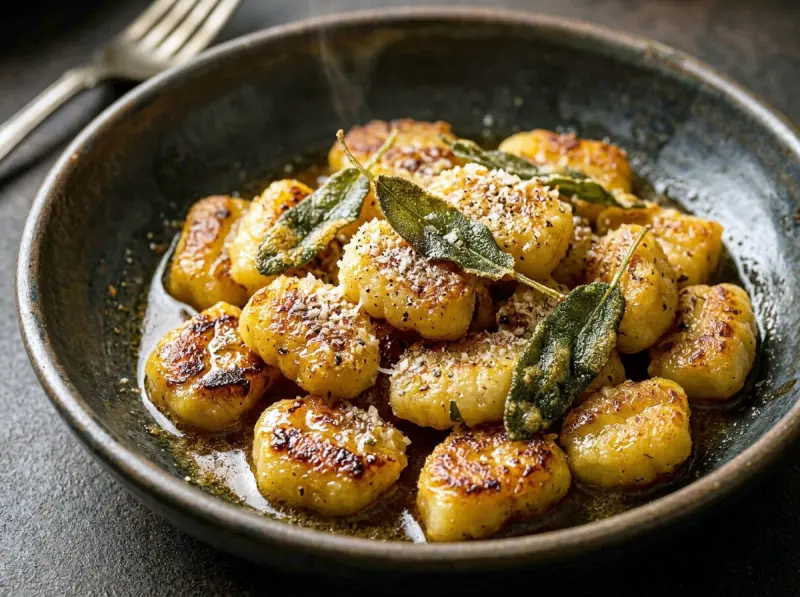
Butter Gnocchi (Gnocchi al Burro e Salvia)
Soft potato dumplings boiled until they float, then pan-fried in brown butter with crispy sage until golden at the edges. The sauce is four ingredients: butter, sage, starchy pasta water, and Parmesan. The pasta water is not optional — its starch emulsifies the brown butter into a glossy, light sauce that coats every piece rather than pooling at the bottom of the bowl. This is the classic northern Italian preparation, served in Veneto and Friuli with every autumn meal. Use store-bought gnocchi for a 20-minute weeknight dinner, or make your own for a project that rewards the effort.
Ingredients
- 500 gpotato gnocchi
- 100 gunsalted butter
- 12 fresh sage leaves
- 2 garlic cloves
- 80 mlpasta cooking water
- 60 gParmesan
- 1 lemon
- 1 tspflaky salt and black pepper
Method
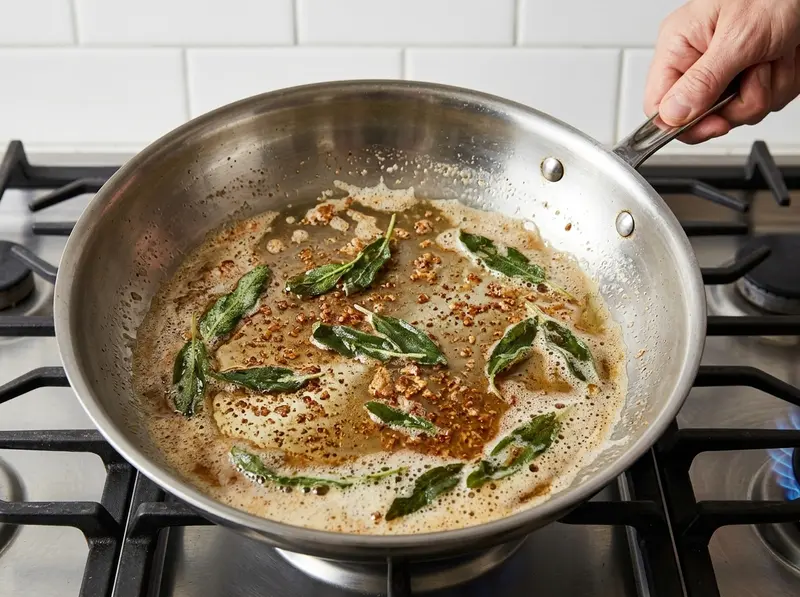
- Brown the butter and crisp the sage. In a large wide pan over medium heat, melt the butter. Add the sage leaves and the garlic if using. Cook, swirling the pan frequently, until the butter turns golden-amber and smells nutty — about 3 to 4 minutes. The milk solids on the pan bottom will turn light brown. Remove the sage leaves with a fork onto a plate; they should be crisp. Set the brown butter aside in the pan — do not wipe it.
- Boil the gnocchi. Bring a large pot of well-salted water to a boil. Add the gnocchi and cook until they float to the surface, then cook 30 seconds more. Before draining, scoop out 80 ml of the starchy cooking water and set aside — this is the emulsifier that transforms butter into a sauce.
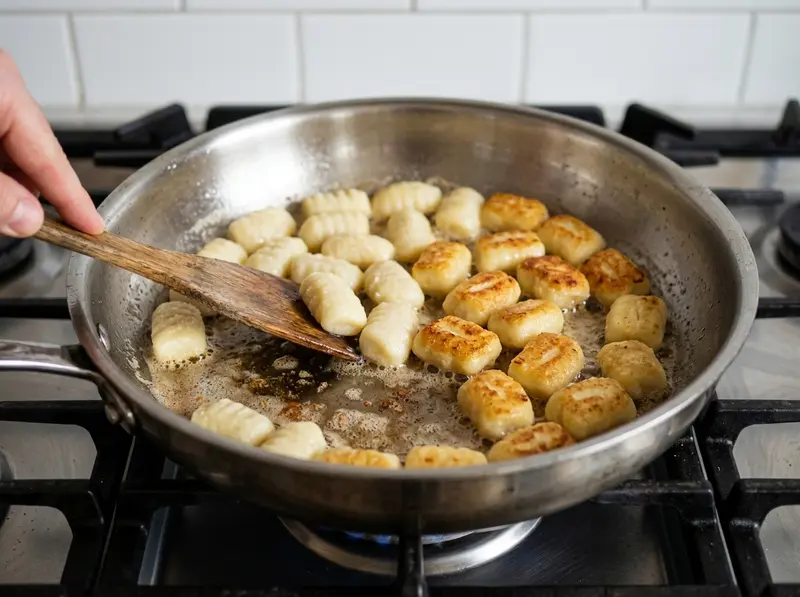
- Pan-fry for golden edges. Return the brown butter pan to medium-high heat. Drain the gnocchi and transfer them directly into the hot butter. Do not stir for 2 minutes — let the gnocchi develop a golden crust on one side. Flip and cook the other side for 1 minute. The edges should be lightly caramelized and the centers still soft.
- Finish with pasta water and Parmesan. Add the reserved pasta water and stir vigorously — the starch emulsifies with the butter, creating a glossy coating sauce rather than a greasy pool. Remove from heat and stir in the grated Parmesan. Add a squeeze of lemon if using. Season with salt and black pepper. Taste and adjust.
- Plate immediately. Divide between warm bowls. Lay the crispy sage leaves on top. Add more grated Parmesan. Eat at once — gnocchi in brown butter does not wait.
FAQ
Brown butter (beurre noisette) is butter that has been cooked past the melting point until the water evaporates and the milk solids caramelize. The result has a distinctly nutty, toasty, complex flavor that plain melted butter does not have. The French name means 'hazelnut butter' because the finished product smells and tastes of hazelnuts. In this dish, brown butter is the sauce — its flavor is the flavor of the whole plate. Using ordinary melted butter produces a greasy, flat result.
Pasta cooking water is starchy water. When that starch hits hot butter and is agitated vigorously, it creates an emulsion — the fat and water combine into a uniform, creamy coating instead of separating into butter pools and watery liquid. The same principle makes carbonara silky and cacio e pepe glossy. Without pasta water, brown butter gnocchi is greasy — the butter slides off the gnocchi into the bottom of the bowl. One ladleful of pasta water is the difference between a sauce and a puddle.
Fresh sage is strongly preferred for this dish. Fresh leaves, when fried in hot butter, become crisp and mellow in flavor — the harshness disappears and a deep, warm, earthy note remains. Dried sage has already lost its volatile oils and turns acrid when cooked in hot fat — it tastes medicinal. If fresh sage is unavailable, the closest alternatives are fresh thyme or fresh rosemary, which both crisp well in butter. Skip the sage entirely and finish with just Parmesan and black pepper rather than using dried.
Homemade gnocchi, when made correctly, is significantly softer and more pillowy than any store-bought version. Commercial gnocchi is shelf-stable and contains preservatives and extra flour to survive packaging — it is firmer and denser. However, homemade gnocchi is a commitment and is very easy to get wrong (too much flour makes them heavy; overworked dough makes them gummy). For a weeknight dinner, good store-bought gnocchi is entirely appropriate and produces an excellent result. The brown butter and sage sauce is good enough to make commercial gnocchi taste restaurant-quality.
After boiling, drain immediately and transfer straight into the hot butter pan — do not let them sit in a colander where they will stick to each other and start breaking. If using store-bought gnocchi that seems fragile, reduce the boil time by 30 seconds. In the pan, do not stir immediately after adding — let them sit for 2 minutes to develop a crust that holds the structure. Stirring too early tears soft gnocchi apart. Homemade gnocchi that falls apart in the water has too much moisture — either the potato was too wet (always bake, never boil potatoes for gnocchi) or too little flour was added.
Rate this
Recipes by email
One letter a week: a recipe picked for your taste, plus whatever is new on the site. Unsubscribe in one click.
Welcome gift: Sergei's cookbook (e-book).
By subscribing you agree to the privacy policy.
Tell us what you like to cook (30 seconds) →Keep browsing
More dishes from the Italian archive — picked by overlap with what you're cooking now.
Join the conversation
Comments (2)
Store-bought gnocchi is perfectly fine here, do not let anyone tell you otherwise. The star of this dish is the sage brown butter, and homemade gnocchi would not make the sauce taste any different. Brown the butter until it smells nutty and turns amber — not just melted, but actually browned. Drop the sage leaves in and they crisp up in seconds. Then the gnocchi goes in and soaks up all that flavour. Five minutes, one pan.
Store bought gnocchi works perfectly fine here, dont let anyone tell you otherwise. The sage butter is the star anyway. Brown the butter until it smells nutty, toss in the sage leaves until they get crispy, then add the gnocchi. Five minutes start to finish and it tastes like a $30 restaurant plate.