
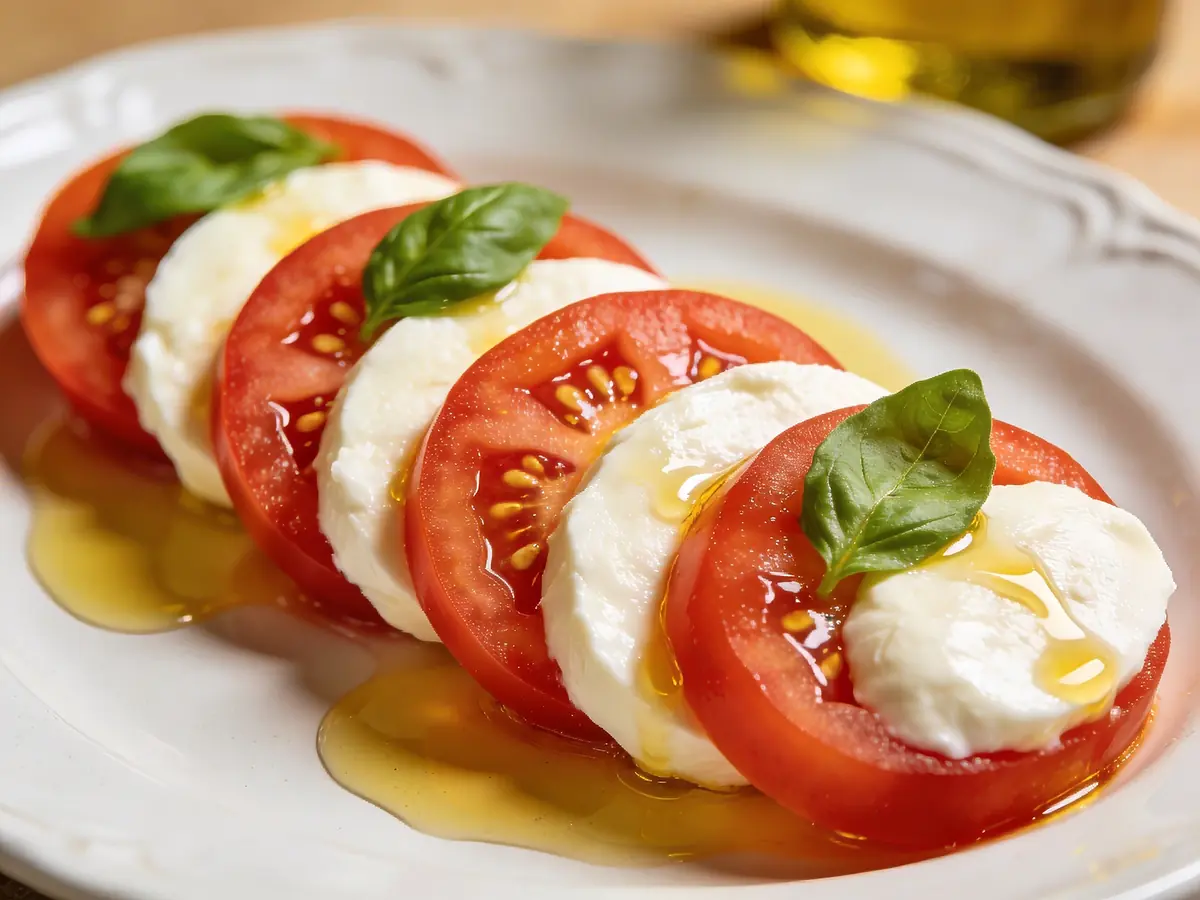
Caprese Salad
Caprese Salad is a simple and refreshing Italian salad that is perfect for summer days. It consists of fresh tomatoes, mozzarella, basil and olive oil.
Ingredients
- 3 ripetomatoes
- 250 gfresh mozzarella, cut into rounds
- a fewfresh basil leaves
- 3 tbspextra virgin olive oil
- 1 tbspbalsamic vinegar
- to tastesalt and black pepper
Method
- Choose tomatoes that are deeply red and give slightly when pressed — flavor matters more than looks here. Slice them into rounds about 5-6 mm thick. Slice the mozzarella to the same thickness so they stack evenly.
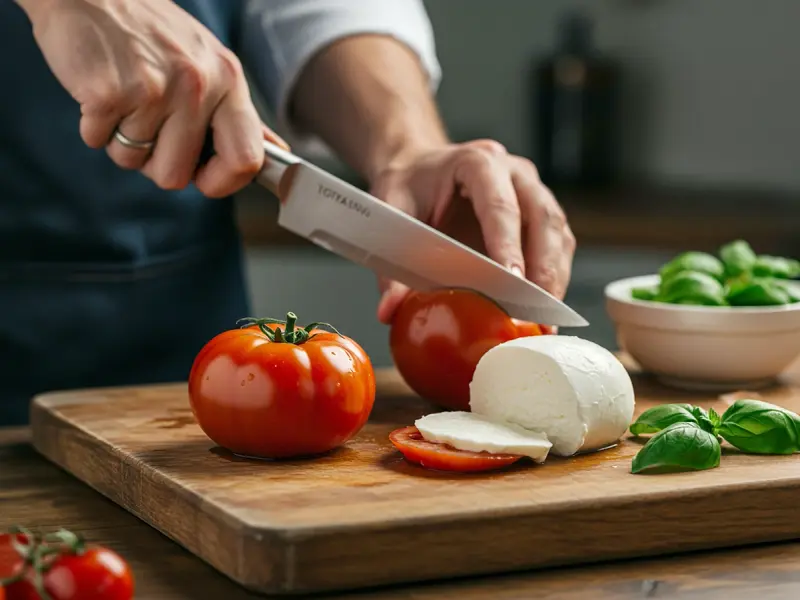
- On a large flat platter, alternate tomato and mozzarella slices in a slightly overlapping row or circle. Tilt each slice at a gentle angle so the layers fan out — this lets the dressing reach every surface.
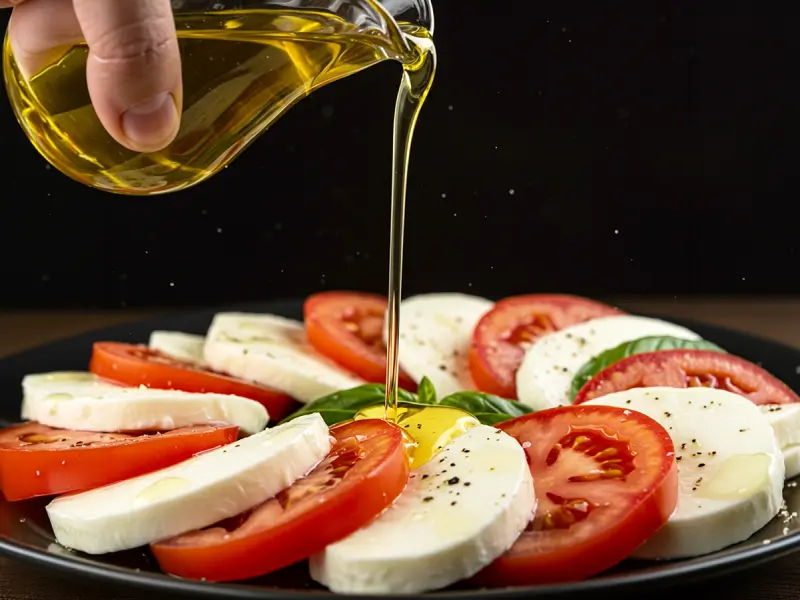
- Tuck whole basil leaves between the slices. Use smaller leaves for tight spots and larger ones where you want a pop of green. Don't chop the basil — tearing or cutting releases bitterness and turns the edges black.
- Drizzle extra virgin olive oil generously over the entire platter in a thin, steady stream. Add balsamic vinegar if using — a light zigzag across the top. Season with flaky salt and freshly cracked black pepper.
- Let the salad sit at room temperature for 5-10 minutes before serving. This allows the tomatoes to release a little juice that mingles with the oil into a natural dressing at the bottom of the plate.
FAQ
Watery caprese is almost always caused by using fresh mozzarella straight from its liquid without draining, or by assembling the salad too far in advance. Fresh mozzarella contains a significant amount of whey and water — remove it from the packaging, place it on a folded kitchen towel or paper towels, and let it drain for at least 20–30 minutes before slicing. After slicing, pat the rounds dry again with paper towel. Tomatoes are the second source of liquid: use ripe but firm tomatoes, slice them just before serving, and don't salt them until the very last moment before eating — salt draws out juice rapidly. Assemble the caprese on a slightly tilted board or a plate, and serve immediately after drizzling with olive oil. If making in advance, keep components separate and assemble within 5 minutes of serving.
Buffalo mozzarella (mozzarella di bufala campana DOP) is the gold standard for caprese and the more traditional choice. It has a richer, more complex flavor, a slightly tangier taste, a creamier interior, and a more delicate skin. It contains more fat and moisture than cow's milk mozzarella, giving it a superior texture for a salad. Cow's milk mozzarella (fior di latte) is a perfectly acceptable and more affordable alternative — it has a milder, cleaner flavor and slightly firmer texture, which some people prefer because it holds its shape better after slicing. Avoid block mozzarella (the kind used on pizza) — it's too dry and rubbery for caprese. Whatever you use, quality is everything: buy it fresh, in whey or water, and use it the same day or the day after purchase for the best result.
The classic arrangement alternates tomato slices and mozzarella slices in an overlapping shingled pattern. Slice both to an even thickness of about 0.8–1 cm — too thin and the mozzarella falls apart, too thick and the salad is hard to eat. Use a sharp knife for tomatoes (a serrated knife works well) and a thin smooth knife for mozzarella to avoid tearing. For proportions, aim for roughly equal numbers of tomato and mozzarella slices — one 125 g ball of mozzarella and one medium tomato (150–180 g) per person is the standard serving. Place a fresh basil leaf between each pair of tomato and mozzarella, or tuck leaves under the slices. Drizzle extra virgin olive oil generously over the top just before serving, add flaky sea salt and freshly ground black pepper. Keep it simple — the quality of the ingredients does all the work.
Fresh basil is the defining herb of caprese and genuinely difficult to replace like-for-like. That said, if unavailable: fresh rocket (arugula) is the most common substitute — it adds a peppery bitterness that contrasts nicely with the creamy mozzarella and sweet tomato. Fresh mint works surprisingly well in small amounts, adding brightness without dominating. Fresh flat-leaf parsley is neutral and won't overwhelm the other flavors. Sun-dried tomatoes and a drizzle of pesto (basil or rocket) over the top can stand in when fresh basil is entirely absent. If making a version without basil, add a small drizzle of good quality pesto to keep the herbal character of the dish. Dried basil is not a substitute — it has a completely different flavor profile and becomes unpleasantly chewy in a fresh salad.
Traditional caprese from Campania uses only extra virgin olive oil, salt, and fresh basil — no balsamic vinegar. Adding balsamic is a popular modern addition that has become widespread, especially outside Italy, but purists consider it non-traditional. That said, a small drizzle of aged balsamic vinegar (the thick, syrupy kind aged 12+ years) can genuinely enhance the flavor by adding sweetness and acidity that complements the tomatoes. What to avoid: cheap thin balsamic vinegar that is acidic and sharp — it overwhelms the delicate flavors of the salad. Balsamic glaze (reduction) is milder and works better than raw vinegar. If you want to keep it traditional, skip the balsamic entirely and focus on using the best extra virgin olive oil you can find — the olive oil is just as important as the tomatoes and mozzarella in a proper caprese.
Rate this
Recipes by email
One letter a week: a recipe picked for your taste, plus whatever is new on the site. Unsubscribe in one click.
Welcome gift: Sergei's cookbook (e-book).
By subscribing you agree to the privacy policy.
Tell us what you like to cook (30 seconds) →Keep browsing
More dishes from the Italian archive — picked by overlap with what you're cooking now.

Join the conversation
Comments (1)
I make the dressing for caprese salad first and let it sit while I prep everything else. The tomatoes and seasonings need at least 10 minutes to meld. Last-second dressing always tastes a bit harsh and disjointed.