
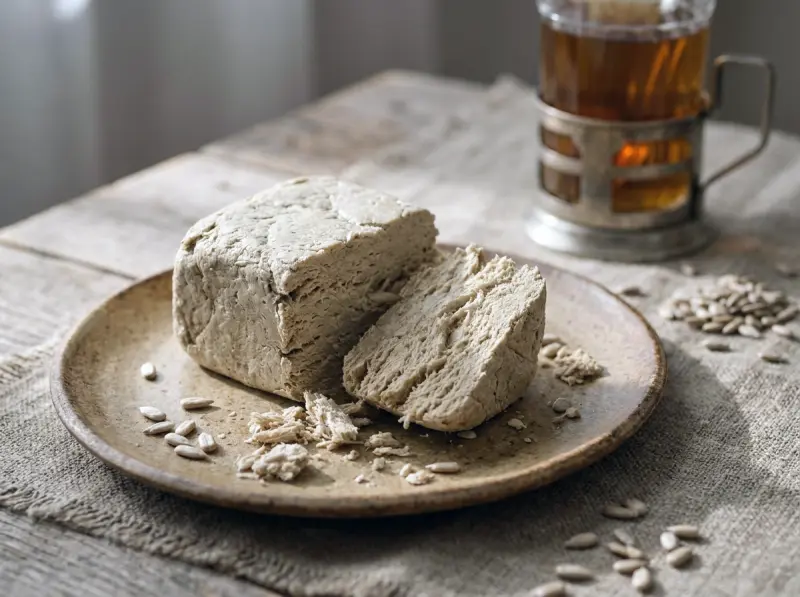
Halva (Russian Sunflower Halva)
Sunflower halva is the crumbly, fibrous sweet that Soviet and Russian childhoods were built on — instantly recognizable by its toasted-seed aroma and the way it flakes into soft layers. Roasted sunflower seeds are ground to an oily paste, bound with a hot sugar syrup, and worked until the mass turns fibrous rather than smooth. Unlike Middle Eastern tahini halva, the star here is the sunflower seed, giving a deeper, nuttier flavor. Allow 3–4 hours of chilling before you cut it.
Ingredients
- 300 gshelled sunflower seeds
- 200 gsugar
- 30 gflour
- 80 mlwater
- 50 gvegetable oil
- 10 gvanilla sugar
Method
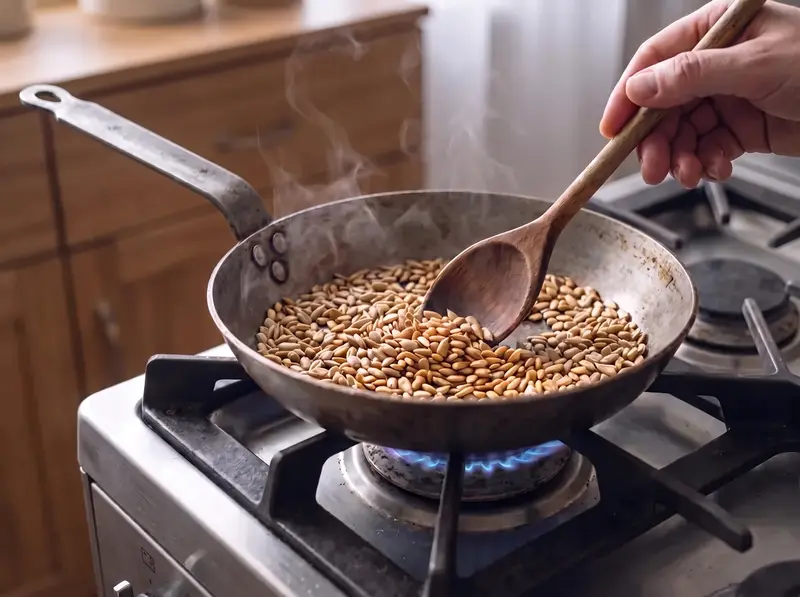
- Toast the shelled sunflower seeds in a dry pan over medium heat, stirring constantly, for 5–7 minutes until golden and fragrant. Don't let them brown too far — scorched seeds turn the halva bitter. Cool completely.
- Toast the flour separately in a dry pan, stirring, until it smells nutty and turns pale gold. This removes the raw taste and helps the halva crumble properly.
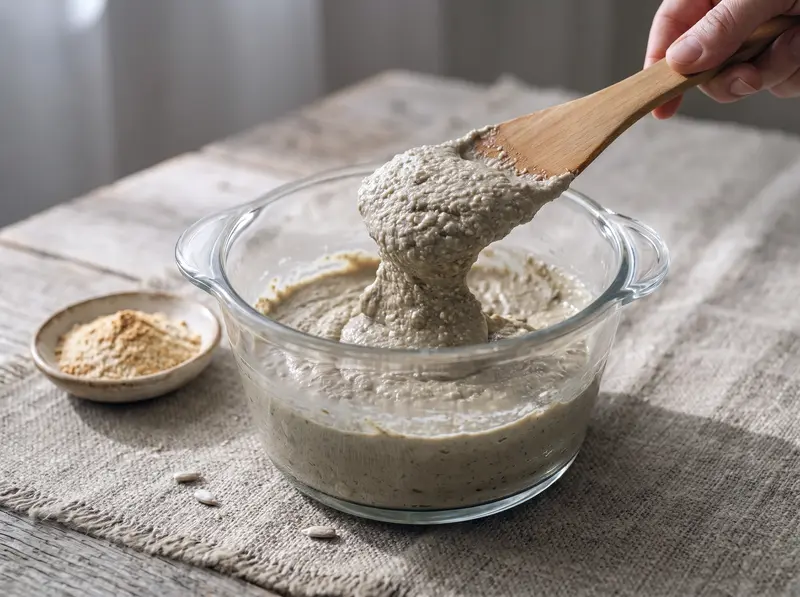
- Blend the cooled seeds in a powerful food processor for several minutes until they release their oil and turn into a thick, wet paste. Blend in the toasted flour and the vegetable oil.
- Make the syrup: combine the sugar and water in a heavy pan and cook over medium heat, without stirring, to about 118–120°C — thick and bubbling but not colored. No thermometer? Drop a little syrup from a spoon into a glass of cold water: it should roll into a firm ball that holds its shape but still squashes between your fingers. If it stays soft and flat, cook a minute longer and test again. Stir in the vanilla sugar.
- Pour the hot syrup into the seed paste and mix hard with a spatula. The syrup is much hotter than boiling water and sticks to skin, so pour it away from you and never test it with a finger — it burns badly. Keep working the mass as it cools — this is what pulls it into the characteristic fibrous, layered texture rather than a smooth paste.
- Press the mixture firmly into a paper-lined dish or mould, compacting it well so it holds together.
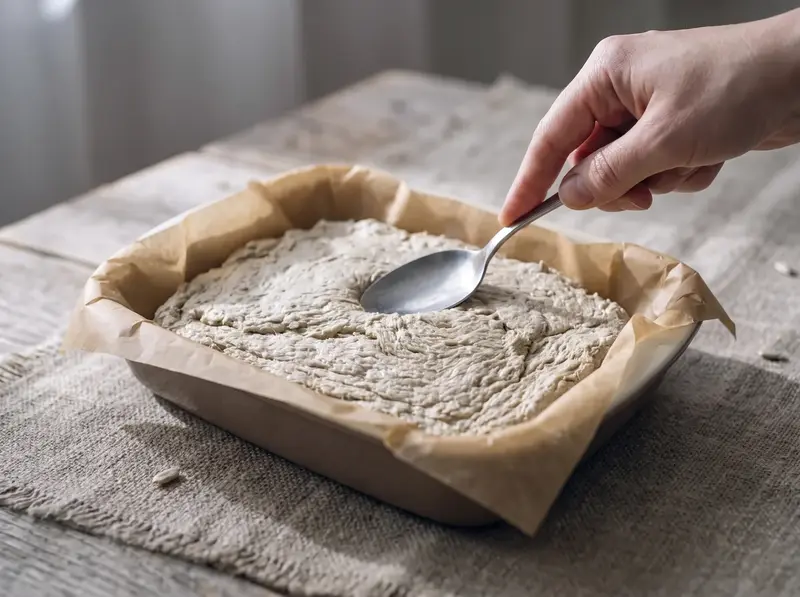
- Chill 3–4 hours, or overnight, until firm. Turn out and cut into pieces. It keeps for weeks in a cool, dry place.
FAQ
The base ingredient is the biggest difference: Russian halva is built on roasted sunflower seeds, while Middle Eastern halva uses tahini (sesame paste). Sunflower gives a deeper, nuttier, slightly darker flavor, while sesame halva is paler and more delicate. Factory-made halva of either kind usually also has a foaming agent (soapwort or licorice root, or egg white) whipped into the syrup for a lighter, layered texture; this home recipe does without one.
Bitterness almost always comes from over-roasting the seeds — take them just to golden and fragrant, not brown. A hard, sticky, or toffee-like result means the sugar syrup was cooked too far and started to caramelize; keep it to about 118–120°C, thick but uncolored — a drop in cold water should form a firm ball you can still squash between your fingers. A greasy, dense block usually means the mass wasn't worked enough as it cooled — keep mixing to pull it into fibrous layers rather than a smooth paste.
For a smooth, proper halva, yes. The seeds have to be ground long enough to break down and release their natural oil, turning from dry crumbs into a wet, flowing paste — this can take several minutes and heats the motor, so pause if it gets hot. A weak blender leaves them dry and crumbly and the halva won't bind. If you can't grind them fully, a spoonful of extra oil helps loosen the paste.
Yes. A simpler home version binds the seed paste with honey instead of cooked syrup — just warm the honey slightly and mix it in, skipping the thermometer entirely. The texture is softer and stickier and less classically flaky, but it's quick and needs no candy-making. You can also use a sugar-honey mix. Whatever you use, the binder must be able to set firm once chilled, so don't add too much liquid.
Halva keeps very well thanks to its low moisture and high sugar and fat: store it wrapped or in an airtight container in a cool, dry place for several weeks, or in the fridge for longer. Keep it away from humidity and strong smells, which it readily absorbs. If it firms up too much in the fridge, let it come to room temperature before serving to bring back its crumbly, melt-in-the-mouth texture.
Keep browsing
More dishes from the Russian archive — picked by overlap with what you're cooking now.
Recipes by email
One letter a week: a recipe picked for your taste, plus whatever is new on the site. Unsubscribe in one click.
Welcome gift: Sergei's cookbook (e-book).
By subscribing you agree to the privacy policy.
Tell us what you like to cook (30 seconds) →
Join the conversation
Comments
No comments yet — be the first!