
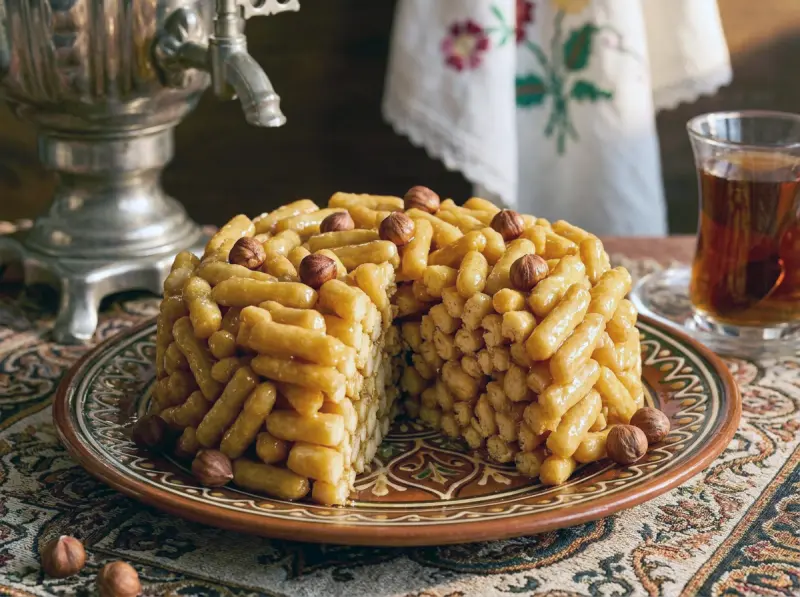
Chak-chak (Tatar Honey Pastry)
Chak-chak is the emblem of Tatar and Bashkir hospitality — a festive sweet of tiny deep-fried dough sticks bound together in honey syrup and mounded into a glistening dome. The dough is just flour and eggs, cut small, fried crisp, then folded through a honey-and-sugar syrup while hot so the pieces set into a sticky, crunchy heap. It keeps for weeks and is the centerpiece of weddings and celebrations across the Middle Volga.
Ingredients
- 400 gflour
- 3 pcsegg
- 1 tbspsugar
- 0.5 tspsalt
- 500 mlvegetable oil
- 200 ghoney
- 100 gsugar
- 2 tbspwater
Method
- Beat the eggs with the sugar and salt, then work in the flour to a firm, smooth dough — as stiff as noodle dough. Knead a few minutes, cover, and rest 30 minutes.
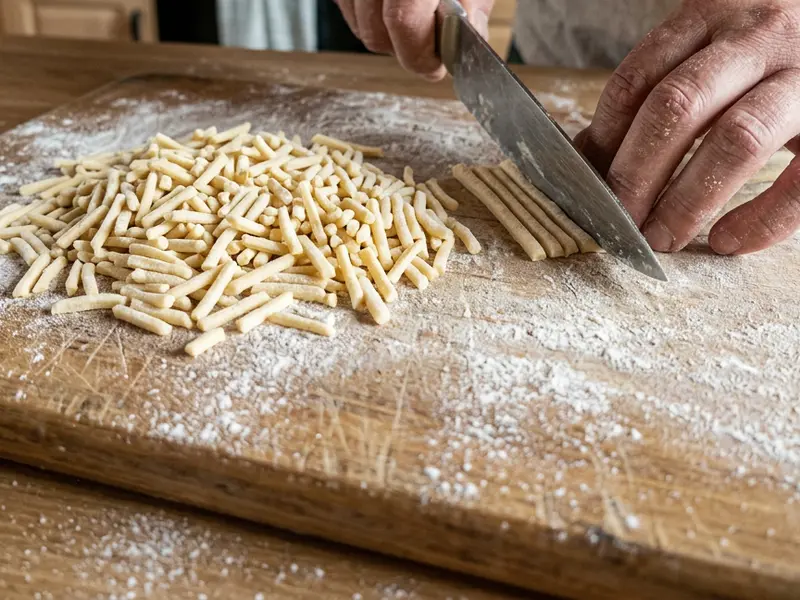
- Roll the dough out very thin and cut it into narrow strips, then across into short matchsticks a few millimetres wide. Dust with a little flour so they don't stick, then shake off the excess.
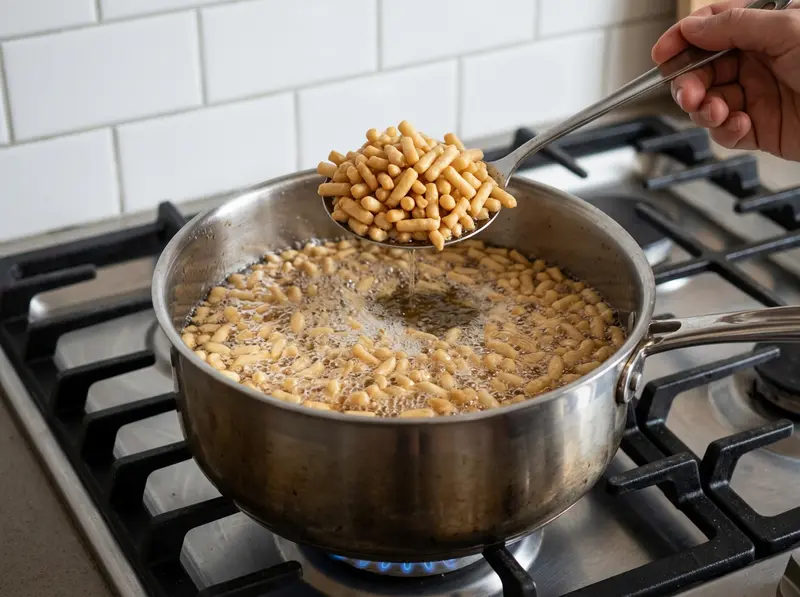
- Heat the vegetable oil for deep-frying to about 175°C (without a thermometer, drop in a small piece of dough: it should sink, rise to the surface within 5 to 6 seconds, and bubble steadily around the edges). Fry the sticks in small batches, stirring, until puffed and light golden — they colour fast, so don't overcrowd. Lift out onto paper towels.
- Make the syrup: combine the honey, sugar, and water in a heavy pan and heat, stirring, until the sugar dissolves and it comes to a boil.
- Boil the syrup 5–7 minutes until thick, in a pan at least three times larger than the amount of syrup, because it foams up sharply. Test by dripping a little into cold water; it should form a soft ball (about 115°C on a thermometer). Without a thermometer, a drop in a glass of cold water should give a soft ball you can squash between your fingers. Take off the heat.
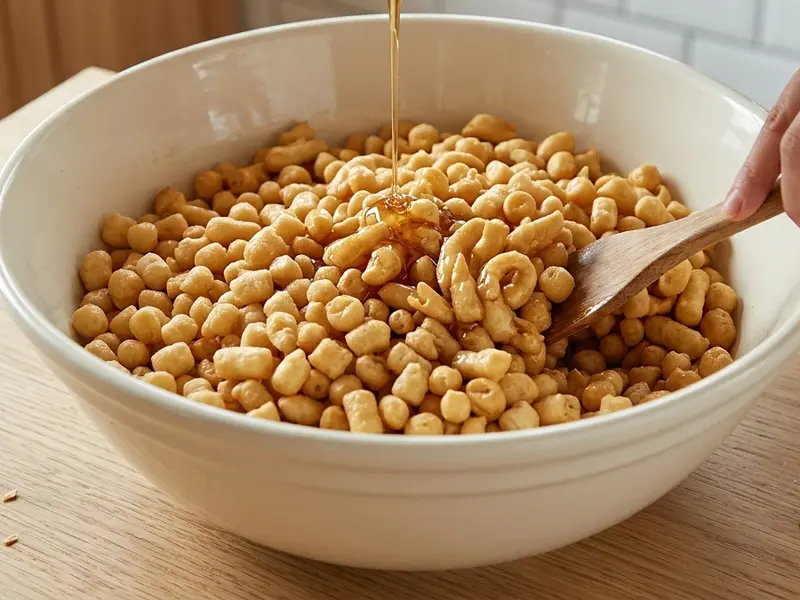
- Put the fried sticks in a large bowl, pour the hot syrup over, and fold quickly with a spatula until every piece is coated.
- With wetted hands, pile the mixture onto a plate in a firm dome or mound, pressing to compact it. Leave to set and cool at least 1–2 hours before slicing.
FAQ
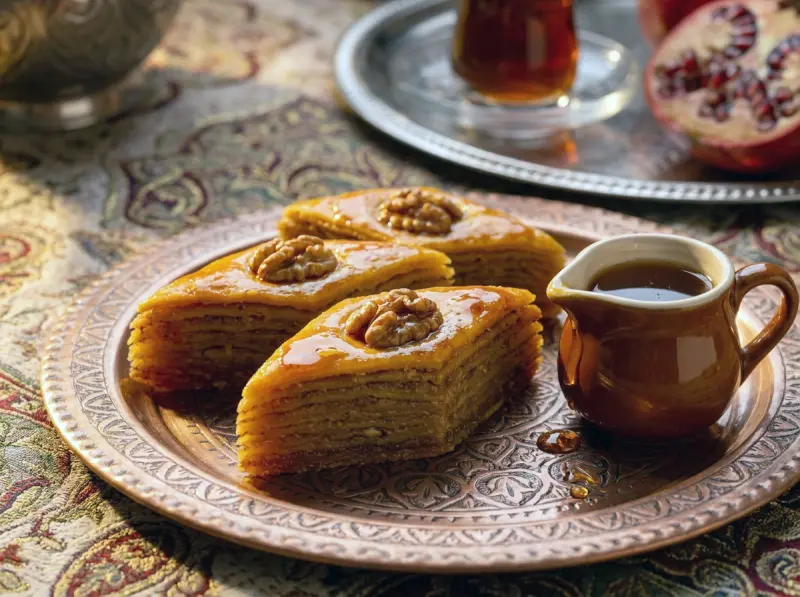
Chak-chak is a traditional sweet of the Tatar and Bashkir peoples of the Middle Volga region in Russia, and is also found among Kazakhs, Kyrgyz, and other Turkic peoples. It's made of small pieces of egg dough deep-fried until crisp, then bound with honey syrup and shaped into a mound. It carries strong symbolism — served at weddings, where the many pieces glued together represent unity and a prosperous, close family. It's considered the national sweet of Tatarstan. Another festive honey-syrup pastry is Azerbaijani pakhlava.
Soggy chak-chak usually means the dough wasn't fried hot enough or long enough, so it soaked up oil instead of crisping — fry at around 175°C until puffed and golden. Falling apart means the syrup was under-cooked: it needs to reach the soft-ball stage (a drop forms a soft ball in cold water) to glue the pieces. Coat and shape everything while the syrup is still hot, then let it cool undisturbed to set firm.
The oldest, most traditional dough is just flour and eggs — no leavening at all — which fries up into crisp, dense little sticks. Modern recipes sometimes add a pinch of baking soda or a splash of vodka to make the dough slightly puffier and lighter, and some add butter for a richer, shortbread-like bite. All are accepted variations; purists insist on egg-only dough. Whichever you use, the dough should be firm, like noodle dough.
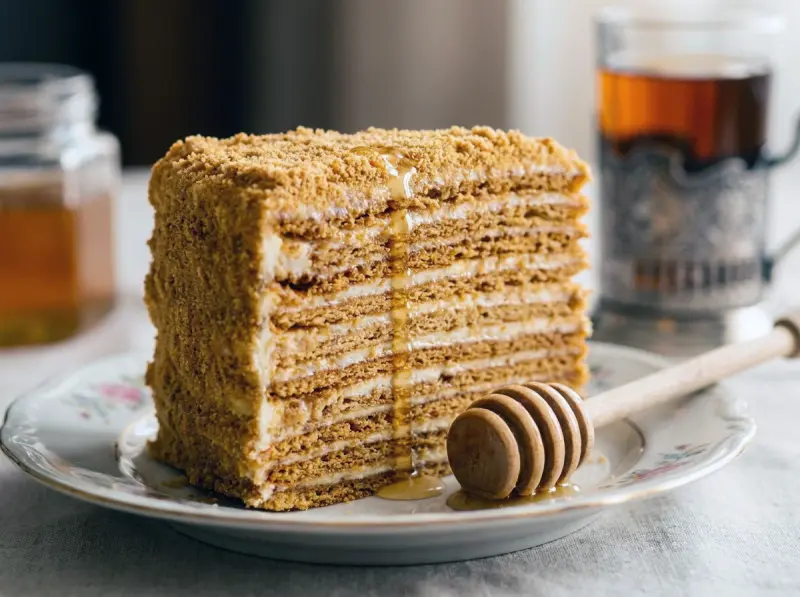
Yes — the original chak-chak was glued with pure honey, gently warmed and poured over. Adding sugar helps the syrup set firmer and hold the mound together more reliably, which is why most modern recipes combine the two. If you use honey alone, warm it gently rather than boiling it hard, and expect a slightly softer, stickier set. Some cooks add a squeeze of lemon or orange juice to balance the sweetness. Honey also carries medovik, the Russian honey layer cake.
Chak-chak keeps exceptionally well — up to two or three weeks at cool room temperature in a covered container, thanks to the honey and sugar, which is why it was traditionally made in large batches to keep on hand and even sent by post. Keep it away from damp, which softens the crunch. It doesn't need refrigerating; the fridge can actually make it sticky. It travels well, so it's a good make-ahead gift or party centerpiece.
Rate this
Recipes by email
One letter a week: a recipe picked for your taste, plus whatever is new on the site. Unsubscribe in one click.
Welcome gift: Sergei's cookbook (e-book).
By subscribing you agree to the privacy policy.
Tell us what you like to cook (30 seconds) →Keep browsing
More dishes from the Russian archive — picked by overlap with what you're cooking now.
Join the conversation
Comments
No comments yet — be the first!