


Gozinaki (Georgian Walnut and Honey Candy)
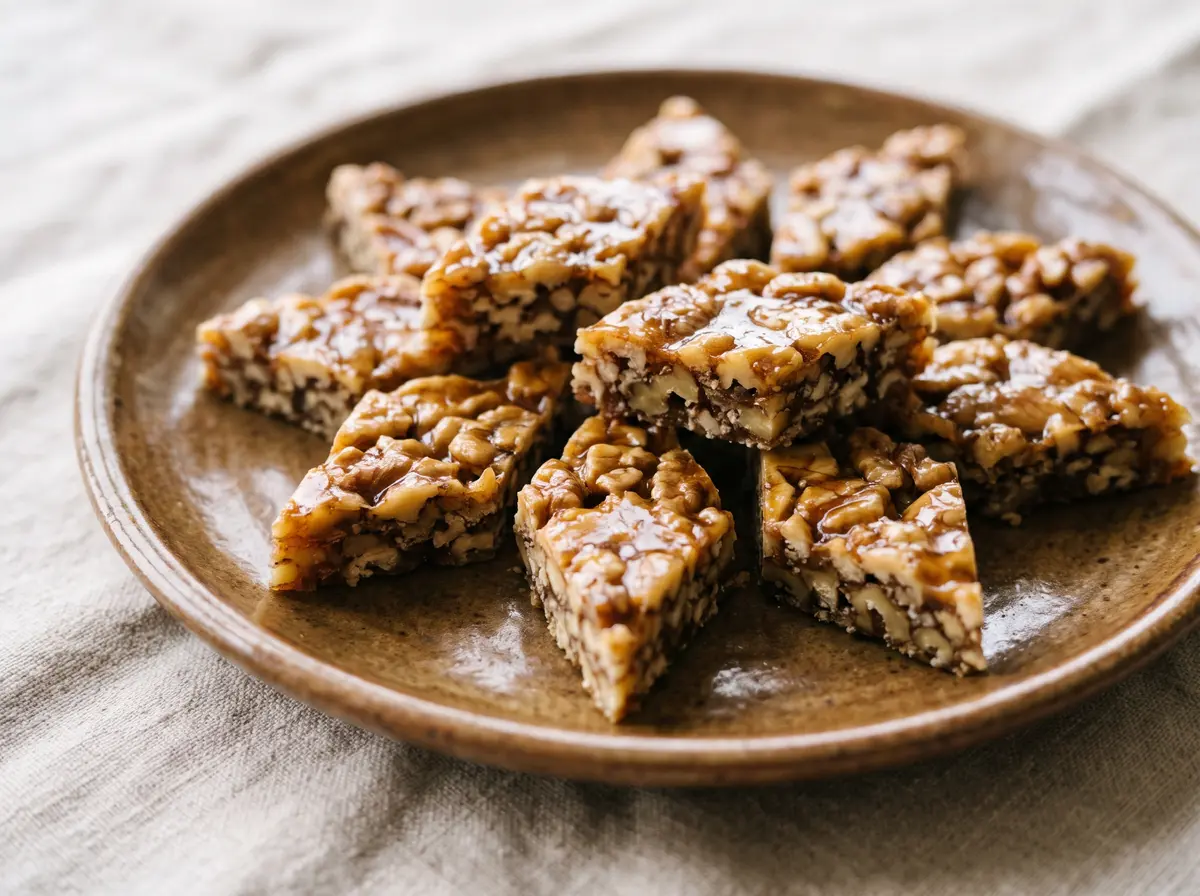
Gozinaki (გოზინაყი, often spelled Gosinaki in German) is the Georgian New Year sweet: toasted walnuts bound in honey that has been cooked until thick, rolled into a slab and cut into diamonds. Georgian cooks use three ingredients, honey, walnuts and a little sugar, and it is not the sunflower-seed kozinaki sold in Russian shops. The nuts get a short spell in the oven, the honey cooks slowly until a drop holds its shape in cold water, and once it is rolled you have about 10 minutes to cut it while it is warm. It takes about an hour, plus 30 minutes for the slab to cool and set.
What gozinaki is
Gozinaki (გოზინაყი, also written Gosinaki in German) is a Georgian sweet of toasted walnuts bound in cooked honey, with a little sugar. The mass is rolled into a slab and cut into diamonds while it is still warm. Russian shop kozinaki is a different bar, usually sunflower seeds in caramel.
Georgian cooks are particular about the honey. The tourism board of Georgia recommends May honey from acacia, citrus or mixed flowers. Linden or chestnut honey gives a darker gozinaki, and fresh, thin honey takes longer to boil down.
Gozinaki and the Georgian New Year
Gozinaki belongs to the New Year table. Georgian families start getting ready at the beginning of December, picking the palest walnuts, and the person in the family who makes the best gozinaki is the one who makes it. Irma Laghadze, a cooking teacher in Tbilisi, says families eat it first thing at midnight, so the year turns out as sweet as that first bite.
The visits and toasts go on for two weeks, until Old New Year on 14 January, the New Year of the Julian calendar that the Georgian Orthodox Church follows. Gozinaki also appears at Georgian Christmas on 7 January. And because it keeps its shape on a long trip, it is a usual parcel for relatives living abroad.
Ingredients
- 400 gwalnuts
- 300 ghoney
- 1 tspsugar
Method
- Heat the oven to 180°C. Spread 400 g walnut halves on a baking sheet in one layer and toast them for 8–10 minutes, stirring once. Pull them when they smell toasty and a broken kernel is still cream-coloured inside, not brown: pale nuts keep the gozinaki light in colour. While they toast, wet a large wooden board (at least 35×30 cm), cut a sheet of baking parchment about the size of the board and fill a glass with cold water.
- Tip the warm nuts onto a clean kitchen towel and rub them so the loose flakes of skin come off. Skin that holds on can stay. Break or cut each half into 2–3 pieces. You want coarse chunks, not crumbs, so each bite has real walnut in it.
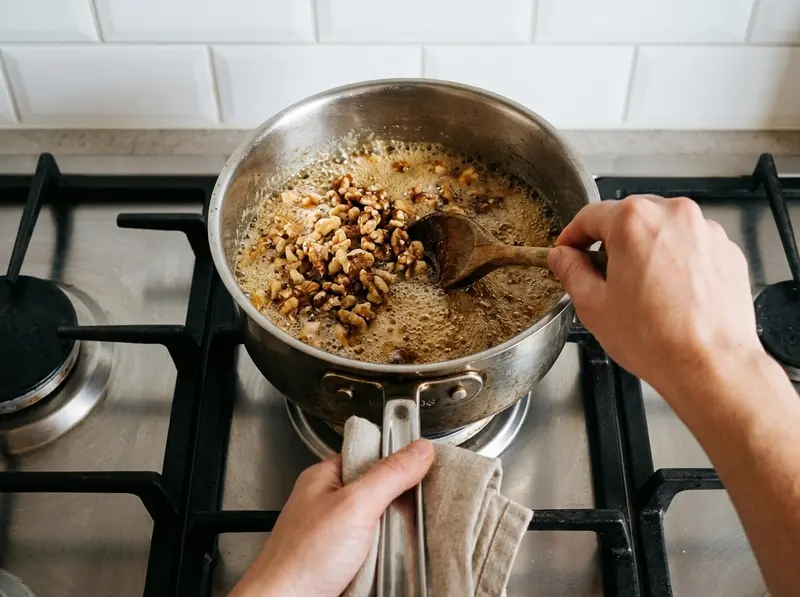
- Put 300 g honey into a heavy 3-litre saucepan over low heat and stir with a wooden spoon. After about 5 minutes it starts to foam: stir in 1 tsp sugar. Keep stirring over low heat for another 10–15 minutes, 15–20 minutes in all. From the 12-minute mark, drop a little honey from the spoon into the cold water. If it spreads, keep cooking. When it sinks and holds as a firm ball at the bottom of the glass that still gives a little when pressed, the honey is ready (121–130°C if you use a thermometer). It should be golden amber. Dark brown honey tastes bitter and sets too hard. Never test with your finger: the syrup is far hotter than boiling water.
- Tip all the walnuts into the honey and stir on low heat for 3 minutes, until every piece is coated and no loose honey is left on the bottom of the pan.
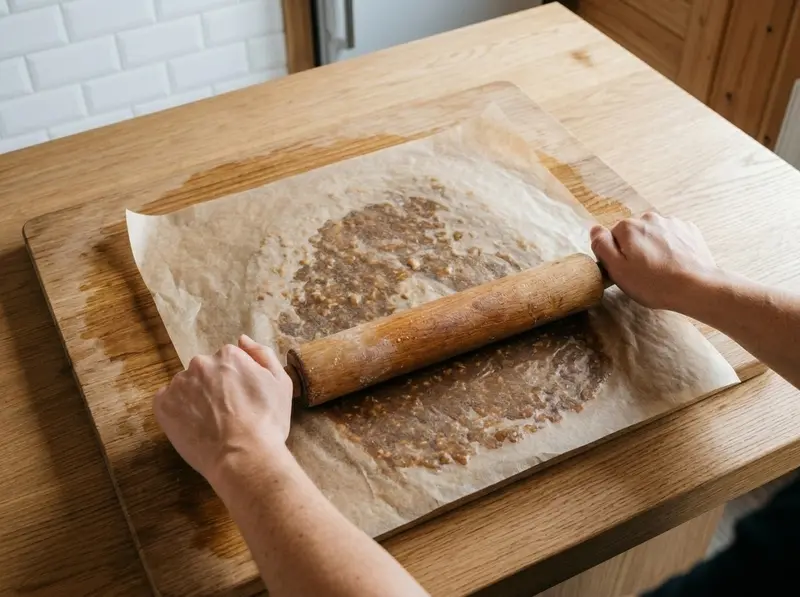
- Wet the board again and wipe off any puddles. Scrape the mixture onto the damp board, lay the parchment on top and roll it with a wet rolling pin into an even slab 1 cm thick, about 25×25 cm. Push the edges straight with the side of the pin. Georgian cooks often press it with wet hands. We keep hands off, because the mass is still very hot. Keep children away from the stove and the board.
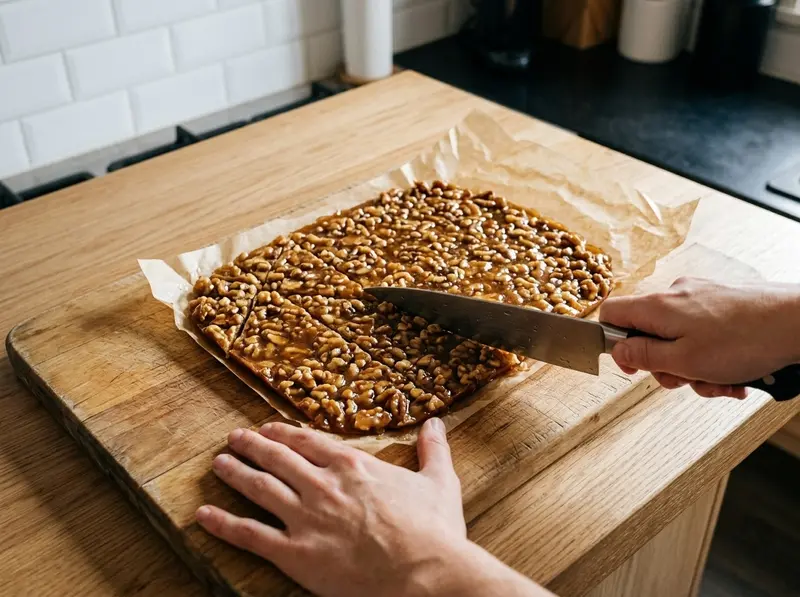
- Peel off the top parchment. While the slab is still warm, within about 10 minutes, cut lines 5 cm apart with a long wet knife, then cut diagonals 5 cm apart to make diamonds. Wet the knife again between cuts. Warm gozinaki cuts cleanly. Once it cools it shatters instead.
- Leave it for 30 minutes until completely cool and hard, then break the diamonds apart. You should get about 24 pieces, 2 pieces a serving. Store them in an airtight tin with parchment between the layers, in a cool, dry place, for up to 2 weeks. Left open, gozinaki soaks up moisture and turns tacky.
Cooked it? Rate the recipe
FAQ
In Russian shops, kozinaki usually means a bar of sunflower seeds held together with caramel, often with added sugar. Georgian gozinaki (გოზინაყი, often spelled Gosinaki in German) is walnuts bound in honey, with only a little sugar, here 1 tsp to 300 g honey. The walnuts are toasted first and cut into coarse pieces, so it tastes of nuts and honey rather than of seeds. Georgia does make other versions too: in Racha people still make it from pumpkin seeds.
Cook 300 g honey in a heavy saucepan on low heat, stirring all the time. It foams after about 5 minutes and needs 15–20 minutes in all. From the 12-minute mark, drop a little into a glass of cold water: if it sinks and holds as a firm but pliable ball, it is ready, and if it spreads, cook a little longer. On a thermometer that is the hard-ball stage, 121–130°C. The colour should be golden amber, not dark brown.
Sticky gozinaki almost always means the honey came off the heat before the drop held its shape in cold water. It can also go tacky if you store it open, because it pulls moisture from the air. Rock-hard, bitter gozinaki means the honey went dark brown. Well made, it comes out soft enough to bite and does not stick to the plate. Rolling it to 1 cm and cutting it within about 10 minutes, while it is still warm, also keeps the pieces neat.
Kept in an airtight tin with parchment between the layers, in a cool, dry place, gozinaki keeps for up to 2 weeks. It holds its shape on the road, which is why Georgians often send it to relatives abroad. Babies under 1 year should not have honey at all, because of the risk of infant botulism. The NHS also advises against whole nuts for children under 5, as they can choke, so gozinaki is not a sweet for small children.
Yes. Georgian cooks make it with hazelnuts too, and the method is the same: toast the nuts, rub off the skins, cook the honey until a drop holds in cold water. Keep the same weights as here, 400 g nuts to 300 g honey, so there is just enough honey to bind them. In Racha some cooks use pumpkin seeds. If you like walnuts and honey in pastry, try baklava.
Keep browsing
More dishes from the Georgian archive — picked by overlap with what you're cooking now.




Recipes by email
One letter a week: a recipe picked for your taste, plus whatever is new on the site. You can stop the letters in one click.
Welcome gift: Sergei's cookbook (e-book).
By signing up for the newsletter you agree to the privacy policy.
Tell us what you like to cook (30 seconds) →
Join the conversation
Comments
No comments yet — be the first!