
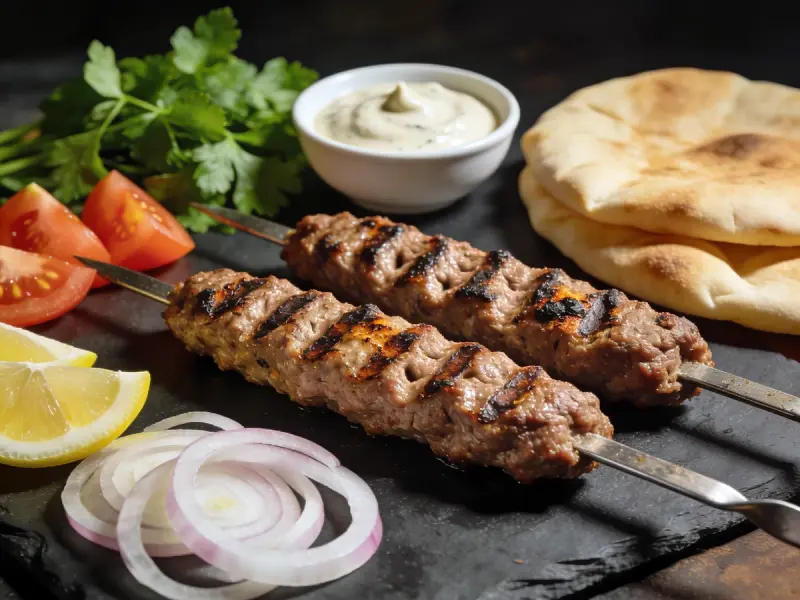
Kofta Kebab Skewers
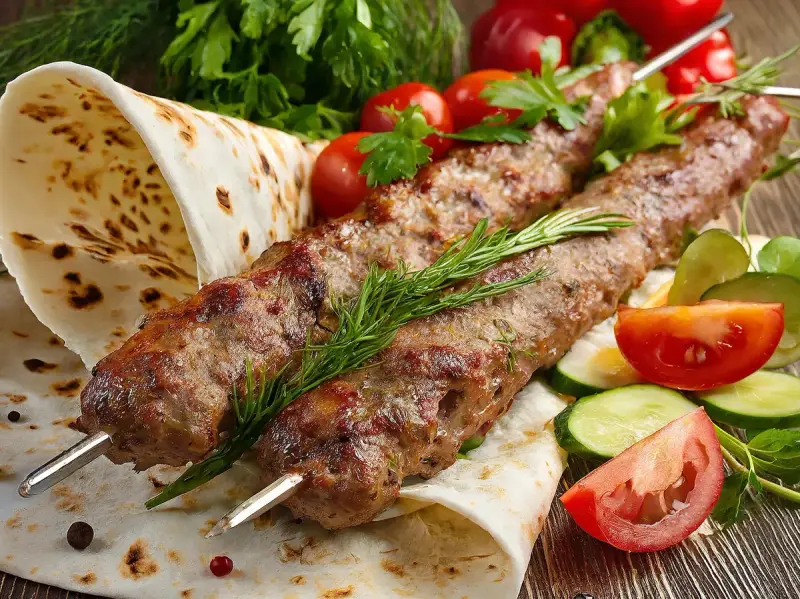
Kofta kebab (kafta in Lebanon) is a Lebanese dish of seasoned ground lamb — mixed with grated onion, parsley, and warm spices, then pressed onto flat metal skewers. It belongs to the ground-meat branch of the wider kebab family found from Morocco to Central Asia, distinct from shish kebab, which threads whole cubes of marinated meat instead (see the tip below for that version). The kofta is grilled over direct high heat, ideally charcoal, until charred outside and just cooked through. The technique that separates good kofta from crumbly kofta is kneading the mixture until it turns cohesive and paste-like, and squeezing the grated onion completely dry before mixing it in. The mixture chills for 15 to 30 minutes before shaping; if you grill over charcoal, allow extra time for the coals to burn down to white ash.
Ingredients
- 500 gground lamb
- 1 medium onion
- 4 tbspfresh flat-leaf parsley
- 1 tspground allspice
- 0.5 tspground cinnamon
- 0.5 tspground cumin
- 0.5 tspground coriander
- 0.25 tspground nutmeg
- 1 tspfine salt
- 0.5 tspblack pepper
- 1 tbspolive oil
- 1 lemon
- 4 tbsptahini sauce or yoghurt with garlic
Method
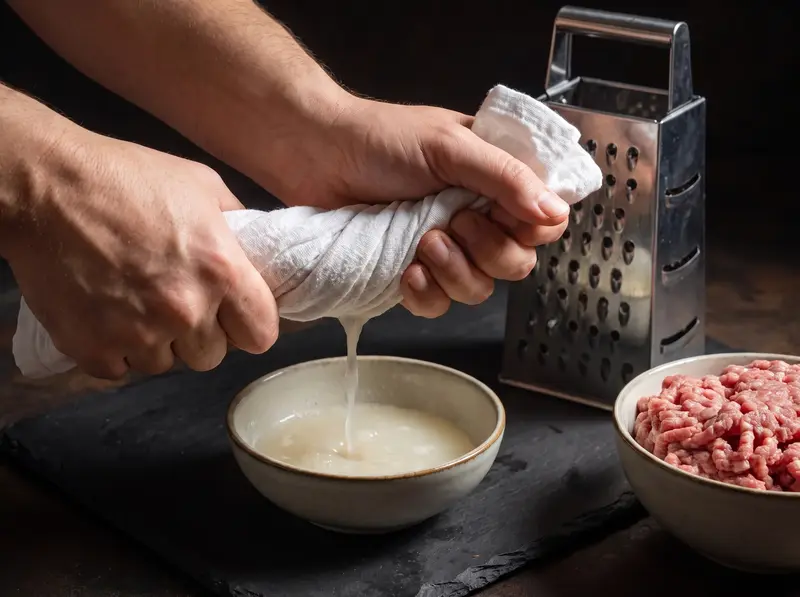
- Make the kofta mixture and chill. Grate the onion on a box grater into a clean kitchen towel. Gather the towel and wring it tightly to squeeze out all the liquid — this step is non-negotiable. Wet onion releases steam during grilling and makes the kofta fall off the skewer. Combine the dry onion pulp with the ground meat, finely chopped parsley, all spices (or 2 teaspoons of Lebanese seven-spice in place of the five ground spices), salt, and pepper in a large bowl. Knead with your hands for 3 to 4 minutes until the mixture becomes cohesive, sticky, and almost paste-like. It should hold together when pressed into a ball. Use flat, wide metal skewers — on round ones the meat spins when you turn it. Refrigerate the mixture for 15 to 30 minutes; the fat firms up and helps the kofta adhere to the skewer.
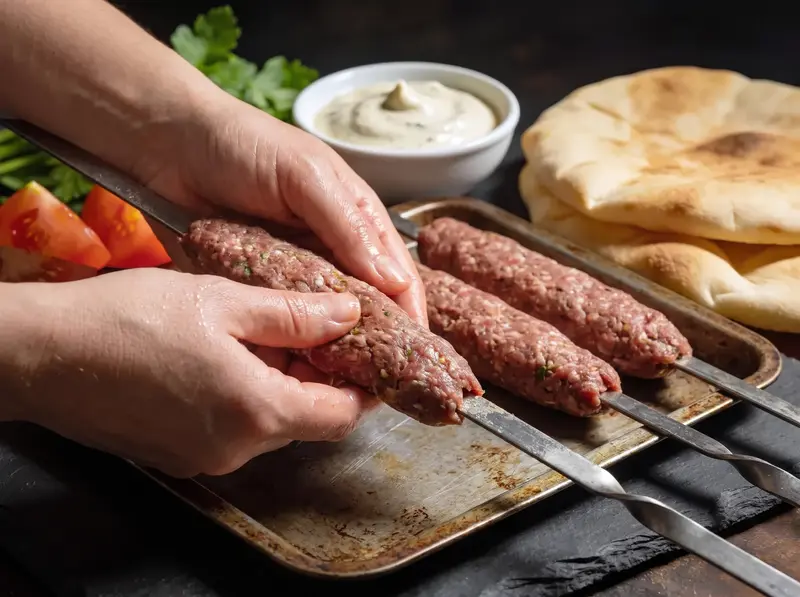
- Shape onto skewers. Divide the mixture into 8 equal portions (about 70 g each). With damp hands, take one portion and press it around the lower half of a flat metal skewer, squeezing it into a cylinder about 2.5 cm (1 inch) thick and 12 to 14 cm long. Press firmly so there are no air pockets — air pockets cause the kofta to burst on the grill. Using your thumb and forefinger, pinch ridges across the kofta every 2 cm — these indentations increase the surface area that contacts the grill, producing more char and flavor. Lay the shaped kofta skewers on a parchment-lined tray. Refrigerate until the grill is ready.
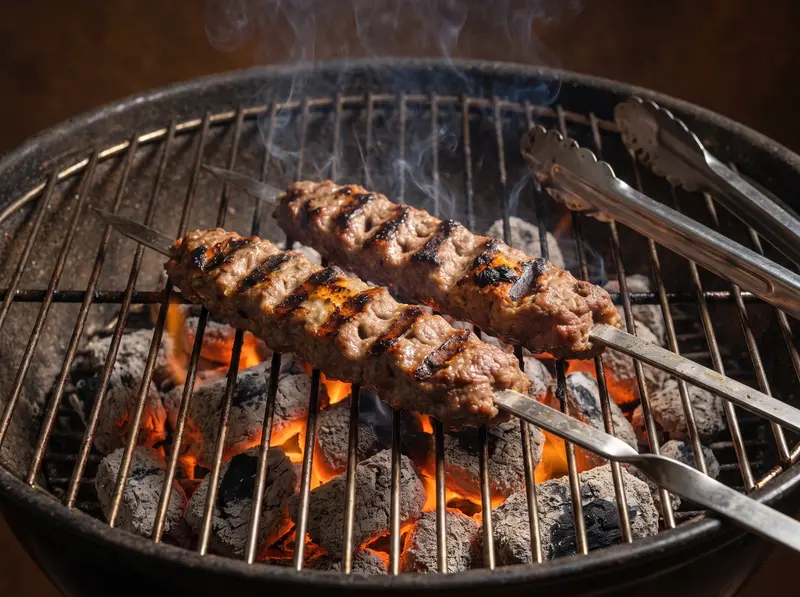
- Set up the grill for direct high heat. For charcoal: light a full chimney, wait until covered in white ash, then arrange in a single tight layer across the entire grill base, and wait 5 minutes more — the grates must be very hot. For gas: preheat all burners to high for 15 minutes, then clean the grates. Kofta needs strong direct heat, roughly 230 to 260°C (450 to 500°F): hold your hand 5 cm above the grate, and if you can bear it for only 1 to 2 seconds, the grill is hot enough. Oil the grates by rubbing them with an oil-soaked paper towel held in tongs. No outdoor grill? A well-seasoned cast-iron grill pan on the stovetop over high heat, or an oven broiler (grill) set to 250°C (480°F) with the skewers close to the element, gets you close — use the same times as the next step.
- Grill the kofta. Place the skewers on the hot oiled grates. Brush lightly with olive oil. Grill for 4 to 5 minutes on the first side without moving — the kofta must form a crust before you attempt to turn it, or it will tear. Gently test: slide a thin spatula under the edge of the kofta — if it releases cleanly, turn the skewer 180° to the second side. Grill 3 to 4 minutes on the second side. Kofta is done when it is firm and browned all over with slightly charred edges, the center reaches 71°C (160°F), and a cut piece shows no pink and runs clear juice. Take it off as soon as it gets there — a few minutes past that point kofta turns dry and sandy.
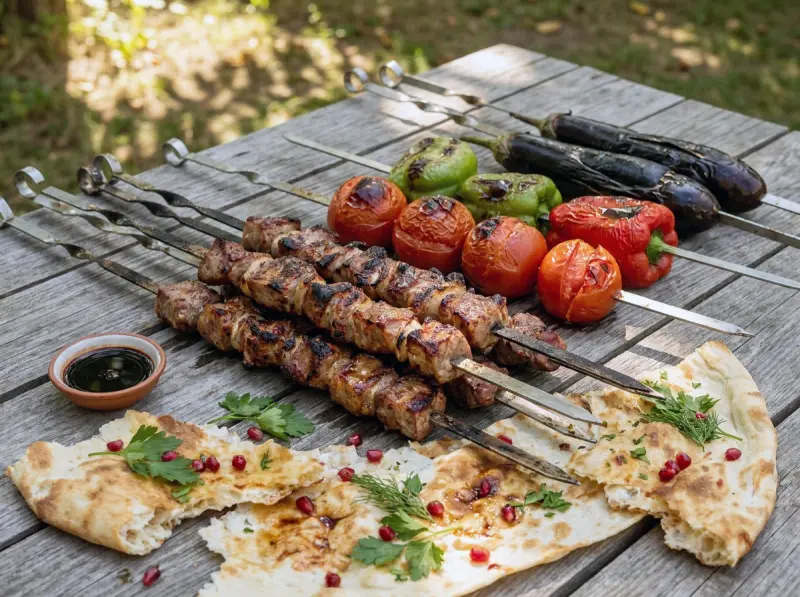
- Rest and serve. Transfer the skewers to a platter and rest for 3 to 5 minutes — resting allows the internal juices to redistribute. Slide the kofta off the skewers or serve on skewers directly. Squeeze lemon over the top. Serve immediately with warm pita, tahini sauce or garlic yoghurt, sliced tomatoes, raw onion, fresh parsley, and pickled vegetables. In the Lebanese tradition, the full spread is called mashawi and includes grilled tomatoes and whole chilli peppers grilled alongside the kofta.
FAQ
Kofta falls off the skewer for two reasons: the onion was not squeezed dry, or the meat mixture was not kneaded enough. Raw onion contains a large amount of water — when the kofta hits the hot grill, this water turns to steam, which expands and pushes the meat off the skewer from the inside. Squeezing all the liquid out of the grated onion before mixing eliminates this problem. Insufficient kneading is the second cause: kneading the meat mixture for 3 to 4 minutes extracts myosin (a muscle protein) that, when heated, acts as a binding glue. Under-kneaded mixture will crumble on the grill. A correctly made kofta mixture is tacky and holds its shape when pressed — it should not be crumbly or loose.
Baharat (Arabic: بَهَارَات, "spices") is the foundational spice blend of Lebanese and wider Levantine cooking, typically combining allspice, black pepper, cinnamon, coriander, cumin, cloves, and nutmeg into a warm, slightly sweet mix. This recipe lists the spices individually — with ground allspice as the primary note — so you can control the exact ratios yourself. If you already have a jar of baharat, use 2 teaspoons of it in place of the allspice, cinnamon, cumin, coriander, and nutmeg combined. Without either, a mix of allspice, cinnamon, and cumin gets you most of the way to the real flavor.
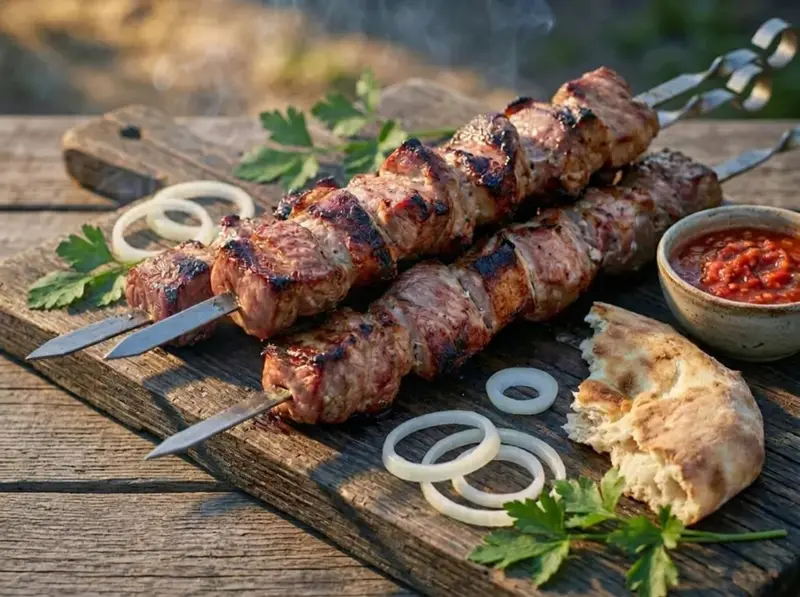
Kofta (also spelled kefta, kafta, köfte) is made from ground or minced meat that is spiced, shaped onto a skewer, and grilled. The meat is essentially seasoned mince moulded into a cylinder. Shish kebab (shish means skewer in Turkish) is made from whole cubes of marinated meat — most commonly lamb shoulder, beef sirloin, or chicken thigh — threaded onto skewers and grilled. The two styles have entirely different textures: kofta is dense, smooth, and flavor-forward from the spice mix; shish is chewy, juicy, and character-forward from the quality and marinade of the whole meat. In a Lebanese mashawi spread, both are typically served together alongside grilled chicken (shish tawook) and grilled vegetables. The wider skewered-meat tradition spans many cuisines, from Armenian khorovats to Russian shashlik, each shaped by its own cut, marinade, and choice of charcoal or wood.
For kofta, flat wide metal skewers — typically 2 to 3 cm wide — are essential, not a preference. A round skewer allows the meat to spin around the skewer when you try to turn it, and because ground meat has no structural grain to grip the metal, round skewers produce kofta that spins loose and breaks. Flat skewers grip the meat from two sides and prevent rotation. Metal skewers are also preferred over wooden for kofta because they conduct heat into the center of the meat from the inside, improving even cooking, and they do not require soaking. For shish kebab (whole cubed meat), round metal skewers work perfectly because the meat pieces grip the skewer at their cut surfaces.
In Lebanon, a full mashawi (مشاوي, "grilled things") spread is the proper context for kebab. The kofta skewers arrive at the table still on the skewer or freshly slid off, surrounded by: warm pita or Lebanese flatbread; raw thinly sliced white onion; quartered fresh tomatoes; fresh flat-leaf parsley, ideally a whole bunch; pickled turnips (pink from beetroot brine) or other pickles; tahini sauce or toum (Lebanese garlic sauce); and freshly squeezed lemon. In the street food tradition, a kofta skewer is wrapped in a sheet of flatbread with the accompaniments and eaten as a sandwich. Adding hummus is common and welcome.
Keep browsing
More dishes from the Lebanese archive — picked by overlap with what you're cooking now.
Recipes by email
One letter a week: a recipe picked for your taste, plus whatever is new on the site. Unsubscribe in one click.
Welcome gift: Sergei's cookbook (e-book).
By subscribing you agree to the privacy policy.
Tell us what you like to cook (30 seconds) →
Join the conversation
Comments
No comments yet — be the first!