
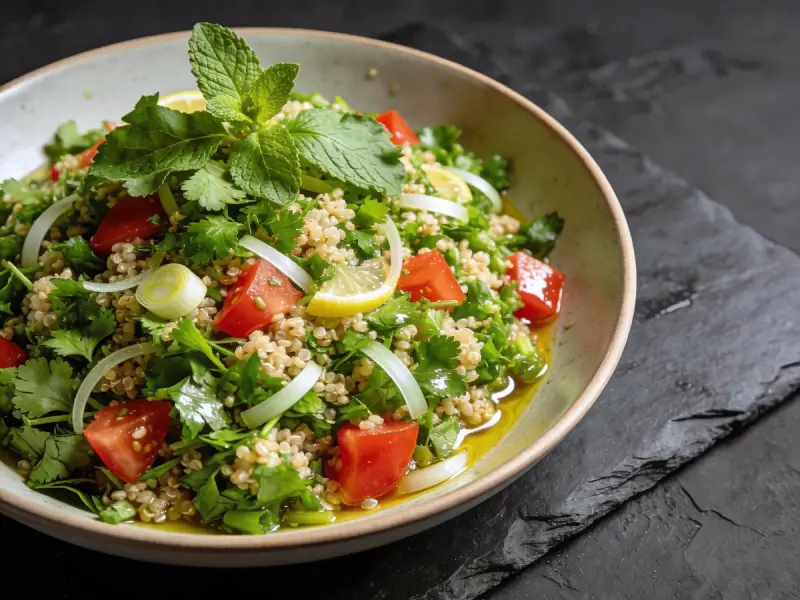
Tabbouleh
Tabbouleh is a Lebanese herb salad — not, as many Western recipes would have it, a grain salad with herbs in it. The correct ratio is roughly four parts chopped parsley to one part bulgur by volume. The bulgur is present for texture and a gentle nuttiness, but the parsley is the point: the salad should be intensely green, assertively flavoured, and taste like fresh herbs dressed with lemon rather than wheat dressed with garnish. Fine bulgur (#1) soaks directly in the lemon-olive oil dressing without any cooking, which keeps the texture light. The tomatoes are salted and drained before going in so they don't flood the salad with watery juice. Everything is finely chopped by hand — a knife, not a food processor, which turns the parsley to paste.
Ingredients
- 120 gfresh flat-leaf parsley
- 20 gfresh mint leaves
- 50 gfine bulgur wheat
- 4 tbspfresh lemon juice
- 4 tbspextra-virgin olive oil
- 250 gripe tomatoes
- 4 scallions
- 0.75 tspfine salt
- 0.25 tspblack pepper
- 0.25 tspground allspice
Method
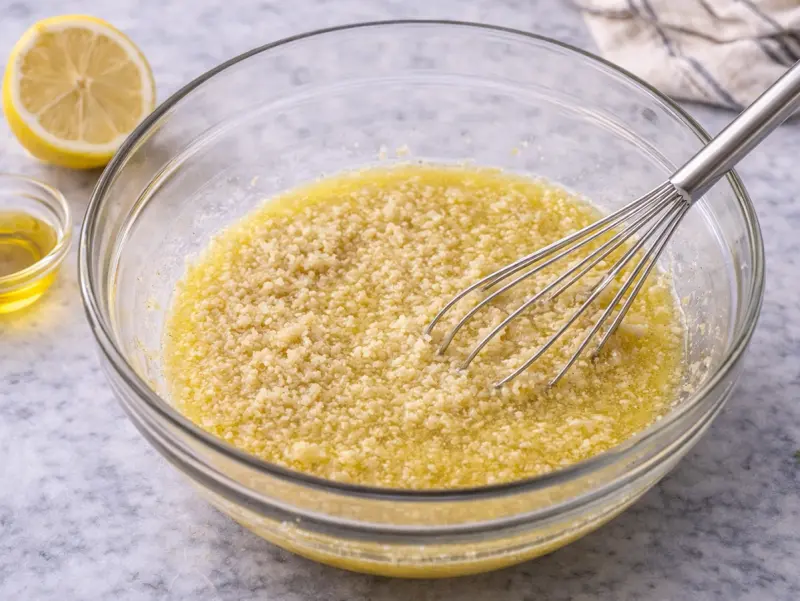
- Hydrate the bulgur in the dressing. In a large bowl, whisk together the lemon juice, olive oil, salt (use ½ tsp here, save ¼ tsp for the tomatoes), pepper, and allspice if using. Add the fine bulgur directly to this dressing and stir to combine. Leave to hydrate while you prepare everything else — 20 to 30 minutes is enough for fine bulgur to soften. It absorbs the lemon and oil as it rehydrates, which seasons it from the inside. This is the correct technique for fine bulgur; it requires no boiling.
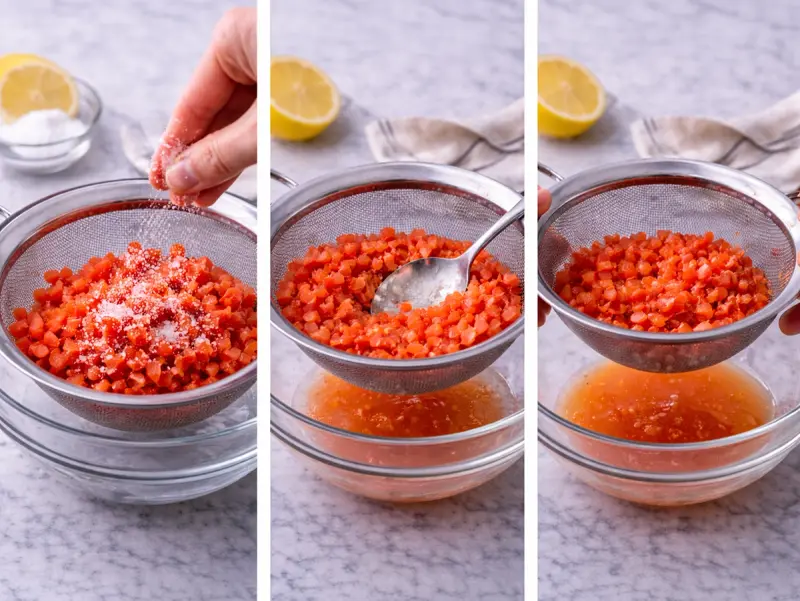
- Salt and drain the tomatoes. Dice the tomatoes into small pieces — aim for roughly the same size as the bulgur grains, about 5 mm. Put the diced tomatoes in a sieve or colander, sprinkle with the remaining ¼ teaspoon of salt, and leave to drain over a bowl for 10 to 15 minutes. Press gently with the back of a spoon. Discard the juice. This step stops the tomatoes from flooding the salad with liquid when it sits. Don't skip it.
- Wash and dry the parsley and mint thoroughly. This is the most important preparation step. Wet parsley wilts immediately when dressed and releases water that dilutes the salad. Wash both herbs in cold water, spin dry in a salad spinner — do it twice if you need to — then spread on a clean tea towel and pat dry. The herbs should feel completely dry to the touch. Remove the thick stems from the parsley; the thin stems can stay and have good flavor.
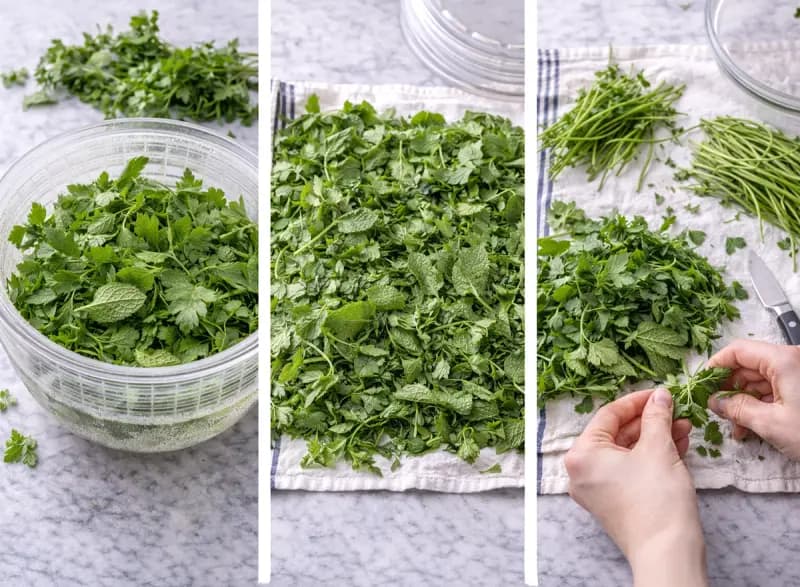
- Chop everything finely by hand. Gather the parsley into a tight bunch and chop with a sharp knife into very small pieces — the goal is a fine chop, not a mince. You want the parsley to have texture and integrity, not to turn into mush. Chop the mint leaves separately and finely. Finely slice the spring onions. Combine the chopped parsley, mint, and spring onions in the bowl with the bulgur and dressing. Add the drained tomatoes. Toss everything together gently.
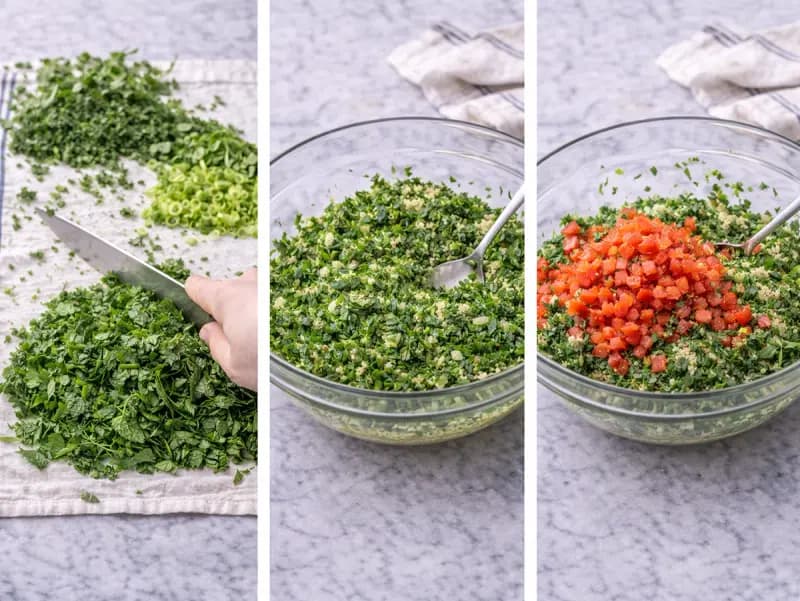
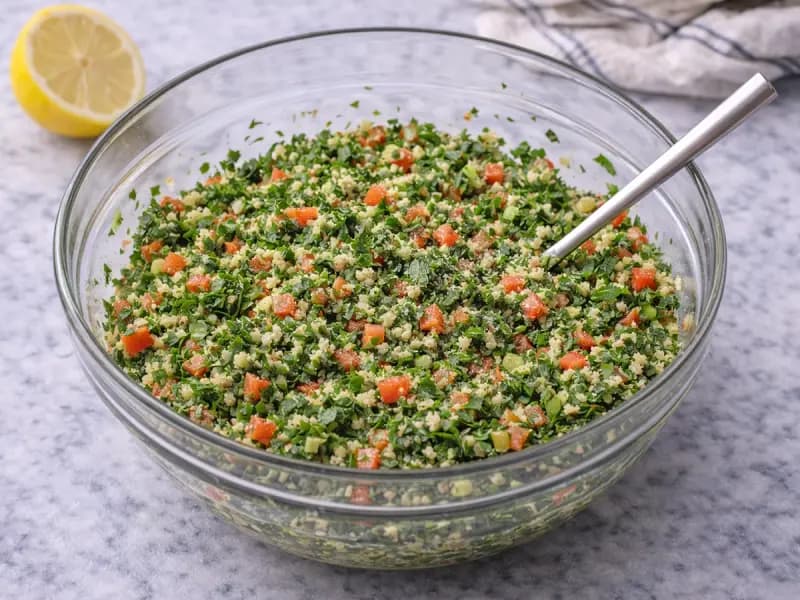
- Taste, rest, and serve. Taste the tabbouleh and adjust: more lemon juice if it needs brightness, more salt if it's flat, more olive oil if it seems dry. The tabbouleh benefits from resting for 15 to 20 minutes at room temperature before serving — the bulgur continues to absorb the dressing and the flavors integrate. Serve at room temperature, not cold from the fridge. The traditional accompaniment is cos lettuce leaves, which work as edible scoops, and warm pita bread.
FAQ
This is how tabbouleh was and is made in Lebanon, where the dish originates. The Lebanese use the least amount of bulgur of any regional variation — just enough to add texture and a gentle grain note without becoming the dominant ingredient. Palestinian and Syrian versions typically use a little more. Western supermarket versions often reverse the ratio entirely, which produces a different dish: filling, hearty, cheaper to make — but not what tabbouleh is. The name comes from the Arabic word tabala, meaning to season or spice, which originally referred to the herb seasoning, not the grain. The parsley is the dish.
Fine bulgur (also called #1 bulgur) is wheat that has been parboiled, dried, and cracked into very small pieces, about the size of couscous. Because it is already partially cooked, it can be hydrated simply by soaking in liquid for 20 to 30 minutes with no heat required. Coarser bulgur (grades #2, #3, #4) takes longer and may need boiling. If you can't find fine bulgur: couscous is the closest substitute in size and behaviour — just pour boiling water over it. Quinoa is a good gluten-free option: cook it until tender, cool completely, then use in the same quantity. Rice or regular cracked wheat are less suitable — their texture doesn't integrate as well.
Traditional Lebanese tabbouleh is made with flat-leaf parsley (also called Italian parsley), which grows widely in the Levant and has a clean, peppery flavor and flat surface that makes it easy to chop cleanly. Curly parsley has a milder, slightly more bitter flavor and its frilly texture means it holds more moisture and is harder to dry properly. Both will produce good tabbouleh; flat-leaf is more authentic and most cooks prefer its flavor. What matters more than the variety is that the parsley is very fresh, very dry before chopping, and very finely chopped.
Tomatoes are mostly water, and when you salt them, the salt draws that water out through osmosis. A medium tomato can release a surprising amount of liquid in 10 to 15 minutes. If you add undrained tomatoes to tabbouleh, they release that liquid as the salad sits, diluting the lemon-olive oil dressing, making the bulgur soggy, and wilting the parsley faster. Draining the tomatoes concentrates their flavor as well — you're removing the most watery part and leaving behind the more intensely flavoured tomato tissue.
Assembled tabbouleh keeps in the refrigerator for up to 2 days, but it degrades over time: the parsley wilts, the tomatoes release more liquid, and the lemon aroma fades. Day-of is best; day-after is acceptable with a squeeze of fresh lemon and a drizzle of olive oil to revive it. If you want to make it further ahead, keep the components separate: dressed bulgur refrigerates for 3 days; chopped dried herbs keep for a day; salted drained tomatoes keep for 2 days. Assemble within 30 minutes of serving for the freshest result.
Keep browsing
More dishes from the Lebanese archive — picked by overlap with what you're cooking now.
Recipes by email
One letter a week: a recipe picked for your taste, plus whatever is new on the site. Unsubscribe in one click.
Welcome gift: Sergei's cookbook (e-book).
By subscribing you agree to the privacy policy.
Tell us what you like to cook (30 seconds) →
Join the conversation
Comments
No comments yet — be the first!