
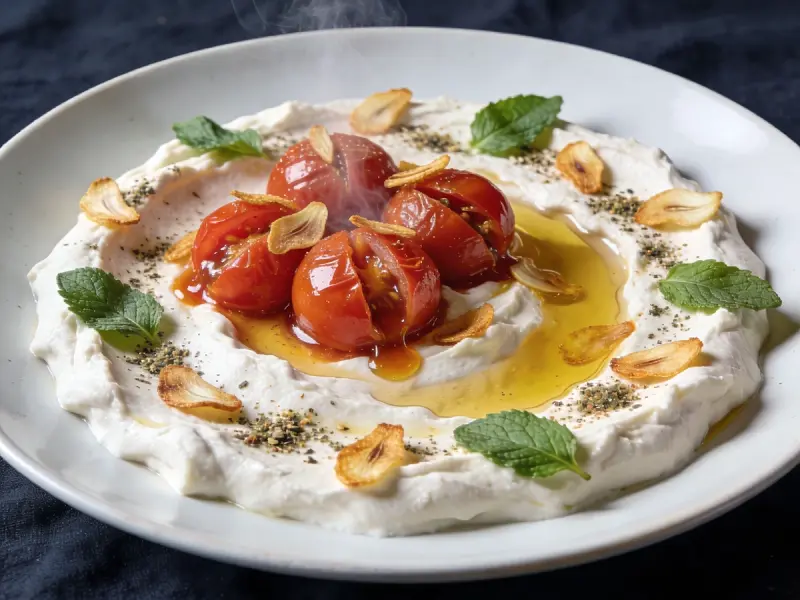
Labneh with Sizzled Tomatoes
Labneh is strained yogurt — drained overnight until it's thick, tangy, and spreadable. The tomatoes are the opposite: cooked fast in very hot oil with garlic and cumin until they blister and burst, then poured while still sizzling over the cold labneh. The contrast is the point. Cold and creamy against hot and jammy. You can buy labneh at most Middle Eastern grocery stores and save the overnight step, but making it yourself takes nothing except time.
Ingredients
- 500 gfull-fat plain yogurt
- 0.5 tspfine salt
- 250 gcherry or baby plum tomatoes
- 3 tbspextra-virgin olive oil
- 3 garlic cloves
- 1 tspcumin seeds
- 0.5 tspAleppo pepper flakes
- 1 tbspfresh lemon juice
- 1 tspza'atar
- 2 tbspextra-virgin olive oil
- 10 gfresh mint or basil
Method
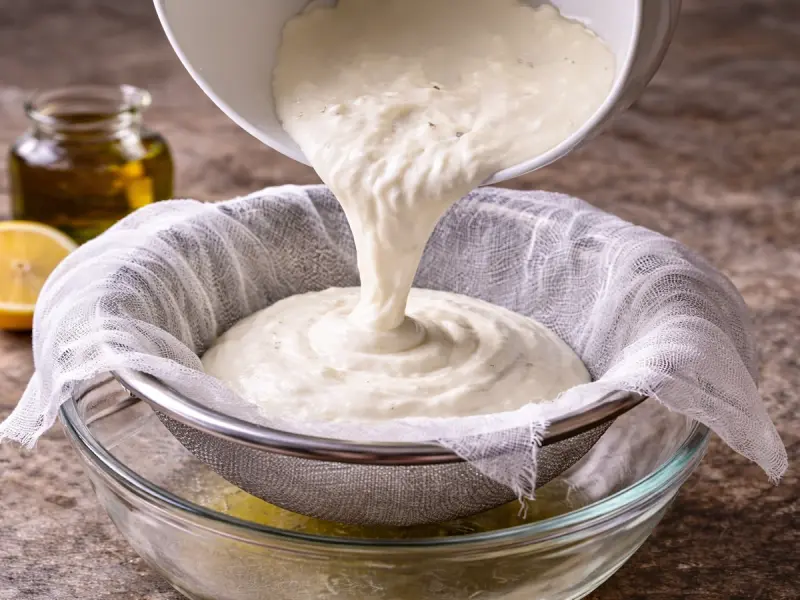
- Strain the yogurt into labneh. Line a sieve with a double layer of muslin, cheesecloth, or a clean cotton tea towel. Stir the salt into the yogurt, pour it into the lined sieve, and fold the cloth over the top. Set the sieve over a bowl, refrigerate, and leave for at least 12 hours — 24 is better. The longer it drains, the thicker and tangier the labneh. Discard the liquid whey. You'll end up with roughly 250 to 300 g of labneh from 500 g of yogurt. Skip this step if using store-bought labneh.
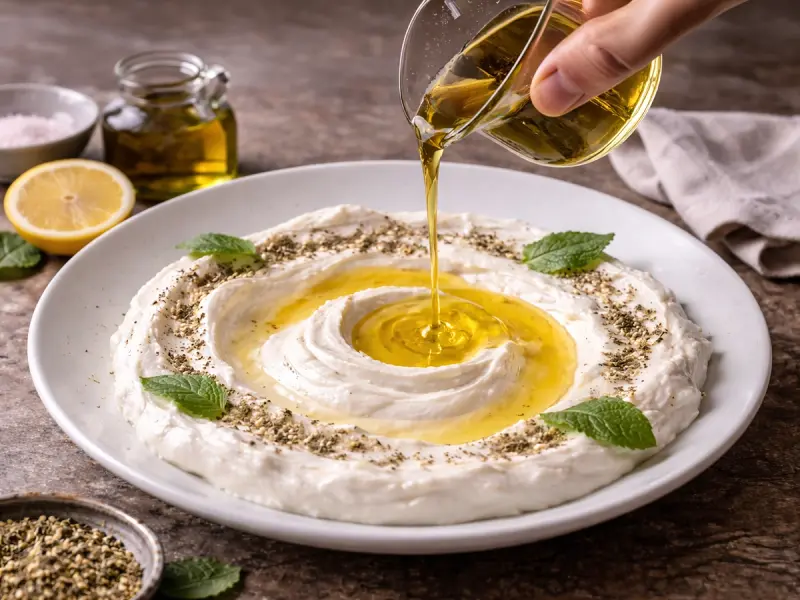
- Plate the labneh. Take the labneh straight from the fridge — it needs to be cold when the tomatoes hit it. Spoon it onto a wide, shallow plate or bowl. Spread it outward with the back of a spoon, leaving a slight mound in the center and thin edges. The uneven surface gives the oil somewhere to pool. Drizzle with the finishing olive oil and set aside while you cook the tomatoes.
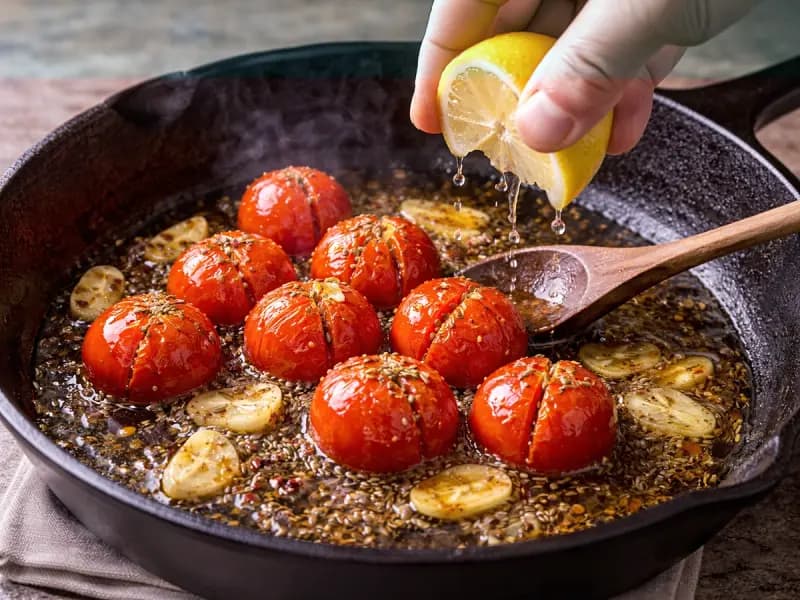
- Sizzle the tomatoes. Heat a small frying pan or skillet over high heat until very hot — a drop of water should evaporate immediately on contact. Add the 3 tablespoons of olive oil. When it shimmers, add the garlic slices. They'll color in about 30 seconds; remove them with a slotted spoon when golden and set aside. Add the cumin seeds — they'll pop within seconds. Then add the cherry tomatoes. Leave them untouched for 1 to 2 minutes so the skin blisters. Shake the pan. Some tomatoes will burst; encourage the rest by pressing gently with a wooden spoon. Add the Aleppo pepper and lemon juice. Cook another 30 seconds. The total cooking time is about 3 to 4 minutes.
- Assemble. Pour the hot sizzling tomatoes and all the oil directly over the center of the cold labneh. The contrast of temperatures is deliberate — don't let it sit before serving. Scatter the golden garlic slices back over the top. Dust with za'atar. Add torn mint or basil.
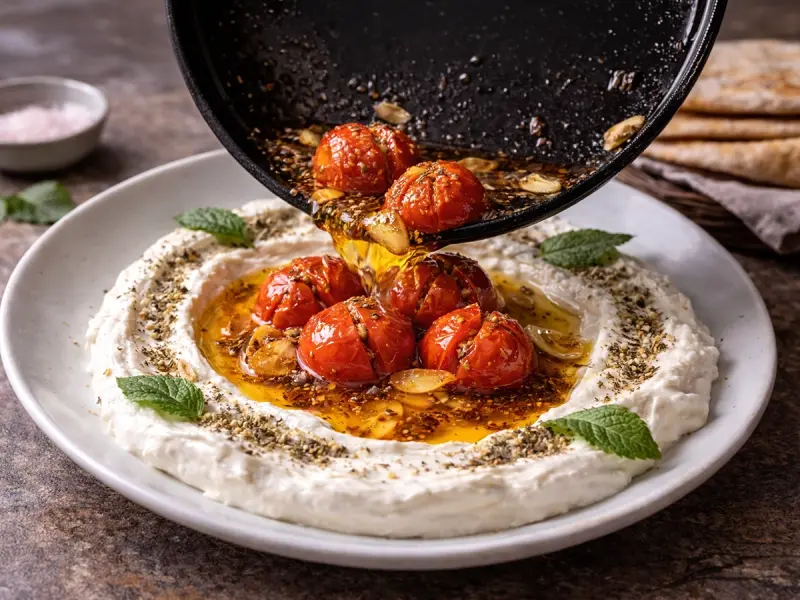
- Serve immediately with warm pita, flatbread, or toasted sourdough. The dish doesn't keep assembled — the tomatoes cool and the oil is absorbed within 20 minutes. If you want to prep ahead, keep the labneh plated in the fridge and make the sizzled tomatoes just before serving.
FAQ
Labneh is yogurt that has been drained of its liquid whey. The longer it drains, the thicker and more sour it becomes. At 12 hours it's the consistency of thick sour cream and spreadable. At 24 hours it's closer to cream cheese. At 48 hours it's firm enough to roll into balls. It's a staple across Lebanon, Syria, Palestine, Jordan, and the wider Levant — eaten for breakfast spread on flatbread with olive oil, served as part of mezze, preserved in olive oil, and used as a base for dips. The flavor is clean, tart, and dairy-rich.
Greek yogurt is already strained, so it drains faster and produces a denser labneh. The result works but is a bit more pasty and less silky than labneh made from full-fat plain yogurt. If using Greek yogurt, reduce the draining time to 8 to 12 hours. Don't use fat-free or low-fat yogurt for either — the labneh will be watery and lack flavor. Full-fat is not optional here.
Za'atar is a Middle Eastern spice blend made from dried thyme or oregano, sesame seeds, sumac, and salt. The flavor is herbal, nutty, lemony, and savory. It's used as a finishing spice — stirred into olive oil as a dip, sprinkled over labneh, baked into flatbread. There's no clean substitute, but you can make a rough version by combining dried thyme with toasted sesame seeds and a pinch of sumac. Za'atar is available in Middle Eastern grocery stores and increasingly in regular supermarkets.
Yes — buy labneh. It's sold in jars or tubs in Middle Eastern grocery stores, and increasingly in large supermarkets near the yogurt or cheese. Look for full-fat labneh. The store-bought version is often slightly thicker and saltier than homemade, so taste it before adding any additional salt. If you're outside of areas where labneh is sold, thick full-fat Greek yogurt is the best ready-made substitute — skip the draining and use it cold directly.
The sizzled tomato version here is one approach. Other classic combinations: labneh with just olive oil, za'atar, and olives (the most traditional Lebanese breakfast); labneh with pomegranate seeds and walnuts; labneh with roasted red peppers and Aleppo pepper; labneh in balls rolled in herbs or spices like dukkah. As a base, labneh takes the place of yogurt, sour cream, or cream cheese in most applications — use it under roasted vegetables, as a sauce for grilled chicken, or as a dip for raw vegetables.
Keep browsing
More dishes from the Lebanese archive — picked by overlap with what you're cooking now.
Recipes by email
One letter a week: a recipe picked for your taste, plus whatever is new on the site. Unsubscribe in one click.
Welcome gift: Sergei's cookbook (e-book).
By subscribing you agree to the privacy policy.
Tell us what you like to cook (30 seconds) →
Join the conversation
Comments
No comments yet — be the first!